

Bathroom specialist
Free and without obligation
Find your contractor
Free and without obligation
Cost Overview Bathroom Renovation (9 m²)
1. Total Target price
|
Renovation segment |
Budget class (€) |
Middle class (€) |
High-quality finish (€) |
|
Total price (indication) |
€ 9,000 – € 12,000 |
€ 12,000 – € 16,000 |
€ 16,000 – € 22,000 |
2. Detailed cost breakdown
|
Cost category |
Indication costs at 9 m² |
Explanation |
|
Demolition and removal |
€ 500 – € 1.000 |
Removing old tiles, sanitary ware, pipes |
|
Pipes (electricity + water) |
€ 1,000 – € 2,000 |
Relocating, renewing and preparing connection points |
|
Plastering / making ready for tiling |
€ 600 – € 1,200 |
Leveling walls and ceilings, possibly primer |
|
Wall and floor tiles |
€ 1,200 – € 2,200 |
Including tiles (€ 30 – € 60 p/m²) and labor costs |
|
Sanitary ware (toilet, shower, sink) |
€ 1,800 – € 3,000 |
Average quality; excl. luxury options |
|
Shower area or bath |
€ 1,500 – € 2,500 |
Walk-in shower, shower screen or bath incl. installation |
|
Furniture + mirror + accessories |
€ 1,000 – € 2,000 |
Vanity unit, mirror cabinet, shelf |
|
Ceiling + lighting |
€ 400 – € 800 |
Suspended ceiling or plaster + LED spots |
|
Ventilation and extraction |
€ 250 – € 600 |
Mechanical ventilation or extraction system |
|
Labor (total) |
included in items |
Contractor, installer, tiler |
|
Total (incl. VAT) |
€ 9.000 – € 22.000 |
Depending on choices in finishing and sanitary ware |
3. Factors that influence costs
- Quality of sanitary ware (budget, middle class or luxury)
- Number of technical adjustments (relocating pipes, underfloor heating)
- Type of finish (plasterwork, tiles, concrete look, microcement)
- Built-in versus surface-mounted (niches, wall toilet, built-in taps)
- Type of contractor (total renovation or working with subcontractors)
4. Optional additional costs (if applicable)
|
Extra option |
Additional cost indication |
|
Electric floor heating |
€ 500 – € 1,000 |
|
Recessed spotlights with dimmer |
€ 200 – € 500 |
|
Betonciré or stucco instead of tiles |
€ 1,000 – € 2,000 |
|
Wall heating |
€ 700 – € 1,500 |
|
Soundproofing measures |
€ 400 – € 900 |
5. Possible grants or financing
- In 2025, there are no standard subsidies for bathroom renovations.
- In the case of lifetime-resistant adaptations (such as shower chair, grab bar, non-slip floor), a contribution may be available in some municipalities from the Wmo.
- Energy-saving measures in combination with renovation (such as heat pump boiler or floor insulation) can yield ISDE subsidies.
Conclusion
A complete bathroom renovation of 9 m² will cost an average of €12,000 to €16,000 in 2025, depending on the choice of materials, finish, and technical complexity. By preparing the project well, comparing quotes, and working with specialized professionals, the investment can be realized sustainably and valuably.
Bathroom Design Costs (2025)
|
Type of design
|
Average costs
|
Content
|
|
Basic 2D design
|
€ 200 – € 400 |
Floor plan with layout, piping advice
|
|
Extensive 2D design
|
€ 400 – € 600
|
+ color plan, tile proposal, lighting plan
|
|
3D design / visualization
|
€ 500 – € 1.000 |
Photorealistic image of the space
|
|
Complete bathroom plan
|
€ 750 – € 1,500
|
Including 2D + 3D, product selection, technical info
|
|
Design via sanitary shop
|
Often free with purchase |
Conditional design service
|

- Inventory of wishes and intended use
- Spatial layout (floor plan and sections)
- Positions of water, electricity, drainage and ventilation
- Material and color advice
- Sanitary and tile selection
- Lighting and mirror plan
- Technical connection points for installer
- Purchase of sanitary ware or tiles through their showroom
- Purchase of the complete renovation package
- Confirmation of quotation within the set deadline
|
Professional
|
Hourly rate (average)
|
Project price (9 m² bathroom)
|
|
Interior designer
|
€ 75 – € 125 per hour |
€ 800 – € 1,500
|
|
Specialized bathroom studio
|
Fixed price
|
€ 500 – € 1,000
|
Crucial Choices and Costs in Bathroom Renovation (2025)
1. Layout and Plumbing
The biggest impact on costs and functionality lies with the chosen layout.
|
Choice |
Financial impact |
Explanation |
|
Keep current layout |
Low cost |
Connection points remain in place |
|
Change layout |
+ € 1,000 – € 3,000 |
Relocate pipes, adjust drains, milling required |
Advice: only change the layout if it is functionally or visually necessary.
2. Sanitary Selection
The quality of sanitary ware determines both appearance and lifespan.
|
Component |
Price range low – high (incl. installation) |
|
Washbasin set |
€ 400 – € 1,200 |
|
Toilet (wall-hung) |
€ 600 – € 1,500 |
|
Shower enclosure |
€ 800 – € 2,000 |
|
Bathtub |
€ 900 – € 2,500 |
|
Faucets |
€ 250 – € 1,000 per faucet |
Advice: do not skimp on faucets and built-in parts – replacement is complex.
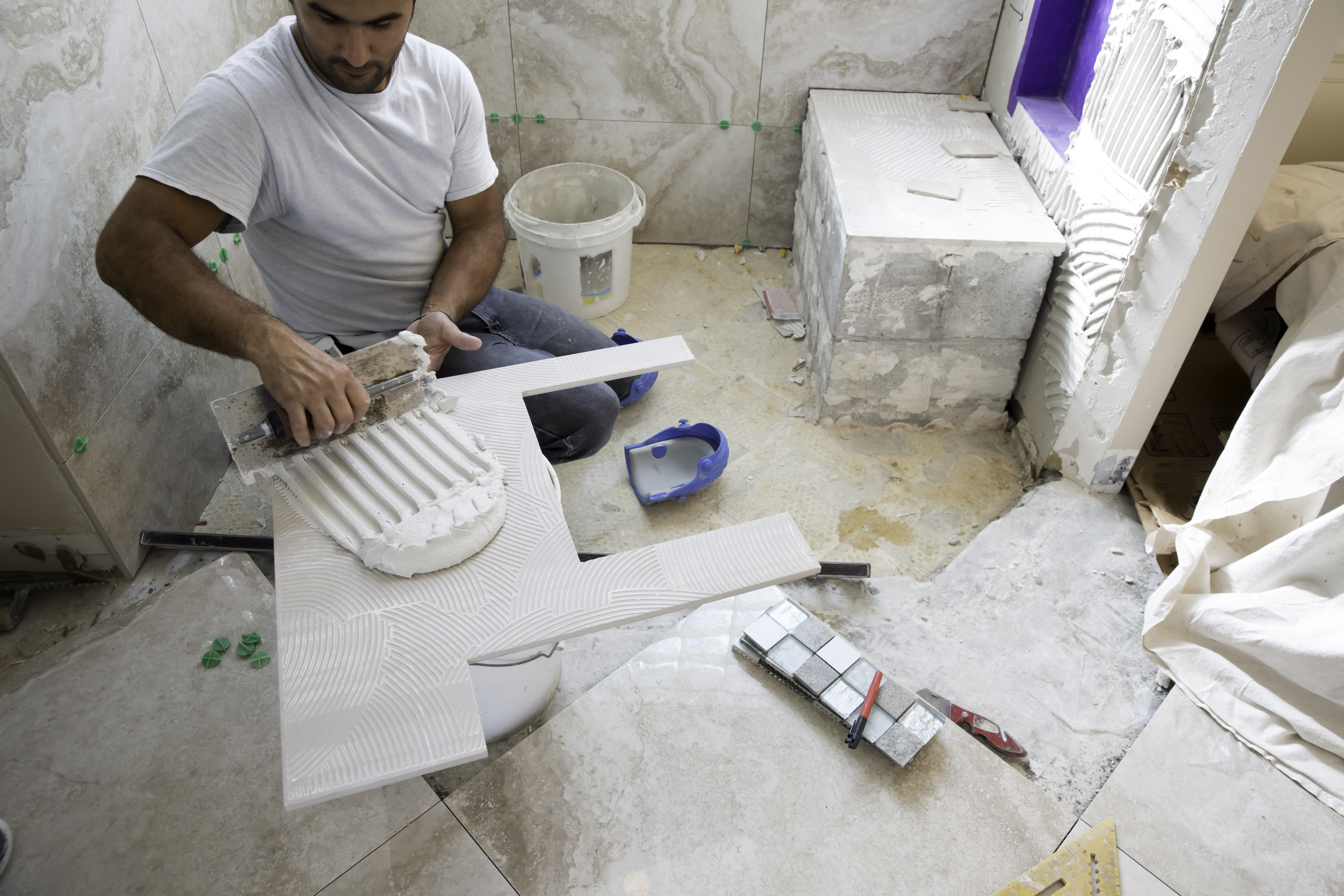
3. Tile or wall finishing
The finishing of walls and floors determines the overall visual appearance and requires craftsmanship.
|
Type of finishing |
Cost per m² (incl. installation) |
|
Wall or floor tiles |
€ 60 – € 100 |
|
Beton Ciré |
€ 110 – € 160 |
|
Tadelakt / plasterwork |
€ 100 – € 180 |
|
PVC or wall panels |
€ 70 – € 120 |
Choice impact: wall finishes determine appearance, but also moisture resistance and maintenance.
4. Ventilation and lighting
Essential for comfort and durability. Poor ventilation leads to moisture problems.
|
Component |
Cost indication |
Explanation |
|
Mechanical ventilation |
€ 300 – € 600 |
Including duct, extractor and switch |
|
Recessed spotlights with dimmer |
€ 200 – € 500 |
Lighting via suspended ceiling |
Advice: invest in a good extractor – prevents mold and paint wear.
5. Heating
Heat sources determine the feeling of comfort, especially in larger bathrooms.
|
Heating type |
Costs (incl. installation) |
|
Electric underfloor heating |
€ 500 – € 1,000 |
|
Designer radiator |
€ 300 – € 700 |
|
Wall heating |
€ 800 – € 1,500 |
Choice: underfloor heating is popular for comfort, but requires preparatory work.
6. Labor Costs
Labor accounts for an average of 40% – 50% of the total costs. Skilled labor is necessary for waterproof finishing and installations.
|
Discipline |
Average Hourly Rate |
Number of Hours (Indication) |
|
Tiler |
€ 45 – € 60 |
40 – 60 hours |
|
Plumber/Installer |
€ 55 – € 75 |
25 – 40 hours |
|
Electrician |
€ 60 – € 80 |
10 – 20 hours |
|
Plasterer |
€ 40 – € 60 |
15 – 30 hours |
Advice: choose specialists with demonstrable experience in bathroom renovation.
7. Project supervision or total execution
For complex renovations, coordination by one main contractor is efficient, but this incurs extra costs.
|
Option |
Additional cost (indicative) |
Advantage |
|
Coordinate yourself |
None |
Cheaper, but more risk and time |
|
Total renovation via 1 party |
+ 10% – 20% on project |
Fewer errors, 1 point of contact |
Consideration: for major renovations (incl. pipework and demolition), central management is recommended.
Conclusion
The crucial choices in a bathroom renovation together determine the technical result, the comfort level, and the final investment. The largest cost items are sanitary ware, wall finishes, and labor. By making smart choices – for example, in finishes or by reusing the layout – the investment can be significantly managed without compromising on quality or lifespan.
Replacement of Bathroom Parts (2025)
A. Overview Cost per part (including installation and VAT)
|
Part |
Average cost (incl. labor) |
Explanation |
|
Toilet (wall-hung or floor-standing) |
€ 600 – € 1,200 |
Including drain adjustment and installation |
|
Washbasin + faucet |
€ 400 – € 900 |
Simple assembly set or furniture with faucet |
|
Shower faucet |
€ 300 – € 750 |
Thermostatic mixer faucet incl. installation |
|
Rain shower / built-in shower |
€ 700 – € 1.500 |
Installation kit + demolition work + waterproof finishing |
|
Shower cabin (complete) |
€ 800 – € 1,800 |
Including shower tray and walls |
|
Bathtub (replacement) |
€ 900 – € 2,000 |
Including removal and new connection |
|
Replace wall or floor tiles (partially) |
€ 60 – € 100 per m² |
Depending on surface area and pattern |
|
Furniture with mirror cabinet |
€ 600 – € 1,200 |
Including dismantling old furniture |
|
Electric underfloor heating (when laying new floor) |
€ 500 – € 1,000 |
In combination with new tiles or finishes |
B. Points to consider during replacement
- Existing pipes: When placed in the same location, costs are lower. Moving connection points increases installation costs.
- Waterproof finish: When replacing a shower or bath, proper sealing is essential to prevent leaks and mold formation.
- Tile reuse or replacement: Partial replacement of tiles can result in color or pattern differences.
- Accessibility: In older homes, extra work may be needed to adapt pipes or drains.
- Assembly by a specialist required: especially for built-in systems (toilet, faucets) and waterproof facilities.
C. Savings tips for part replacement
- Combine multiple replacements in one workflow to limit call-out fees and labor.
- Opt for surface-mounted kits instead of built-in solutions to avoid demolition and breaking work.
- Request multiple quotes, especially for tiling and installation of shower cabins.
- Look out for offers where installation is included when purchasing in the showroom.
Conclusion
Replacing individual bathroom components is a cost-effective way to improve the comfort and look of your bathroom without the expense of a full renovation. The average investment per component ranges between €400 and €1,500, depending on the product type, installation complexity, and the condition of existing connections.
Bathroom Tiling (2025)
1. Total cost indication
|
Project size |
Average price (incl. material and labor) |
|
Complete tiling (wall + floor, 9 m² bathroom) |
€ 3,500 – € 6,500 |
|
Wall tiles only (approx. 25 – 30 m²) |
€ 2,500 – € 4,000 |
|
Floor tiles only (approx. 8 – 10 m²) |
€ 800 – € 1,500 |
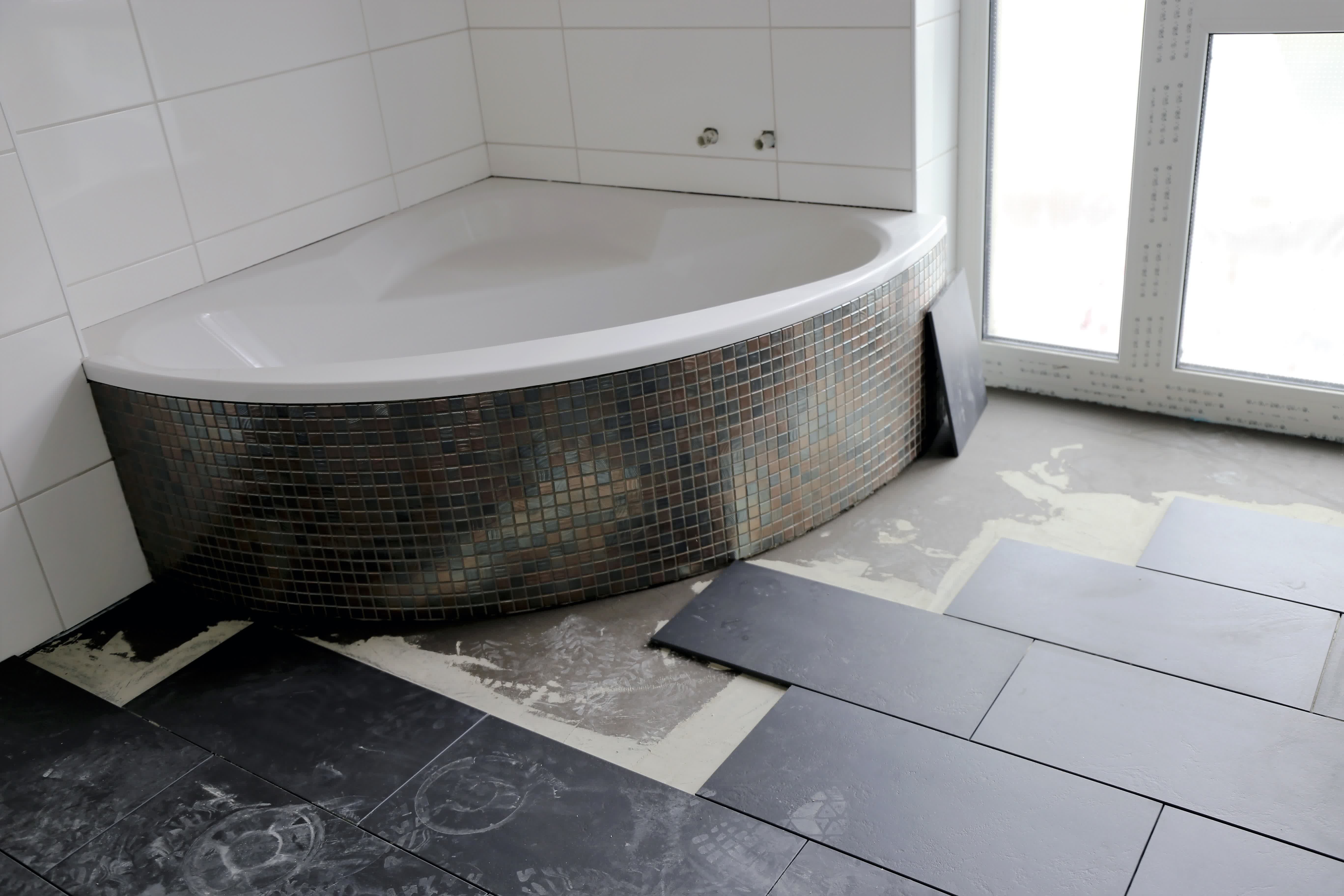
Price depends on tile choice, pattern, substrate and grout type.
2. Prices per square meter
|
Type of tiling |
Price per m² (incl. material and labor) |
|
Wall tiles standard |
€ 75 – € 120 |
|
Wall tiles large format or pattern |
€ 100 – € 140 |
|
Floor tiles standard |
€ 80 – € 130 |
|
Tiling with niches / built-in parts |
€ 110 – € 160 |
3. Cost structure
|
Component |
Guideline price per m² |
Explanation |
|
Tiles (material) |
€ 25 – € 60 |
Ceramics, natural stone, concrete look etc. |
|
Adhesive and grout |
€ 10 – € 15 |
Depending on surface and type of tile |
|
Tiler labor |
€ 35 – € 60 |
Experienced professional, m²-dependent |
|
Additional work (milling, leveling) |
€ 10 – € 30 |
Only with poor surface or niches |
4. Important considerations
- Waterproofing (walls): in the wet zones (shower, bath) a waterproof underlay is required. Use of a sealing kit (sealing tape, sealing paste) is essential.
- Tile format: larger tiles are visually appealing, but require more preparation and experience from the tiler.
- Substrate: existing tiles can sometimes remain in place, provided they are level and firm. Otherwise, leveling must be done first.
- Grout color and grout width: determining for the end result. Narrow joints give a more modern appearance.
- Floor tiles: ensure anti-slip value (minimum R10) in wet rooms.
5. Alternatives to tiles
|
Alternative |
Price per m² (incl. finishing) |
Note |
|
Betonciré / stucco |
€ 110 – € 160 |
Seamless, modern, waterproof with proper finishing |
|
PVC wall panels |
€ 70 – € 120 |
Quick installation, less grout |
|
Natural stone |
€ 120 – € 250 |
Exclusive, requires good sealing |
6. Average duration of work
|
Bathroom surface |
Duration tiling (from) |
|
6 – 9 m² bathroom |
3 – 5 working days |
Depending on the complexity, drying times, preparation and finishing.
Conclusion
Tiling a bathroom is an investment of an average of €75 to €130 per m² in 2025, depending on the material, finish and situation. Wall and floor tiles remain popular due to their durability, ease of maintenance and appearance. Correct execution is essential for the water resistance and lifespan of the room. The combination of good preparation, the right choice of materials and an experienced tiler prevents moisture problems and repair costs in the long term.
Bathroom Plastering (2025)
1. Total cost indication
|
Type of finish |
Price per m² (incl. material and labor) |
Explanation |
|
Cement-based stucco |
€ 90 – € 120 |
Suitable for wet areas |
|
Betonciré |
€ 110 – € 160 |
Waterproof, sleek and modern |
|
Tadelakt (natural lime plaster) |
€ 140 – € 180 |
Handcrafted, completely waterproof, sustainable |
|
Traditional plasterwork |
€ 25 – € 45 |
Only suitable for dry areas (not in shower) |
2. Cost structure per square meter
|
Cost element |
Average price per m² |
Explanation |
|
Material (base layer) |
€ 20 – € 40 |
Cement stucco, lime, béton ciré or tadelakt |
|
Sealing / coating |
€ 10 – € 25 |
Wax, PU coating or special impregnation |
|
Labor (specialist) |
€ 50 – € 90 |
Depending on finish, surface and accessibility |
3. Suitable Applications
|
Space part |
Suitable for stucco? |
Recommended finish |
|
Shower room |
Yes |
Betonciré or tadelakt |
|
Above sink |
Yes |
Cement stucco with coating |
|
Ceiling |
Yes |
Lime plaster or moisture-resistant gypsum plaster |
|
Behind toilet |
Yes |
Betonciré or cement-based |
|
Floor |
Limited |
Only with extra protective layers (PU top layer) |
4. Important considerations
- Water resistance: Only suitable if the correct combination of stucco material and coating is applied. Errors in this can lead to leakage or mold growth.
- Substrate: Must be stable, dry and suitable for adhesion (e.g. cement board or leveled wall). Existing tiles must be removed or pre-treated first.
- Durability: High-quality finishes such as tadelakt are extremely durable and resistant to moisture and lime, but require craftsmanship.
5. Comparison with tiling
|
Aspect |
Plasterwork (betonciré/tadelakt) |
Tiling |
|
Appearance |
Seamless, modern |
Classic or modern (depending on tile choice) |
|
Maintenance |
Few joints, easier to clean |
Joints susceptible to mold |
|
Costs |
Higher per m² |
Lower per m² (depending on tile type) |
|
Water resistance |
Only with correct finishing |
Standard waterproof when properly installed |
|
Repairability |
Difficult to repair locally |
Tile can be replaced individually |
6. Average total price (complete bathroom)
|
Bathroom surface |
Betonciré finish |
Tadelakt finish |
|
6 – 8 m² walls |
€ 3,000 – € 5,000 |
€ 4,000 – € 6,000 |
|
Floor + wall (complete) |
€ 4,500 – € 7,500 |
€ 5,500 – € 8,500 |
Conclusion
Stucco in the bathroom is a high-quality and aesthetically pleasing choice in 2025, provided it is applied correctly with the right materials and craftsmanship. The costs are higher than with traditional tiling, but the result is seamless, low-maintenance and unique. It is especially suitable for those who value design and custom finishing. Note: technical execution is crucial for durability and water resistance.
Underfloor heating in the Bathroom (2025)
|
System type
|
Application
|
Properties
|
|
Electric underfloor heating
|
Most commonly used in bathrooms |
Thin mats, fast heating, local
|
|
Water-based underfloor heating
|
Only for main heating or renovation
|
Connected to central heating or heat pump, slower but more energy-efficient
|
|
Component
|
Electric (9 m²)
|
Water-based (9 m²)
|
|
Heating mat material
|
€ 300 – € 500
|
€ 400 – € 600 |
|
Thermostat + sensor
|
€ 100 – € 200
|
€ 100 – € 200
|
|
Installation
|
€ 300 – € 500
|
€ 500 – € 900
|
|
Floor leveling / extra insulation
|
€ 200 – € 400 |
€ 300 – € 500
|
|
Total price
|
€ 900 – € 1,600
|
€ 1,300 – € 2,200
|
- Floor construction height: electrical systems have a construction of approx. 3–5 mm; water-based systems approx. 4–8 cm including screed.
- Insulation: in older homes, it is advisable to install an insulating underlay to limit heat loss downwards.
- Regulation: is usually controlled separately from the main heating, with its own wall thermostat or time switch.
- Floor finish: ceramic tiles conduct heat best. Betonciré is also possible, provided it is correctly constructed with suitable adhesive and coating.
- Even heat distribution
- No visible radiators needed
- Comfortable floor, especially during cold months
- More energy-efficient with low-temperature heating (in case of water-based system)
- Not suitable for all existing floors without modification
- Electric version can result in relatively higher electricity costs with intensive use
- Repair in case of malfunctions requires breaking open the floor (only in case of damage)
Important Points Regarding Bathroom Renovation Prices (2025)
1. Prices are highly dependent on material choice
The chosen finishing materials have a direct and often significant impact on the total price. Examples:
|
Example part |
Budget (€) |
Mid-range (€) |
High-end (€) |
|
Shower faucet |
200 |
500 |
1,000 |
|
Tiles per m² |
20 |
40 |
80+ |
|
Vanity unit |
400 |
900 |
1,800+ |
Advice: determine in advance which parts have aesthetic and technical priority, and build your budget around them.
2. Labor costs account for 40% – 50% of the total
With a complete bathroom renovation, a large part of the budget goes into labor. Consider:
- Demolition and disposal costs
- Tiling
- Pipes and drainage
- Plastering and installation
Specialized professionals are needed for quality execution. Do not choose solely based on low rates, but on experience in wet rooms and waterproof construction.
3. Additional work is often costly and common
Not everything is visible in advance. Common forms of additional work include:
- Poor subfloor or rotting wooden joists
- Outdated pipes or electricity (need to be replaced)
- Adaptation of ventilation or strengthening of the power group
Advice: reserve at least 10% to 15% of the total budget for unforeseen work.
4. Prices per m² are not always representative
For small bathrooms, the price per m² is relatively high because fixed costs (connections, finishing, demolition work) do not decrease proportionally.
|
Bathroom size |
Guide price per m² (indication) |
|
5 m² |
€ 1,800 – € 2,600 per m² |
|
9 m² |
€ 1,400 – € 1,800 per m² |
|
12+ m² |
€ 1,200 – € 1,500 per m² |

5. Quotes differ in structure and scope
When comparing quotes, pay attention to:
- Finishing included or excluded (trim, painting, baseboards)
- Delivery of sanitary ware included or not
- VAT and labor specified separately?
- Clear description per item (no "package price" without breakdown)
When in doubt, always ask for a breakdown per item (material + labor).
6. Timing affects costs
- Shorter turnaround times often require more people on the floor at the same time, which incurs extra costs.
- Work during peak season (spring/autumn) is generally more expensive than during quiet periods.
- If there is urgency (e.g., for leak or damage repair), rates increase.
7. Payment arrangements and guarantees
Usual arrangements for total renovations:
- 30% deposit upon agreement/order
- 40% interim payment upon completion of pipes or tiling
- 30% final payment upon completion
Also always check:
- Warranty on materials and installation (usually 2 – 5 years)
- Conditions for delays or additional work
Conclusion
The price of a bathroom renovation is determined by a combination of material choice, labor, additional work, and economies of scale. Clear specifications and preparation are essential to avoid surprises. By paying attention to the structure, warranties, and expected extra costs, you maintain control over your investment and prevent budget overruns.
Step-by-Step Guide to Finding a Bathroom Specialist (2025)
Step 1. Determine the scope of the job
Determine in advance whether you are looking for a complete renovation or just a partial replacement (e.g., tiles or sanitary ware). This determines the type of specialist you need:
- Bathroom specialist or contractor for complete renovations
- Tiler, plumber, or installer for partial jobs
Tip: Make sure your wish list and floor plan are clear in advance.
Step 2. Request multiple quotes
Approach at least three recognized professional companies. Note:
- Quotes must be specified in material and labor
- Ask for the hourly rate or fixed price per item
- Ask how long the quote is valid
Compare not only on price, but also on service, experience, and timeline.
Step 3. Check expertise and registration
A reliable bathroom specialist:
- Is registered with the Chamber of Commerce
- Has demonstrable experience with bathroom renovations
- Works with own staff or regular partners
- Can show references and examples
Look for quality marks such as Techniek Nederland or VLOK for total installers.
Step 4. Check guarantees and liability
A professional company offers:
- Assembly guarantee (usually 2 to 5 years)
- Clear agreements on additional work and completion
- Liability insurance in case of damage
Always ask for confirmation of the guarantee conditions upon completion.
Step 5. Visit showrooms or previous projects (if possible)
For larger assignments, it is advisable to visit a showroom or a previously completed project. You will then gain insight into:
- Finishing and details
- Use of materials
- Accuracy and eye for quality
Step 6. Discuss planning and lead time
Make concrete agreements about:
- Start date
- Expected lead time
- Time slots per discipline (e.g., demolition, pipework, tiling)
A professional company will create a plan with clear phases and contact moments.
Step 7. Record agreements in writing
Ensure a signed order confirmation or contract agreement stating:
- Work and materials
- Total price and payment moments
- Execution period and warranty
- Handling of additional or less work
Only pay the final installment upon full completion without defects.
Conclusion
Finding a reliable bathroom specialist requires careful preparation, comparison of quotes, and verification of expertise. A well-chosen professional prevents delays, quality issues, and cost overruns. Clear communication, written agreements, and transparency are essential for a successful renovation.
Bathroom Saving Tips (2025)
1. Keep the existing layout
Moving pipes, drains, and connection points will incur additional costs.
|
Choice |
Cost-effectiveness |
|
Keep layout |
Low cost |
|
Move pipes and connections |
+ € 1,000 – € 3,000 |
Advice: Keep the layout unless functional improvement is really necessary.
2. Choose standard sanitary dimensions
Custom furniture, built-in toilets, or luxury baths are more expensive in both material and installation.
|
Sanitary type |
Average savings compared to custom |
|
Vanity unit with countertop basin |
± € 300 – € 800 |
|
Standard shower cabin |
± € 500 – € 1.000 |
Advice: Use standard sizes where possible for fast delivery and low assembly costs.
3. Work in phases if necessary
Can't or don't want to replace everything at once? Consider phased renovation:
- First plumbing, then tiles or furniture
- First functional parts (e.g., leaks, ventilation)
Note: Not always cheaper in the long run, but better spreadable in terms of investment.
4. Compare quotes from multiple specialists
Price differences between installers or tilers can be up to 30% for the same quality.
|
Number of quotes |
Expected savings |
|
2 to 3 quotes |
€ 500 – € 2,000 |
Advice: Always ask for quotes with specified parts (material, labor, VAT).
5. Choose affordable finishes with high appeal
A luxurious look doesn't always have to mean high costs.
|
Alternative |
Cheaper than |
Remark |
|
Ceramic tiles with a concrete look |
Real polished concrete |
Low maintenance, more economical |
|
PVC wall panels |
Large wall tiles |
Quick installation, no grout |
|
Plastic bath or sink |
Natural stone or solid surface |
Lightweight, low maintenance |
6. Opt for functional lighting
Recessed spotlights and indirect LED lighting are popular, but can be expensive.
Advice: Combine a central ceiling lamp with 1 or 2 directed wall fixtures for sufficient light and lower costs.
7. Avoid unnecessary extras
Elements such as niches, built-in taps, illuminated mirrors, and designer radiators are visually attractive but not essential. They increase:
- Installation costs
- Connection work
- Maintenance sensitivity
Consideration: Consciously choose which extras truly contribute to comfort or usability.
8. Consider showroom models or outlet offers
Many bathroom stores offer showroom models at discounts of up to 30–60%.
|
Product category |
Possible discount |
|
Vanity units |
30% – 50% |
|
Shower enclosures |
20% – 40% |
|
Toilets and faucets |
15% – 30% |
Please note: Warranty and return conditions may be more limited.
9. Plan the renovation outside of peak season
Bathrooms are in high demand in spring and autumn. Planning during quieter months (December – February or summer) can be more advantageous in terms of:
- Hourly rates
- Delivery times
- Availability of specialists
10. Check local subsidies or Wmo schemes
For adaptations to make a home suitable for all life stages (such as non-slip floors or grab bars), Wmo reimbursements may be available through the municipality.
Inquire in advance whether your plans are eligible for subsidies for home adaptation or energy saving.
Conclusion
With a combination of smart choices, phased implementation, and conscious material selection, the costs of a bathroom renovation can be significantly reduced without compromising on quality and comfort. The biggest savings are often found in labor, layout choices, and avoiding unnecessary extras.