

Insulation
Free and without obligation
Find your contractor
Free and without obligation
Request a quote for insulation
Are you looking for an effective way to make your home more energy-efficient and comfortable? Then request a no-obligation quote for insulation, tailored to your home type and wishes. You will receive a custom proposal from a certified insulation company near you.
Types of insulation for which you can request a quote

- Cavity wall insulation
- Roof insulation (pitched or flat roof)
- Floor insulation or subfloor insulation
- Facade insulation (inside or outside)
- Crawl space insulation
- Glass and frame insulation (HR++ or triple glazing)
What is included in the quote?
The quote includes:
- Advice on the suitable insulation method for your home
- Material choice (e.g. EPS, PUR, glass wool, wood fiber, mineral wool)
- Price per m² and total price, including labor costs and VAT
- Estimate of energy savings and payback period
- Information on possible subsidies (such as ISDE)
- Planning of execution and estimated lead time
Why request a quote?
- You gain insight into the exact costs, materials, and completion time
- You can compare quotes based on price, quality, and experience
- You prevent over- or under-insulation and save energy effectively
- You will more quickly meet the requirements for sustainability and energy label improvement
How does it work?
- Fill in the application form with your contact details and insulation wishes
- If possible, provide information about your home (year of construction, type, surface area)
- You will receive a personalized quote from an accredited specialist within a few working days
The quote is non-binding and does not obligate you to anything.
Subsidy for insulation: ISDE scheme 2025
In 2025, homeowners can make use of the Investment Subsidy for Sustainable Energy and Energy Saving (ISDE). This subsidy reimburses part of the costs for various insulation measures in and around the home. The scheme is intended to make homes more energy-efficient and reduce natural gas consumption.
Subsidy amounts per measure
The government makes a fixed amount available per square meter, depending on the chosen insulation method and material. Below is an overview of the standard subsidy amounts in 2025:
|
Insulation measure |
Subsidy amount per m² |
|
Cavity wall insulation |
€ 5.25 |
|
Floor insulation |
€ 5.50 |
|
Crawl space insulation |
€ 3.00 |
|
Roof insulation |
€ 16.25 |
|
Attic floor insulation |
€ 4.00 |
|
Facade insulation (exterior) |
€ 20.25 |
|
HR++ glass (only as a 2nd measure) |
€ 25.00 |
|
Triple glazing (only as a 2nd measure) |
€ 111.00 |
Note: For insulating glass, you must combine at least two measures to receive a subsidy.
Bio-based bonus
When using bio-based insulation materials, such as wood fiber or cellulose, there is an additional subsidy bonus. This amounts to an average of €1.00 to €6.00 extra per m², depending on the measure.
Doubling for two measures
If you have at least two insulation measures carried out within 24 months, the subsidy amounts per m² will be doubled. This also applies if you combine one insulation measure with a heat pump, a solar water heater, or a connection to a district heating network.
Conditions
- The measures must be carried out by a certified company.
- DIY is not allowed for subsidies.
- You must have at least 10 m² (3 m² for glass) insulated per measure.
- The subsidy must be applied for within 24 months of completion.
- You keep supporting documents, such as invoices and before-and-after photos, for the application.
Municipal regulations
In addition to the ISDE, some municipalities offer additional subsidies or loans for insulation. These can vary by region and are aimed at, for example, older homes or specific neighborhoods.
Why apply for a subsidy in 2025?
- The subsidy amounts are higher than in previous years, especially for bio-based applications.
- The conditions have been relaxed, for example for smaller glass surfaces.
- The doubling for multiple measures makes insulation financially more attractive.
- The scheme stimulates sustainable construction and offers a direct reduction in investment costs.
Conclusion
The ISDE subsidy makes insulating financially attractive in 2025, especially with combined measures. By planning smartly and choosing sustainable materials, the total subsidy can amount to thousands of euros. Get well informed in advance about the exact amounts and technical requirements, and always work with a certified insulation specialist.
Crawl space insulation: benefits, costs, and execution
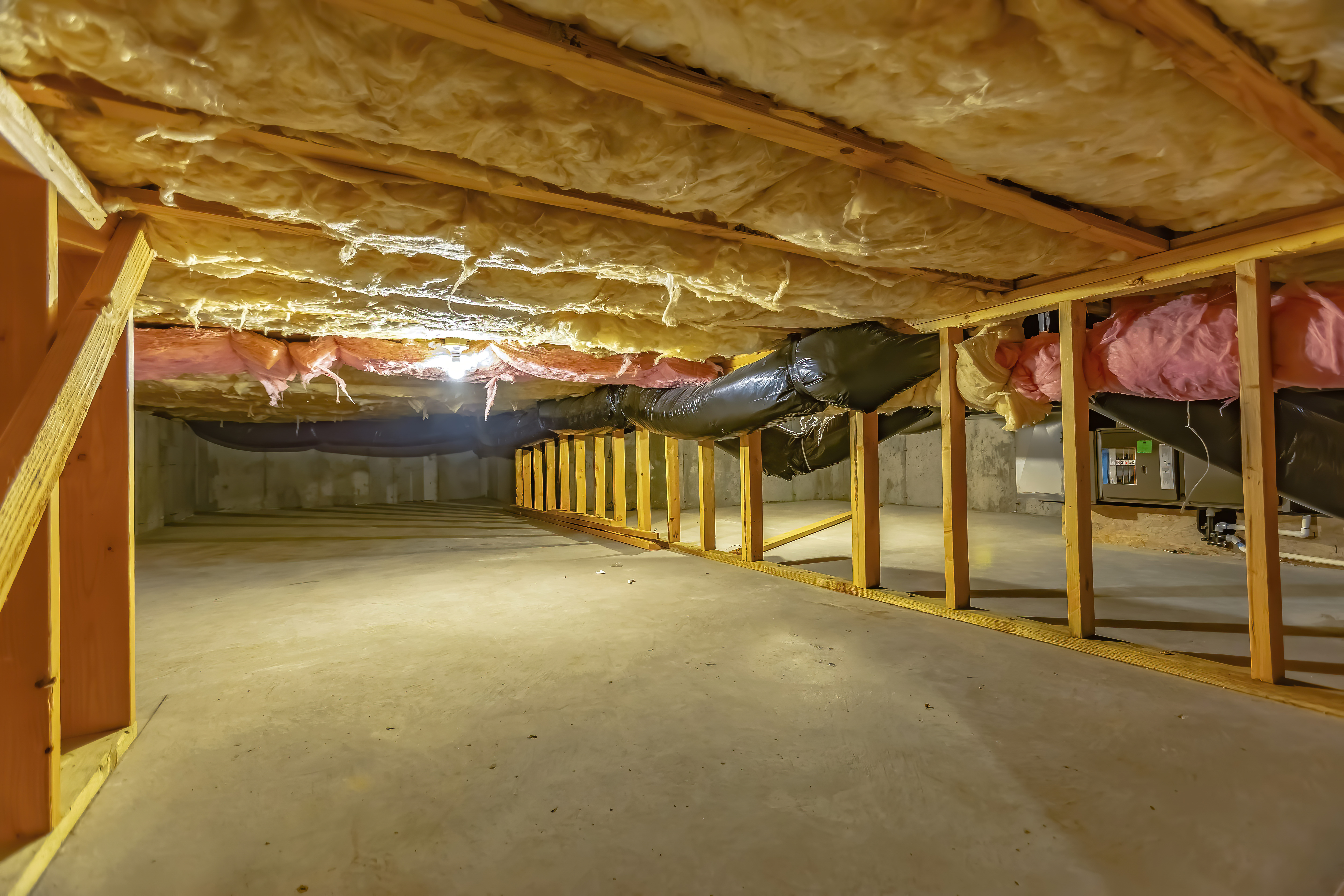
Crawl space insulation is an effective and relatively simple measure to improve the energy efficiency of a home. By applying insulation material in the crawl space, heat loss through the ground floor is limited and living comfort is significantly increased.
What is crawl space insulation?
With crawl space insulation, insulating material is applied to the underside of the ground floor or on the bottom of the crawl space. The choice depends on the available space, the moisture content, and the desired insulation value.
Two main forms:
- Floor insulation: insulation material is applied to the underside of the floor (usually with concrete floors).
- Crawl space insulation: insulation material is laid loosely on the bottom of the crawl space (suitable for limited height or moisture problems).
Applicable insulation materials
Depending on the situation, different materials are used:
|
Material |
Application |
Properties |
|
EPS beads or shells |
Floor insulation |
Moisture-resistant, pressure-resistant |
|
PUR foam |
Floor insulation |
High insulation value, seamless |
|
Glass wool or rock wool |
Floor insulation |
Good sound and heat insulation |
|
PIF foil or reflective foil |
Floor insulation |
Thin, suitable for limited space |
Advantages of crawl space insulation
- Lower energy costs: less heat loss through the floor
- Increased comfort: warm feet and less draft
- Less moisture and mold formation: especially with ground insulation
- Fast payback period: typically 5 to 8 years
Crawl space insulation costs
The price depends on the insulation method, the material, and the floor area. The guide prices below include VAT and installation.
|
Insulation type |
Price per m² |
Average total price (50 m²) |
|
Floor insulation |
€ 20 – € 35 |
€ 1,000 – € 1,750 |
|
Floor insulation |
€ 30 – € 50 |
€ 1,500 – € 2,500 |
Note: the final price also depends on accessibility, crawl space height, moisture content, and additional work.
Subsidy for crawl space insulation
Through the national government's ISDE scheme, you will receive a subsidy of €3.00 per m² for floor insulation and €5.50 per m² for crawl space insulation in 2025. If combined with a second measure within 24 months, the subsidy amount per m² will be doubled.
When is crawl space insulation possible?
- The crawl space is at least 35–50 cm high
- There is no extreme flooding or standing water
- There is sufficient access via a crawl hatch or the side of the house
Execution
The work usually takes one day and can be carried out with minimal inconvenience. In most cases, demolition work is not necessary. The space must be accessible and remain well-ventilated after insulation.
Conclusion
Crawl space insulation is a relatively inexpensive and profitable measure to make the home more comfortable, drier, and more energy-efficient. Especially in combination with other insulation measures and available subsidies, it is a wise investment with an attractive payback period.
Cavity wall insulation
Cavity wall insulation is one of the most cost-effective ways to make a home more sustainable. Applying insulation material in the existing cavity between the inner and outer wall ensures less heat loss, lower energy costs, and more comfort.
What is cavity wall insulation?
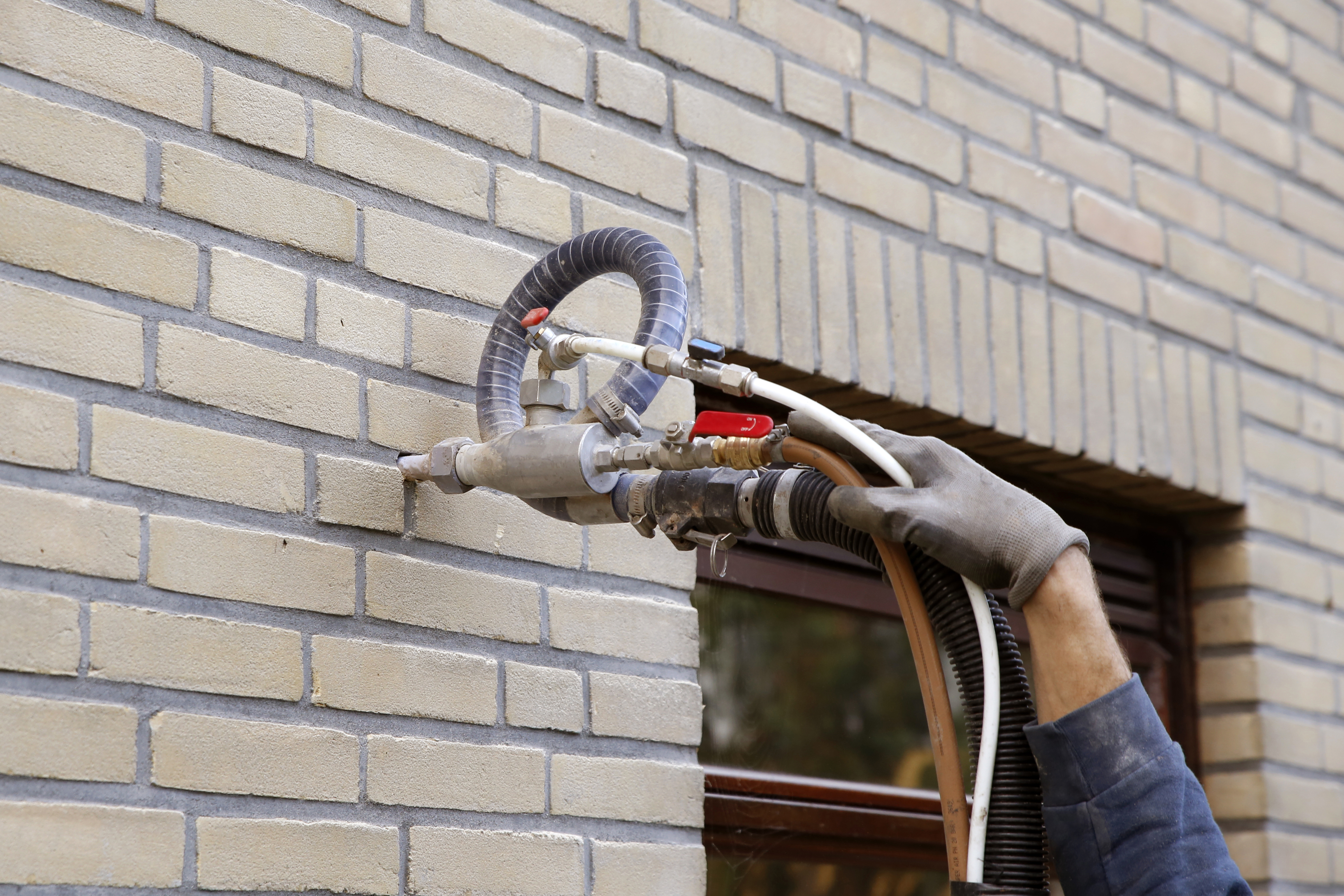
A cavity wall consists of two brick walls with an open space between them: the cavity. In homes built between approximately 1925 and 1980, this cavity is often not insulated at all or hardly insulated. Cavity wall insulation means that this empty space is filled with insulating material, usually through small drill holes in the outer wall.
Suitability
Not every home is suitable for cavity wall insulation. A structural inspection determines whether:
- The cavity is sufficiently wide (at least 4–5 cm)
- The facade is in good condition (no cracks or moisture ingress)
- There is no vapour-inhibiting paint on the exterior facade
- The cavity is clean and free of cement residue
Insulation materials
The most commonly used materials are:
|
Material |
Properties |
|
EPS beads |
High insulation value, water-repellent |
|
Glass wool flakes |
Good sound insulation, fire-safe |
|
PUR foam |
High insulation value, seamless filling |
|
UF foam (for renovation) |
Lightweight and suitable for narrow cavities |
The choice depends on the type of wall, the desired insulation value, and the moisture sensitivity of the facade.
Advantages of cavity wall insulation
- Reduction of gas consumption by up to 25% per year
- Warmer indoor climate, less draught
- No extensive renovation required
- Also has a sound-dampening effect
- Very short payback period (average 3–5 years)
- In many cases possible within one working day
Costs of cavity wall insulation
The price depends on the chosen material, the accessibility of the facade, and the total surface area. The indicative prices below include VAT and installation:
|
House type |
Surface area |
Indicative price for cavity wall insulation |
|
Terraced house |
± 40 m² |
€ 800 – € 1,200 |
|
Corner house |
± 60 m² |
€ 1,100 – € 1,600 |
|
Semi-detached house |
± 80 m² |
€ 1,500 – € 2,000 |
|
Detached house |
± 120 m² |
€ 2,200 – € 3,000 |
Subsidy for cavity wall insulation
Through the ISDE scheme in 2025, you will receive a subsidy of €5.25 per m². If you combine the measure with another insulation application or with a heat pump, the subsidy will be doubled to €10.50 per m². The condition is that the cavity wall insulation is carried out by a recognized insulation company.
Execution and planning
Cavity wall insulation is usually carried out within one day. The facade is provided with small drill holes at strategic points, into which the insulation material is injected. Afterwards, the holes are neatly closed and finished in the color of the existing joint.
Conclusion
Cavity wall insulation is an affordable, quick, and effective measure with a short payback period and a direct impact on comfort and energy consumption. Especially with current subsidies and high energy prices, it is a logical first step towards sustainability for many homes.
Floor insulation: comfort, savings, and return
Floor insulation is an effective measure to limit heat loss through the ground floor. It ensures a more comfortable indoor climate, lower energy costs, and contributes to the sustainability of the home. Unlike underfloor insulation, floor insulation is applied directly to the underside of the floor.
What is floor insulation?
Floor insulation involves applying insulating material to the underside of the ground floor, usually from the crawl space. This prevents cold from the crawl space from entering the house and heat from being lost through the floor.
This measure is particularly suitable for homes with a crawl space that is at least 40 to 50 centimeters high and accessible via a crawl hatch or from the outside.
Difference with underfloor insulation
|
Characteristic |
Floor insulation |
Ground insulation |
|
Application location |
Underside of the floor |
Bottom of the crawl space |
|
Insulation value |
Higher |
Lower |
|
Application |
For dry, easily accessible floors |
For damp or low crawl spaces |
|
Effect on comfort |
Immediately noticeable (warm floor) |
Less noticeable |
Applicable insulation materials
Common materials for floor insulation include:
- PU foam (sprayed): high insulation value, applied seamlessly
- Glass wool or rock wool (batts): fire-safe, moisture-regulating
- PIR boards or EPS boards: pressure-resistant, suitable for limited space
- PIF foil or reflective foil: suitable for use with wooden floors or limited height
The choice of material depends on the floor type (wood or concrete), available space, and desired insulation value.
Advantages of floor insulation
- Less heat loss and up to 15% lower heating costs
- Warmer floor and increased living comfort
- Less draft and condensation problems
- Increased value and durability of the home
- Limitation of moisture and mold formation from the crawl space
Costs floor insulation
The costs depend on the type of material, accessibility, and floor area. The prices below include VAT and labor costs:

|
House type |
Surface area |
Indicative price floor insulation |
|
Terraced house |
± 40 m² |
€ 1,200 – € 1,800 |
|
Corner house |
± 60 m² |
€ 1,800 – € 2,700 |
|
Semi-detached house |
± 80 m² |
€ 2,400 – € 3,600 |
|
Detached house |
± 100 m² |
€ 3,000 – € 4,500 |
On average, the price per m² is between € 30 and € 50, depending on the material and situation.
Subsidy for floor insulation
In 2025, the ISDE subsidy for floor insulation will be € 5.50 per m². If the measure is combined with another insulation measure within 24 months, the subsidy will be doubled to € 11.00 per m². The condition is that the work is carried out by a recognized insulation company.
Execution
The work usually takes one working day. The crawl space is made accessible via a crawl hatch, after which the insulation material is applied mechanically or manually. Afterwards, the floor seal is checked and the crawl space remains sufficiently ventilated.
Conclusion
Floor insulation is a profitable investment with direct effects on comfort, energy saving, and sustainability. Thanks to attractive subsidies in 2025 and the short payback period, it is a logical step for homeowners looking to make their homes more sustainable.
Insulating a flat roof: options, costs, and benefits
Insulating a flat roof is an effective measure to limit heat loss and significantly reduce the energy consumption of a house or building. A well-insulated flat roof ensures a more constant indoor climate, lower heating costs, and increases living comfort.
Why insulate a flat roof?
Flat roofs naturally have a lower insulation value than pitched roofs and are more susceptible to heat loss. Without insulation, up to 25% of the heat in a house is lost through the roof. By properly insulating the roof, you reduce energy costs and comply with current energy performance standards.
Insulation methods for flat roofs
There are three common ways to insulate a flat roof:
1. External insulation (warm roof)
The insulation is applied on top of the roof structure, under the roofing. This is the most common and recommended method for renovations and new constructions.
Advantages:
- Good thermal performance
- Roof structure remains warm and dry
- No interior modification needed
2. Internal insulation (cold roof)
Internal insulation of the roof, against the ceiling of the top floor. This is applied when external insulation is not possible.
Disadvantages:
- Risk of condensation and moisture problems
- Lower insulation value
- Reduction of ceiling height
3. Inverted roof
The insulation is laid on top of the existing roofing, with a ballast layer on top (e.g. gravel or tiles). This is mainly used for roof terraces or parking decks.
Advantages:
- Quick installation without major work
- Protection of existing roofing
Applicable Materials
Commonly used insulation materials for flat roofs include:
- PIR boards: high insulation value, thin and pressure-resistant
- EPS boards: lightweight, cost-effective
- XPS boards: moisture-resistant, suitable for inverted roofs
- Mineral wool: sound-insulating, less suitable for moisture exposure
The insulation value of the material is indicated in Rd-value (resistance in m²K/W). For roof insulation, a recommended minimum Rd-value of 3.5 applies (even 3.7 or higher for subsidies).
Costs for insulating a flat roof
The costs depend on the chosen insulation type, the material, and the roof accessibility. Below is an indication including VAT and labor costs:
|
Method |
Price per m² (average) |
Explanation |
|
Exterior insulation |
€ 70 – € 120 |
Including new roofing |
|
Interior insulation |
€ 40 – € 65 |
Cheaper, but less effective |
|
Inverted roof |
€ 60 – € 90 |
Including ballast layer |
Subsidy flat roof insulation
In 2025, roof insulation will fall under the Investment Subsidy for Sustainable Energy (ISDE). You will receive €16.25 per m² subsidy, provided the roof has a minimum Rd-value of 3.7. If you combine the measure with a second insulation application, the subsidy will be doubled to €32.50 per m².
Conditions:
- Roof must have a minimum insulation area of 20 m²
- Work must be carried out by an accredited company
- Application within 24 months after completion
Execution and planning
Roof insulation can typically be carried out within one to a few working days. With external insulation, the existing roofing is often replaced or renewed. With internal insulation, there are limited works, but ceiling finishing may be necessary.
Conclusion
Insulating a flat roof is an investment with immediately noticeable comfort, structural energy savings, and increased property value. Exterior insulation is technically the best solution, while interior insulation offers an alternative when limitations exist. Thanks to attractive subsidies in 2025, it is more financially appealing than ever before.
Floor insulation: moisture control and comfort from the crawl space
Floor insulation is an insulation method where insulating material is applied to the floor of the crawl space. It is particularly effective in damp or difficult-to-access crawl spaces and contributes to a healthier indoor climate and a lower energy bill.
What is floor insulation?
With floor insulation, an insulating and moisture-regulating material is loosely applied to the floor of the crawl space. This prevents cold and moisture from the ground from rising to the floor of the house. The measure is particularly suitable for homes with a low or poorly accessible crawl space, where floor insulation is not possible.
When is floor insulation suitable?
- The crawl space is at least 30 to 50 cm high
- There is a humid or cold indoor climate
- Floor insulation is technically or financially not feasible
- There are problems with rising damp or mold
Soil insulation is often the first step in improving the indoor climate, and can also be used in combination with floor insulation for extra effect.
Materials for soil insulation
Commonly used materials include:
|
Material |
Properties |
|
EPS beads |
Lightweight, moisture-resistant, insulating |
|
Insulation chips |
Durable, good draft sealing |
|
Insulation shells |
Natural origin, suitable for damp conditions |
|
Foil or bubble wrap |
Vapour barrier, less insulating |
The choice of material depends on the moisture management, desired insulation value, and the construction of the crawl space.
Advantages of floor insulation
- Reduced humidity in the crawl space
- Less heat loss through the floor
- Maintained floor temperature and comfort
- Reduced risk of mold, wood rot, and musty air
- Fast and relatively inexpensive execution
- Suitable for almost any type of home
Costs of floor insulation
The price depends on the choice of materials, the height of the crawl space, and the number of square meters to be insulated. The guide prices below include VAT and labor costs:
|
Home type |
Surface |
Indicative price floor insulation |
|
Terraced house |
± 40 m² |
€ 800 – € 1,400 |
|
Corner house |
± 60 m² |
€ 1,200 – € 2,000 |
|
Semi-detached house |
± 80 m² |
€ 1,600 – € 2,600 |
|
Detached house |
± 100 m² |
€ 2,000 – € 3,200 |
On average, the price per m² is between €20 and €35.
Subsidy for floor insulation
In 2025, the ISDE subsidy for floor insulation will be €3.00 per m². When combined with a second measure, such as roof or cavity wall insulation, this amount will be doubled to €6.00 per m². The minimum area for a subsidy is 20 m². The insulation must be installed by a certified insulation company.
Execution and planning
Floor insulation is usually completed within one day. The insulation material is blown or spread into the crawl space via the access hatch. No demolition work is required, and residents can usually stay at home during the work. Ventilation openings remain intact to prevent condensation.
Conclusion
Floor insulation is an effective and accessible way to increase living comfort, reduce moisture problems, and save energy. It is a valuable intervention, especially for older homes with a damp or cold crawl space, particularly in combination with available subsidies.
Subsidy for facade insulation in 2025
In 2025, as a homeowner, you are eligible for an attractive subsidy on facade insulation through the Investment Subsidy for Sustainable Energy and Energy Saving (ISDE). This scheme supports energy-saving measures and offers a fixed subsidy amount per insulated square meter of exterior facade.
Facade insulation subsidy amounts
- Basic subsidy: € 20.25 per m²
- Biobased bonus: € 6.00 per m² extra
- Doubling upon combination: € 40.50 per m² (excl. biobased bonus), if you carry out a second energy-saving measure within 24 months
Conditions for subsidy
To be eligible for a subsidy for facade insulation in 2025, the following conditions apply:
- Minimum insulation area: 10 m²
- Maximum subsidy area: 170 m² per dwelling
- Minimum insulation value (Rd): 3.5 m²K/W
- Execution: The work must be carried out by a certified insulation company. DIY is not permitted.
Combining measures
When combining facade insulation with at least one other energy-saving measure, such as roof insulation, floor insulation or a heat pump, the subsidy amounts per m² are doubled. This significantly increases the financial benefit and ensures a shorter payback period.
Bio-based insulation material
Are you using a bio-based insulation material such as wood fiber, cellulose, or hemp? Then you will receive an additional subsidy of € 6.00 per m², on top of the basic amount or the doubled amount. This encourages nature-friendly insulation.
Example calculation
Suppose: you have 60 m² of facade insulation installed with bio-based material and you combine this with roof insulation.
- Basic subsidy: 60 m² × € 20.25 = € 1,215
- Doubling on combination: 60 m² × € 20.25 = € 1,215 extra
- Bio-based bonus: 60 m² × € 6.00 = € 360
- Total subsidy: € 2,790
Conclusion
Facade insulation is extra attractive in 2025 thanks to:
- Increased subsidy amounts per square meter
- Bonus for nature-friendly materials
- Doubling of the amount when combined with other measures
- Applicability to many existing homes with uninsulated exterior walls
The investment in facade insulation will therefore be recouped more quickly and contributes to lower energy consumption, more comfort, and a better energy label.
ISDE subsidy for cavity wall insulation in 2025
In 2025, as a homeowner, you can receive a subsidy for having cavity wall insulation carried out through the Investment Subsidy for Sustainable Energy and Energy Saving (ISDE). This scheme aims to stimulate energy-saving measures and reduce the CO₂ emissions of existing homes.
Subsidy amounts
- Basic subsidy: € 5.25 per m² cavity wall insulation
- Biobased bonus: € 1.50 per m² extra when using nature-friendly insulation material
- Doubling upon combination: when combining with at least one other measure within 24 months, the subsidy amount will be increased to € 10.50 per m² (excluding biobased bonus)
Conditions
To be eligible for a subsidy on cavity wall insulation in 2025, the following conditions apply:
- Minimum area: 10 m²
- Maximum area: 170 m² per dwelling
- Minimum insulation value: Rd-value of at least 1.1 m²K/W
- Execution: the work must be carried out by a recognized insulation company; DIY is excluded from subsidies
- Application deadline: subsidy must be applied for within 24 months of implementation
- Combination benefit: for doubling the subsidy amount, cavity wall insulation must be combined with another measure, such as roof insulation, floor insulation or a heat pump
Application of biobased materials
If you opt for insulation material of biological origin (such as wood fiber, cellulose or sheep wool), you are eligible for an additional subsidy bonus of €1.50 per m². This bonus applies on top of the standard subsidy amounts.
Example calculation
For 60 m² of cavity wall insulation with bio-based material and a second measure:
- Basic subsidy: 60 m² × € 5.25 = € 315
- Doubling upon combination: + € 315
- Bio-based bonus: 60 m² × € 1.50 = € 90
- Total subsidy: € 720
Important points
- The subsidy only applies to existing homes; new constructions or extensions are excluded
- The subsidy will be paid out after the work has been carried out and all requirements have been met
- When applying, you must have proof, including invoices, before and after photos, material data, and a completed registration code from the executing company
Conclusion
Cavity wall insulation is extra attractive in 2025 thanks to the increased ISDE subsidy. By combining it with other energy-saving measures and possibly using bio-based insulation material, the subsidy amount can increase significantly. This results in a lower investment, a shorter payback period, and an increased energy performance of the home.
Subsidy for floor insulation in 2025
In 2025, floor insulation is again included in the Investment Subsidy for Sustainable Energy and Energy Saving (ISDE). This subsidy is intended to financially support private homeowners in taking energy-saving measures, including insulating the ground floor.
Subsidy amounts
- Basic subsidy: € 5.50 per m²
- Doubled subsidy: € 11.00 per m² when combined with a second measure within 24 months
- Bio-based bonus: € 2.00 per m² extra when using bio-based insulation materials such as wood fiber, cellulose or flax
Conditions
To be eligible for a subsidy on floor insulation in 2025, the following conditions apply:
- Minimal area to be insulated: 20 m²
- Maximum subsidy area: 130 m²
- Minimum insulation value (Rd): 3.5 m²K/W
- Execution: the work must be carried out by a recognized insulation company; DIY does not count
Combination discount
When floor insulation is combined with a second energy-saving measure, such as roof insulation, facade insulation, cavity wall insulation, a heat pump, or a solar water heater, the subsidy amount per m² is doubled.
Bio-based Materials
When using nature-friendly insulation materials, you will receive an additional bonus of €2.00 per m², on top of the basic or doubled subsidy. Bio-based materials include wood fiber, cellulose, hemp, and sheep's wool.
Example Calculation
For 80 m² of floor insulation, carried out with bio-based material and combined with a second measure:
- Basic subsidy: 80 m² × € 5.50 = € 440
- Doubling when combined: + € 440 = € 880
- Bio-based bonus: 80 m² × € 2.00 = € 160
- Total subsidy amount: € 1,040
Conclusion
Thanks to increased subsidy amounts, a doubling scheme for combinations, and extra incentives for bio-based materials, floor insulation will be more attractive than ever in 2025. The scheme lowers investment costs, shortens the payback period, and significantly increases living comfort.
By insulating in a timely manner and strategically combining it with other measures, homeowners can benefit maximally from the available financial support.
Facade insulation from the inside (internal wall insulation)
Internal facade insulation is a method where insulating material is applied to the inside of an exterior wall. This is a suitable solution for homes where the exterior facade cannot or should not be modified, such as with monumental buildings or buildings with a protected facade appearance.
What is internal wall insulation?
With internal wall insulation, an insulation layer is placed against the inside of the existing exterior wall. This layer is usually constructed from insulation boards or blankets in combination with a vapor barrier and a finish such as plasterboards. The whole is finished so that it fits seamlessly into the interior.
Construction of internal wall insulation
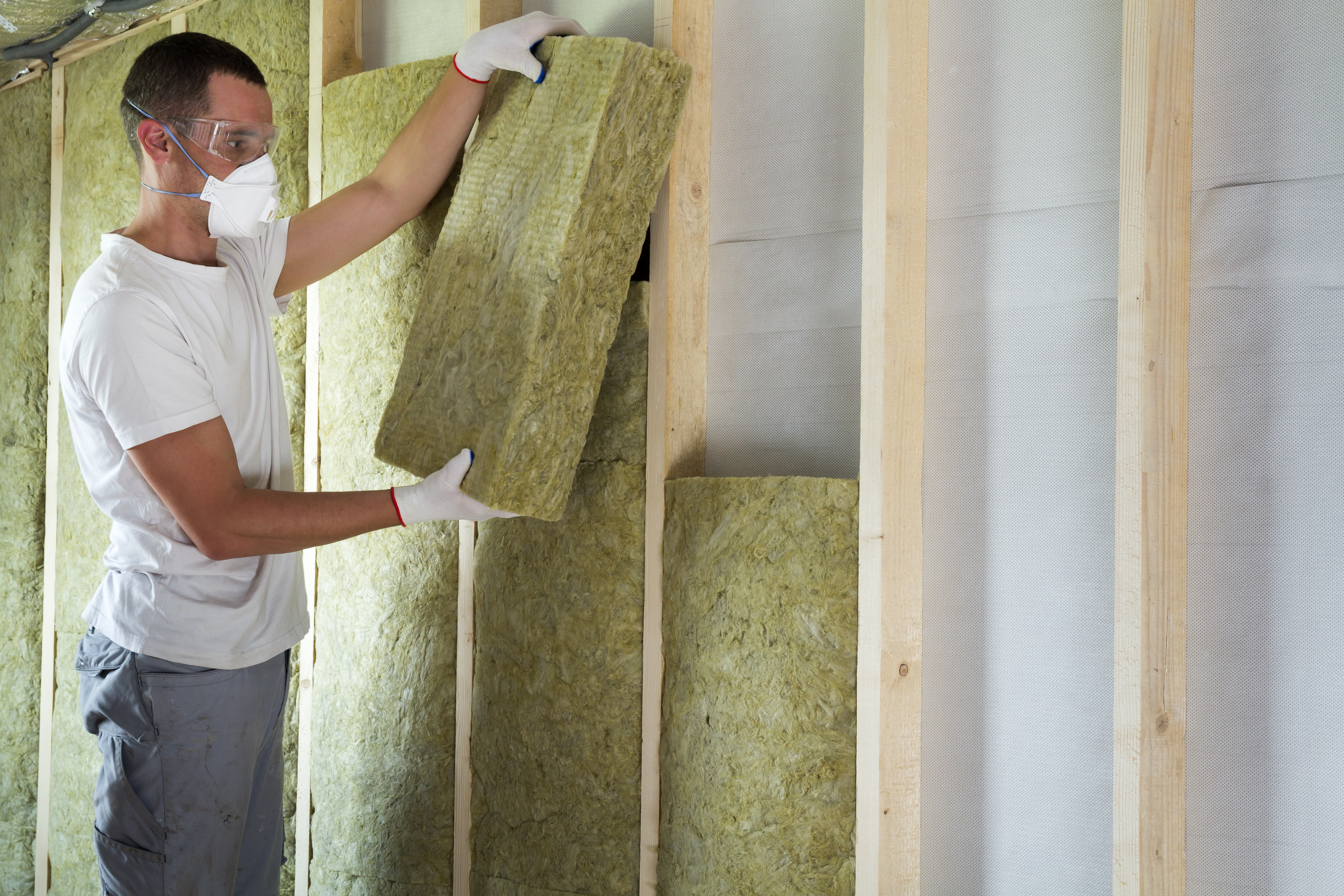 Construction profiles (wood or metal)
- Insulation material (glass wool, rock wool, PIR, resol foam or wood fiber)
- Vapor barrier to prevent moisture problems
- Finishing layer (usually plasterboard or wall panels)
Advantages
- Preservation of the facade view
The exterior of the building remains intact – ideal for heritage or urban planning restrictions. - Improved thermal comfort
Less heat loss through cold exterior walls; the room heats up faster. - Noise reduction
Especially when using mineral wool, interior insulation also provides sound absorption. - Relatively easy to combine with interior renovation work
Such as new floor or wall finishes, piping, or interior walls.
Disadvantages and points to consider
- Loss of space
Internal wall insulation typically takes up 6 to 12 centimeters of space per wall. - Increased risk of condensation and mold formation
Incorrect placement or lack of a vapor barrier can lead to moisture problems between the insulation and the wall. - More detailing required
Pipes, sockets, windows, and door frames must be carefully adapted. - Lower efficiency than external insulation
Because the thermal mass of the wall is not insulated, the effect is slightly less than with external facade insulation.
Insulation materials
- Glass wool or rock wool: good thermal and acoustic performance
- PIR or resol foam: high insulation value with low thickness
- Wood fiber or cellulose: bio-based options with breathability
- EPS or XPS boards: rigid boards for dry walls with a smooth surface
Technical requirements (for subsidies, etc.)
- Minimum Rd-value: 3.5 m²K/W
- Applied airtight and vapor-retardant
- No thermal bridges or open connections
- Only applicable to dry, undamaged exterior walls
Cost indication
The cost of interior wall insulation is on average between € 60 and € 120 per m², depending on the chosen insulation material, the finish, and the complexity of the space. Monumental buildings or homes with many details or recesses (windows, doors) are often more expensive.
Conclusion
Interior wall insulation is a suitable solution when exterior facade insulation is not possible or desirable. The measure increases living comfort, lowers energy bills, and can be part of a broader insulation plan. Professional execution is necessary due to the risk of moisture problems. If installed correctly, it provides a durable and comfortable indoor climate.
Subsidy for garage insulation (2025)
Insulating a garage is eligible for a subsidy under certain conditions through the Investment Subsidy for Sustainable Energy and Energy Saving (ISDE). This scheme is intended for energy-saving measures in existing homes.
When is a subsidy possible?
A subsidy for garage insulation is only applicable if:
- The garage is heated or is used as living space
- The garage is part of the main house (so not a separate building or extension)
- The insulation is applied to the outside of the house, so for example to the facade or the roof of the garage
- The measure is carried out by a recognized insulation company
Internal walls between the garage and the house itself are generally not eligible for a subsidy, unless the space is actually counted as living space.
What is subsidized?
Depending on the component being insulated, the following subsidy amounts apply in 2025:
- Facade insulation (e.g., garage facade): € 20.25 per m²
- Roof insulation (if the garage roof is insulated and it is part of the thermal envelope): € 30 per m²
- Floor insulation (for heated garage floor above crawl space): € 5.50 per m²
- When using bio-based materials (such as wood fiber or cellulose): bonus of € 1.50 to € 6 per m² extra
If you have at least two energy-saving measures carried out within 24 months (such as roof and facade insulation), the subsidy amounts are doubled.
Conditions at a glance
- The garage must actually be part of the heated living space
- The insulation must meet the minimum insulation value (Rd value) established for ISDE
- The work must be carried out by a qualified company
- You must apply for the subsidy within 24 months of completion
- The garage may not be a detached outbuilding or solely a storage space
No subsidy for:
- Detached garages that are not connected to the house
- Unheated garages that do not fall within the thermal envelope of the home
- Insulation that you carry out yourself or that does not meet the technical requirements of ISDE
- Extensions, new constructions, or renovations that increase the living area
Conclusion
Garage insulation will only be eligible for a subsidy in 2025 if the space is structurally heated and functionally part of the home. Only facades, roofs, and possibly floors of this space can then be counted as eligible. By combining with a second measure within two years, the subsidy amount is increased, making investment in insulation financially more attractive.
Roof insulation subsidy in 2025
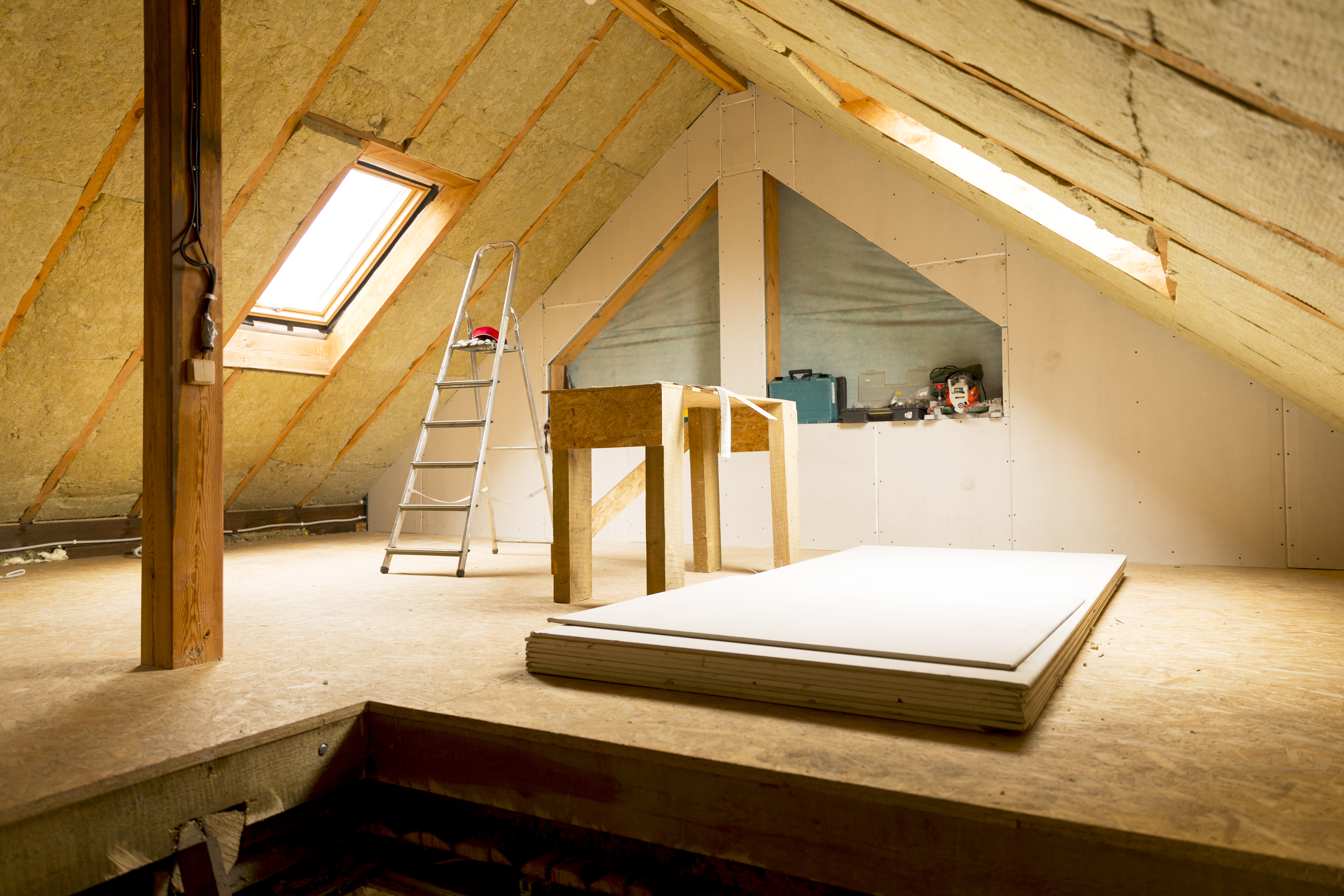
In 2025, the government will make a subsidy available through the Investment Subsidy Sustainable Energy and Energy Saving (ISDE) for insulating existing roofs. This scheme is intended to encourage homeowners to make their homes more energy-efficient by reducing heat loss through the roof.
The subsidy is applicable to both pitched and flat roofs, provided they are part of the heated envelope of the home.
1. Subsidy amounts per square meter
The amount of the subsidy for roof insulation depends on the type of material, the method of execution, and whether it is combined with another measure.
- Basic subsidy: € 16.25 per m²
- Doubled subsidy: € 32.50 per m² when combined with at least one other measure within 24 months
- Bio-based bonus: € 5.00 per m² extra when using nature-friendly insulation materials, such as wood fiber or cellulose
This means that with correct execution and combination, you can receive up to € 37.50 per m² in subsidies.
2. Conditions for roof insulation subsidy
To be eligible for this subsidy in 2025, a number of technical and administrative conditions must be met:
Technical conditions:
- Minimum insulation value: The applied roof insulation must have a minimum Rd value of 3.5 m²K/W
- Minimum area to be insulated: 20 m²
- Maximum area eligible for subsidy: 200 m² per dwelling
- Roof must be part of the thermal envelope: the roof must be above a heated space
Implementation conditions:
Implementation conditions:
- The work must be carried out by a recognized, professional insulation company
- Applying the insulation yourself is excluded from subsidies
- You must be able to demonstrate which material was used, including its R-value, invoice, proof of payment, photos, and date of execution
- The subsidy must be applied for within 24 months of the execution date of the first measure (if combined)
3. Bio-based materials: a bonus for sustainability
The government encourages the use of environmentally friendly insulation materials. That is why you will receive an additional subsidy of €5.00 per m² when using bio-based insulation. Bio-based materials include:
- Wood fiber
- Cellulose
- Flax
- Hemp
- Sheep wool
These materials often have a favorable moisture-regulating capacity and a low environmental impact. The condition is that the product used is officially recognized as bio-based and that this is stated on the invoice and material description.
4. Combining for subsidy doubling
When you combine your roof insulation with a second energy-saving measure within 24 months, the subsidy amount for both measures will be doubled. For example, you can combine with:
- Floor insulation
- Cavity wall insulation
- Facade insulation
- Heat pump installation
- Solar water heater
- Connection to a heating network
This combination rule makes roof insulation financially considerably more attractive and stimulates structural sustainability of homes.
5. Example calculation
You have 100 m² of roof insulated with bio-based material and combine this with floor insulation within 24 months.
- Basic subsidy: 100 m² × € 16.25 = € 1,625
- Doubling upon combination: + € 1,625 = € 3,250
- Biobased bonus: 100 m² × € 5.00 = € 500
- Total subsidy: € 3,750
This subsidy will be paid out after implementation and approved application via the RVO portal.
6. Non-eligible situations
Subsidy for roof insulation is not applicable in the following cases:
- New construction homes or roofs that have been added as an extension to existing buildings (such as an extension or dormer window)
- Unheated spaces (such as a cold attic that is not used as living space)
- Insulation that does not meet the minimum Rd value
- DIY insulation, even if the material was professionally purchased
- Roofs that have previously been subsidized through another scheme
Conclusion
In 2025, roof insulation is one of the most profitable and generously subsidised measures for making homes more sustainable. Thanks to increased subsidy amounts, an extra bonus for bio-based materials, and a doubling when combined with other measures, homeowners can save thousands of euros on their investment.
The condition is, however, that the measure is implemented correctly and applied for in a timely manner, with complete documentation and proof.
Facade insulation – What is it and why is it important?
Facade insulation is a structural measure that improves the thermal performance of a home's exterior walls. This is done by adding insulation material to the outside, inside, or cavity of the facade. The goal is to reduce heat loss, lower energy consumption, and increase living comfort.
Types of Facade Insulation
1. Cavity Wall Insulation
With cavity wall insulation, insulating material is injected into the space (cavity) between the inner and outer wall of an existing facade. This is a relatively simple and affordable method, provided the cavity is suitable.
Characteristics:
- Fast execution (1 to 2 days)
- Limited costs per square meter
- No change to the outside or inside
- Only applicable to cavity walls (houses built after approx. 1925)
2. External wall insulation
With external facade insulation, insulation material is applied to the outside of the house, finished with plaster or facade cladding.
Features:
- Highest insulation value
- Visual refresh of the facade
- Effective for homes without a cavity or with a poor cavity wall
- Often requires a building permit
3. Internal wall insulation
Insulation on the inside of the exterior wall, particularly used for monuments or facades that cannot be altered from the outside.
Features:
- Suitable when preserving the exterior facade
- Less impact on the streetscape
- Loss of space inside (5–12 cm per wall)
- Increased risk of condensation, requires expert installation
Advantages of facade insulation
- Energy saving: reduction of heating costs by reducing heat loss through walls
- Higher living comfort: more stable indoor temperature and less draft
- Value increase: improvement of the energy label increases the market value of the home
- Sound insulation: better acoustics and less ambient noise
Subsidy for facade insulation (2025)
In 2025, you are eligible for an attractive subsidy through the Investment Subsidy for Renewable Energy and Energy Saving (ISDE).
Subsidy amounts:
- Basic subsidy: € 20.25 per m²
- Doubling when combined with a second measure: € 40.50 per m²
- Biobased bonus (wood fiber, cellulose, flax): + € 6.00 per m²
Conditions:
- Minimum 10 m², maximum 170 m²
- Insulation value: Rd ≥ 3.5 m²K/W
- Execution by an accredited insulation company
- Subsidy application within 24 months of execution
- Only applicable to existing homes
Cost Estimate
The costs for facade insulation vary by type:
- Cavity wall insulation: € 15 – € 30 per m²
- External wall insulation: € 90 – € 150 per m²
- Internal wall insulation: € 60 – € 120 per m²
The investment is partially recouped through lower energy costs and subsidies. The payback period is typically between 5 and 10 years, depending on the type of house and the chosen method.
When is facade insulation suitable?
- Homes with uninsulated or poorly insulated exterior walls
- During renovation or energy upgrade of existing homes
- When facade maintenance can be combined with insulation
- If you want to structurally improve the energy label
- For noise problems in urban areas
Technical considerations
- Check that the exterior wall is free of moisture before execution
- Cavity wall must be sufficiently wide and free of construction debris
- Exterior insulation often requires roof overhang adjustment and drainage
- Interior insulation requires extra attention to thermal bridges and condensation
- Insulation value, material choice and vapor tightness determine efficiency
Conclusion
Facade insulation is an effective way to save energy, increase living comfort, and improve the value of your home. By choosing a suitable method – cavity, interior, or exterior insulation – and having it professionally installed, you will achieve a structural improvement of the building envelope. In combination with available subsidies, it is also financially attractive to implement this measure in 2025.
Disadvantages of cavity wall insulation
Although cavity wall insulation is an efficient and affordable method to limit heat loss, there are also some disadvantages and points to consider:
1. Not suitable for all walls
Cavity wall insulation is only possible for homes with a cavity wall construction. Houses built before approximately 1925 often do not have a cavity wall and are therefore excluded from this measure.
2. Risk of moisture problems if the wall is in poor condition
If the facade bricks or joints are in poor condition, rainwater can penetrate. With an insulated cavity, the moisture can evaporate less easily, which can lead to damp patches or mold formation on the inside of the wall. A technical inspection beforehand is essential.
3. Limited insulation value
The insulating effect of cavity wall insulation is limited to the width of the cavity (often 4 to 6 cm). This results in a lower Rd-value compared to, for example, external wall insulation, which offers more space for thicker insulation layers.
4. No aesthetic improvement of the facade
Because the insulation is applied to the inside of the cavity, the appearance of the facade does not change. Any damage, dirt, or aging of the exterior wall remains visible.
5. Limited sound insulation
Cavity wall insulation has little effect on sound insulation. Homes located along busy roads or where noise reduction is a priority often require additional measures for windows and facades.
6. Invisible execution can lead to uncertainty
Because the insulation material is blown into the wall and is therefore not visible after installation, it can be difficult for residents to check whether the work has been carried out completely and correctly. A good choice of an accredited insulation company is therefore important.
7. Not suitable for contaminated or filled cavities
If the cavity is already partially filled with construction debris, cement residue, or old insulation, it is not possible to apply new material evenly. This can cause cold bridges or moisture problems.
8. Limited subsidy for small areas
The subsidy amounts for cavity wall insulation are relatively low (€ 5.25 per m²). For a small facade area, the financial contribution is therefore modest, especially compared to facade insulation on the outside, where higher amounts apply.
Summary
Cavity wall insulation is quick and relatively inexpensive to apply, but has some limitations:
- Not applicable to homes without a cavity or with a contaminated cavity
- Limited insulation value compared to external insulation
- Risk of moisture problems with poor facade maintenance
- No improvement in appearance or acoustic comfort
- Result cannot be visually verified
Recommendation
A thorough preliminary investigation is necessary to assess the condition of the facade, cavity width, moisture load, and structural conditions. Only on this basis can it be responsibly decided whether cavity wall insulation is technically and economically the right choice.
Insulating a wooden floor – What does it involve?
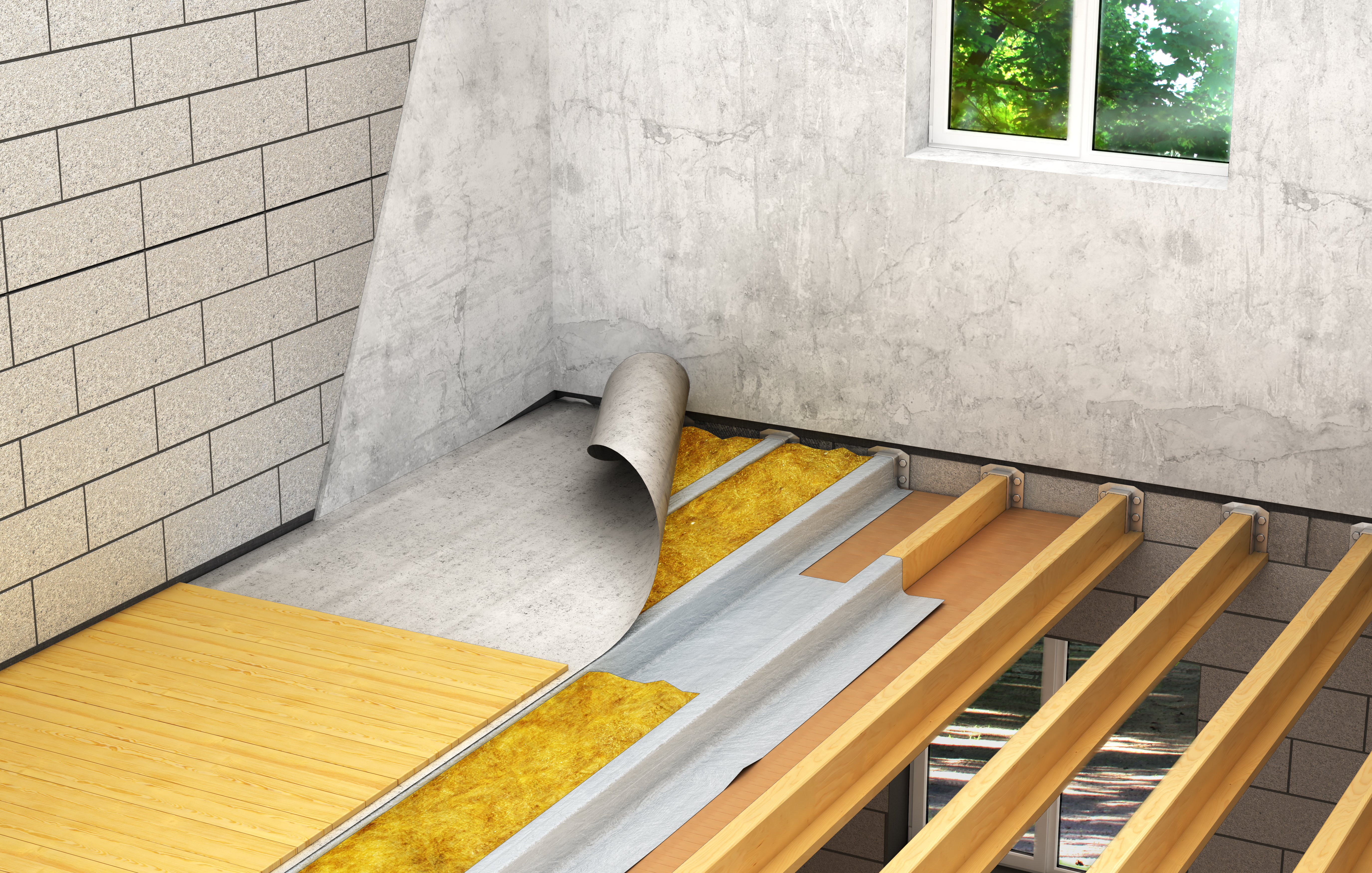
Insulating a wooden floor is an energy-saving measure where insulating material is applied under or between the wooden floor structure. This type of floor is common in older homes (pre-1970) with a crawl space. By thermally improving the floor, heat loss through the ground floor is limited and living comfort is improved.
Method of insulation
1. Insulation via the crawl space (underside of the floor)
The most commonly used method for wooden floors is to apply insulation material to the underside of the floor joists from the crawl space.
Characteristics:
- Applicable for crawl spaces of at least 35–50 cm high
- Minimal demolition or dismantling required
- Most common insulation materials: glass wool, rock wool, PUR boards, EPS, wood fibre boards
2. Insulation from above (on top of the floor)
When there is no crawl space or when it is difficult to access, insulation is applied to the top of the floor. The existing floor covering is removed and insulation material is placed between or on the joists.
Characteristics:
- More drastic, as the floor needs to be partially broken open
- Suitable for renovation or replacement of the floor
- Often requires finishing with new floor covering
Insulation materials
For wooden floors, the following materials are widely used:
- Glass wool or rock wool: good thermal and acoustic performance, flexible application
- EPS boards: lightweight, moisture-insensitive, easy to install
- PUR/PIR boards: high insulation value with low thickness
- Wood fiber boards: bio-based, breathable and moisture-regulating
Advantages of wooden floor insulation
- Energy saving: reduces heat loss through the floor and lowers gas consumption
- Higher comfort: less draft and cold radiation from the floor
- Acoustic damping: sound transmission through the floor is reduced
- Healthier air quality: prevents rising damp from the crawl space
Disadvantages and points to consider
- Limited effectiveness with poor crawl space ventilation: without sufficient ventilation, moisture problems can arise
- Possible adjustment of pipes: in some systems, pipework may need to be temporarily removed or adjusted
- Wooden floor must be dry and in good condition: in case of wood rot or mold, repair is necessary first
- Insulation from above is invasive: temporary unusability of the floor and refinishing required
Subsidy for wooden floor insulation (2025)
The government provides subsidies through the ISDE scheme:
- Basic subsidy: €5.50 per m²
- Doubling when combined with a second measure: €11.00 per m²
- Biobased bonus: €2.00 extra per m² when using biobased insulation material
- Conditions: minimum 20 m², Rd-value ≥ 3.5 m²K/W, carried out by a recognized company
Cost Estimate
The cost of insulating a wooden floor averages between €25 and €50 per m², depending on material choice, accessibility, and finishing. Additional costs for repairing floor coverings or adjusting pipes may vary.
When is floor insulation recommended?
- For homes with a wooden ground floor
- If there is an accessible crawl space
- If there is draft, cold floors, or high energy costs
- During renovation or improvement of the thermal envelope of the home
Conclusion
Insulating a wooden floor is an effective way to prevent heat loss, increase living comfort, and structurally reduce energy consumption. The measure is relatively affordable, quick to implement, and eligible for subsidies. Proper preparation and expert execution are essential for an optimal result.
Costs for insulating a garage
Insulating a garage is a measure that reduces energy consumption and makes the space suitable for other functions, such as a workspace, hobby room, or utility room. The costs depend on the type of insulation, the surface area, accessibility, and the desired finish.
Average cost per component
|
Garage insulation component |
Average cost per m² (incl. VAT and installation) |
|
Roof insulation |
€ 45 – € 80 |
|
Wall insulation (inside) |
€ 50 – € 100 |
|
Wall insulation (exterior) |
€ 90 – € 150 |
|
Cavity wall insulation |
€ 20 – € 40 |
|
Floor insulation |
€ 25 – € 50 |
|
Insulate/replace garage door |
€ 300 – € 1,200 total (depending on type) |
Note: prices are indicative and based on average contractor prices in 2025.
Total cost indication per project type
1. Basic package: Cavity and roof insulation only
- Cavity wall (20 m²): 20 × € 30 = € 600
- Roof (25 m²): 25 × € 60 = € 1,500
- Total indication: approx. € 2,100
2. Full package (floor, walls, roof, door)
- Roof: 25 m² × € 70 = € 1,750
- Walls (inside): 30 m² × € 80 = € 2,400
- Floor: 20 m² × € 40 = € 800
- Insulated garage door: approx. € 900
- Total estimate: approx. € 5,850
Influences on the price
- Garage Accessibility (crawl space, interior finishing)
- Type of Insulation Material (standard vs. bio-based or high Rd-value)
- Presence of pipes or connections in the walls/floor
- Choice of interior or exterior facade insulation
Subsidy and
Cost Reduction
For indoor, heated garages that are functionally part of the home, you can use the ISDE subsidy scheme. This can reduce costs by hundreds of euros, especially if you combine it with a second measure. The subsidy can amount to:
- € 11.00 per m² for facade or roof insulation when combined
- € 5.50 per m² for floor insulation
- + bonus for bio-based materials
Conclusion
The costs for insulating a garage range from a few hundred euros (for minor cavity wall or floor insulation) to over five thousand euros for complete insulation including door replacement. The exact price depends on the surface area, material choice, accessibility, and finishing. In many cases, subsidies are available that reduce the net investment and accelerate the payback period.Roof insulation – What is it and why apply it?
Roof insulation is an energy-saving measure where thermal insulation material is applied to, in, or under the roof of a house or building. Because a significant portion of heat is lost through the roof, this is one of the most effective insulation measures.
Types of roof insulation
1. Insulating a sloping roof – from the inside (attic side)
With this method, insulation material is placed on the inside of the roof sheathing, usually between the rafters in the attic.
Characteristics:
- Most commonly used in existing homes
- Relatively easy to install
- Finishing possible with plasterboard or wooden paneling
- Suitable for unheated attic floors
2. Insulating a pitched roof – from the outside (sarking roof)
In this case, the insulation material is applied on top of the roof sheathing, under the roof tiles. This is usually done during roof renovation.
Features:
- Highest insulation value
- No loss of interior space
- Ideal when replacing roofing
- More drastic and costly
3. Flat roof insulation – on the outside (warm roof)
The insulation material is applied on top of the roof structure, under the roofing.
Features:
- Prevents cold bridges
- Protects the roof structure against temperature fluctuations
- Most chosen method for new construction or roof replacement
4. Insulating a flat roof – from the inside (cold roof)
Insulation is placed under the roof structure, on the inside of the ceiling.
Features:
- Less invasive for existing buildings
- Higher chance of condensation problems
- Only suitable for well-ventilated roof structures
Applicable insulation materials
- Glass wool or rock wool: flexible, good insulation value, relatively inexpensive
- PIR or PUR boards: high insulation value per cm, suitable for limited space
- EPS/XPS: pressure-resistant and moisture-resistant, especially for flat roofs
- Wood fiber or cellulose: bio-based, vapor-permeable, ecologically responsible
Advantages of roof insulation
- Up to 30% less heat loss through the roof
- Higher living comfort: less cold downdraft, warmer attic and rooms
- Lower energy costs: average 15% to 25% savings on gas consumption
- Improvement of the energy label
- Increase in property value
- Less CO₂ emissions
- Sound insulation from outside
Disadvantages and points to consider
- Roof renovation may be necessary with exterior insulation
- Interior insulation costs interior space and can cause cold bridges if not properly connected
- Moisture control is essential with interior insulation (vapor barrier required)
- Costs can increase with complex roof shapes or difficult-to-access attics
Cost Estimate Roof Insulation (2025)
|
Type of Roof Insulation |
Indicative Price per m² (incl. VAT and installation) |
|
Inside of pitched roof |
€ 35 – € 60 |
|
Outside of pitched roof |
€ 60 – € 100 |
|
Flat roof (outside) |
€ 45 – € 85 |
|
Flat roof (inside) |
€ 30 – € 50 |
Costs depend on accessibility, roof type, material and finish.
Subsidy for roof insulation (2025)
Through the ISDE scheme, you can apply for a subsidy for roof insulation:
- Basic subsidy: € 16.25 per m²
- Doubling when combined with another measure: € 32.50 per m²
- Biobased bonus: € 5.00 per m² extra
- Conditions: minimum 20 m², Rd ≥ 3.5 m²K/W, professional execution required
When is roof insulation suitable?
- Homes with uninsulated or poorly insulated roofs
- Existing homes with an attic space or flat roof
- Homes where the roof is being renovated or renewed
- When seeking improved comfort, energy savings, or CO₂ reduction
- As preparation for using a heat pump or living without gas
Conclusion
Roof insulation is one of the most profitable measures to reduce energy consumption and increase living comfort. Depending on the type of house and roof construction, various methods and materials are possible. Thanks to attractive subsidies and short payback periods, it is financially and technically very interesting in 2025 to invest in roof insulation.
Exterior roof insulation – What does it involve?
With exterior roof insulation, the insulation material is applied on top of the existing roof structure, directly under the roofing. This method ensures a continuous, thermally sealed insulation layer without interruptions, thus preventing cold bridges.
Exterior roof insulation is used for:
- Sloping roofs (sarking construction)
- Flat roofs (warm roof principle)
It is the most effective way of insulating a roof, especially during renovation or renewal of the roof.
Applications
1. Pitched roof – Sarking roof construction
On a pitched roof, insulation boards are applied to the decking, after which a water-resistant membrane and the roofing (tiles or slates) are reinstalled or renewed.
Applicable for:
- Renovation of sloping roofs
- Homes with an uninsulated attic
- Situations where attic space is used as living space
2. Flat roof – Warm roof construction
With flat roofs, the insulation is placed on top of the deck (usually concrete or wood), after which it is finished with new waterproof roofing (bitumen, EPDM or PVC).
Applicable to:
- New construction or replacement of flat roofs
- Living spaces or extensions with a flat roof
- Preferably instead of cold roof insulation (inside)
Advantages of exterior roof insulation
- High performance: continuous insulation layer without thermal bridges
- Preserves interior space: no loss of attic height or interior modifications
- Better moisture control: reduces risk of condensation and wood rot
- Extends the lifespan of the roof structure
Disadvantages and points to consider
- Higher cost than internal insulation
Implementation is more labor-intensive and often requires roof covering replacement - Extensive work
The roof must be completely opened; no roof covering present temporarily - Planning and weather dependency
Implementation requires dry weather conditions and tight planning - Not suitable without roof renovation
For a good roof that does not require maintenance, internal insulation is usually more economical
Insulation materials for the exterior of the roof
- PIR boards: very high insulation value per cm, pressure-resistant, widely used
- Resol foam: extremely high insulation value, suitable for limited space
- EPS/XPS: light, pressure-resistant, often used for flat roofs
- Wood fiber: bio-based, breathable, sustainable alternative
- Rock wool: suitable for sound insulation and fire resistance
Insulation value and technical requirements
- Minimum Rd value for subsidy: 3.5 m²K/W
- Recommended Rc value (including construction): 6.0 m²K/W or higher
- Vapour barrier on the warm side of the construction
- Correct airtightness at connections, roof base and ridge
Cost estimate exterior roof insulation (2025)
|
Insulation type |
Average price per m² (incl. VAT and installation) |
|
Pitched roof (sarking) |
€ 60 – € 100 |
|
Flat roof (warm roof) |
€ 45 – € 85 |
Costs depend on the choice of materials, finishing, accessibility and the condition of the existing roof.
Subsidy roof insulation on the outside
The government provides subsidies through the ISDE scheme:
- Base amount: € 16.25 per m²
- Doubling when combined with a second measure: € 32.50 per m²
- Biobased bonus: + € 5.00 per m²
- Conditions: minimum 20 m², execution by recognized company, sufficient Rd-value
When is this method suitable?
- For complete roof renovation or outdated roofing
- When desiring optimal insulation effect without loss of interior space
- For homes with difficult-to-access attics or limited interior finishing
- When a high-quality energetic improvement is desired (such as for gas-free living or the use of a heat pump)
Conclusion
Exterior roof insulation is technically the best insulation method for both pitched and flat roofs. The higher investment is compensated by better insulation values, a longer lifespan, and less chance of building physics problems. Thanks to the subsidy in 2025, this method is also financially attractive, especially when combined with other sustainability measures.
Internal roof insulation – What does it involve?
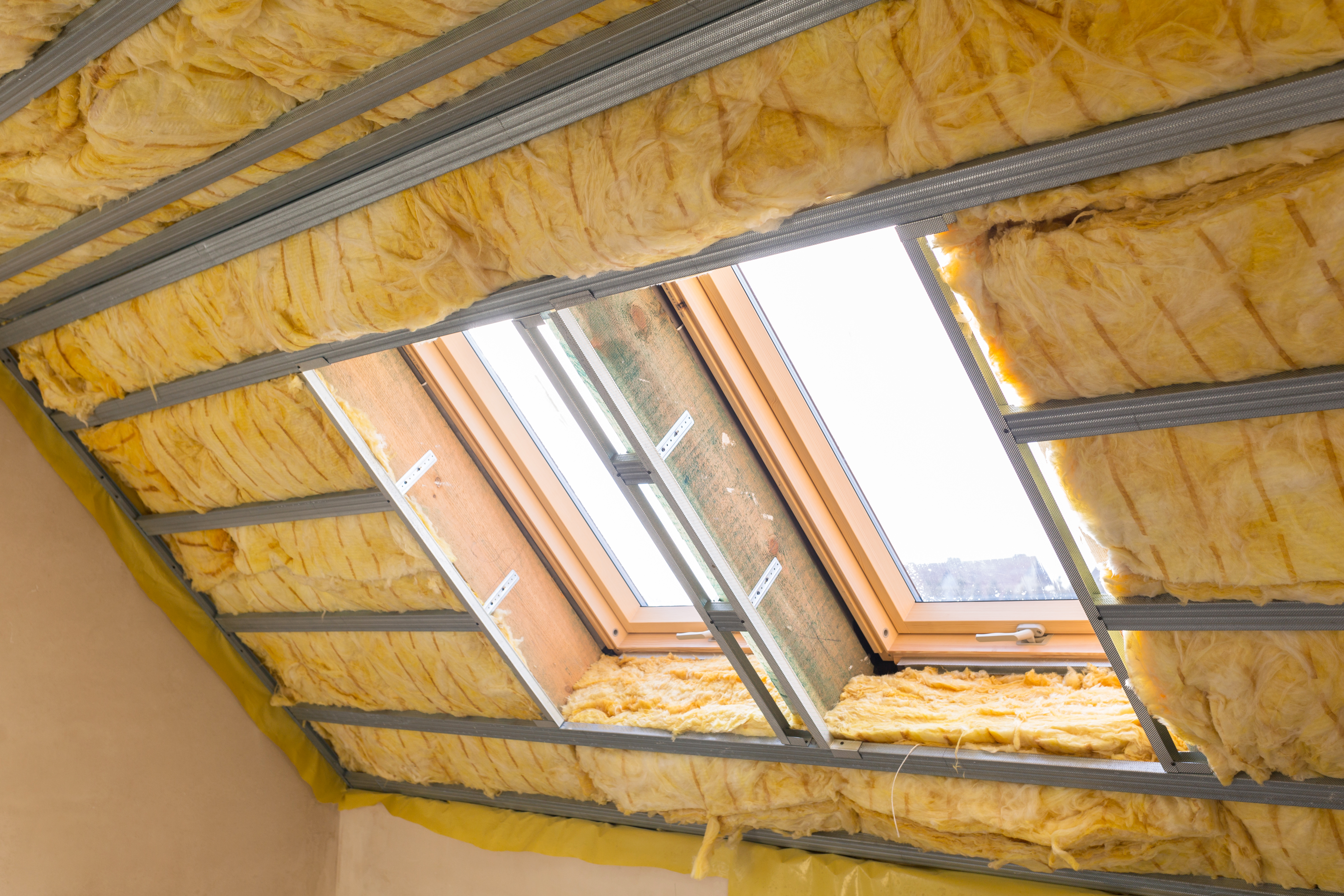
With internal roof insulation, the insulation material is applied to the inside of the roof sheathing, usually in the attic. This method is relatively easy to apply in existing homes and is particularly suitable when the roof is not being replaced or renovated on the outside.
Application possibilities
Internal roof insulation is particularly suitable for:
- Homes with a pitched roof (tiles or slate)
- Homes with an attic space where the roof structure is visible
- Situations where no external access or roof renovation is required
The insulation is placed directly against or between the rafters or purlins, with a vapor barrier and a finishing layer (e.g., plasterboard or wooden panels) over it.
Benefits of interior roof insulation
- Affordable solution: lower costs than external insulation
- Quick installation: suitable for installation without major demolition or roofing work
- Accessible for existing homes: no exterior work or scaffolding needed
- Increases attic comfort: ideal when using the attic as a living space or bedroom
Disadvantages and points to consider
- Loss of interior space: especially when using thicker insulation packages
- Risk of thermal bridges: connection to walls and roof details must be done carefully
- Moisture sensitivity: incorrect placement or lack of vapor barrier can lead to condensation and mold
- Lower insulation performance than sarking roof (external insulation) due to interruptions and more difficult sealing
- Not possible for inaccessible or finished attic constructions
Applicable insulation materials
- Glass or rock wool: flexible, sound-insulating, fire-resistant
- PIR or PUR boards: high insulation value per cm, suitable for limited space
- Resin foam: very high insulation value, can be applied compactly
- Wood fiber boards: bio-based, breathable, moisture-regulating
- Cellulose (blown-in): suitable for hard-to-reach constructions
A vapor barrier on the warm side is mandatory with this method to prevent moisture problems.
Technical requirements and insulation value
- Minimum R-value for subsidy: 3.5 m²K/W
- Recommended insulation thickness: 12 to 20 cm, depending on material type
- Vapour barrier required: apply airtightly to prevent condensation
- Finish connections airtightly: at eaves, ridge, roof penetrations and walls
- Basic rate: € 16.25 per m²
- When combined with a second measure: € 32.50 per m²
- Bonus for bio-based insulation: + € 5.00 per m²
- Conditions:
- Minimum 20 m² roof insulation
- Rd-value ≥ 3.5 m²K/W
- Execution by an accredited company
- Application within 24 months after execution
Cost Estimate (2025)
|
Insulation Method |
Average price per m² (incl. VAT and installation) |
|
Glass or rock wool |
€ 35 – € 50 |
|
PIR/PUR boards |
€ 45 – € 65 |
|
Resol foam |
€ 50 – € 70 |
|
Wood fiber or bio-based |
€ 45 – € 75 |
The total cost depends on accessibility, roof type, finishing choice, and extra work (such as vapor-tight finishing or rerouting pipes).
Subsidy roof insulation inside (2025)
The government offers a subsidy through the ISDE scheme:
When is internal roof insulation suitable?
- For existing homes without planned roof renovation
- When you want to insulate quickly and relatively affordably
- If the attic is used as living or working space
- When the roof is easily accessible from the inside
- As a supplement to other sustainability measures
Conclusion
Insulating the roof from the inside is an efficient and cost-conscious solution to limit heat loss and increase comfort. The measure is particularly suitable for existing homes without major roof work. A correct, vapor-tight, and cold-bridge-free execution is a prerequisite. Combined with subsidies, this insulation method is extra attractive in 2025.
Insulating a house – What does it involve?
Insulating a home means thermally improving the building envelope with the aim of limiting heat loss, reducing energy costs, and increasing living comfort. Home insulation includes several components, such as roof, facade, floor, cavity wall, and window insulation.
A well-insulated house loses less heat in winter and stays cooler in summer. This reduces the demand for heating and cooling, leading to lower energy costs and less CO₂ emissions.
Main insulation measures
1. Roof insulation
- Heat rises; up to 30% of heat loss occurs through the roof
- Can be applied on the inside (attic side) or outside (under the roof covering)
- Applicable to pitched and flat roofs
2. Facade insulation
- Limited heat loss through the exterior walls
- Variants: cavity wall insulation, interior facade insulation, or exterior facade insulation
- Also improves sound insulation and contributes to a uniform indoor temperature
3. Floor insulation
- Reduces cold downdrafts and drafts from the ground floor
- Often applied via the crawl space
- Prevents moisture problems and increases comfort at your feet
4. Cavity wall insulation
- Quickly applicable and affordable method for homes with cavity walls (from approx. 1925)
- Insulation material is blown into the cavity without major interventions
- Significantly reduces heat loss at low cost
5. Insulating glass (HR++, triple)
- Replaces single or old double glazing
- Improves thermal and acoustic insulation
- Reduces condensation on the inside of windows
Benefits of home insulation
- Lower energy costs: up to hundreds of euros saved per year
- Higher living comfort: less draft, stable indoor temperature
- Increased home value: better energy label, more attractive when selling
- More sustainable living: less CO₂ emissions, lower environmental impact
- Prepared for all-electric solutions: such as heat pumps and low-temperature heating
- Less external noise: especially with facade and glass improvements
Home Insulation Subsidy (2025)
In 2025, you can use the Investment Subsidy for Sustainable Energy and Energy Saving (ISDE). This scheme supports insulation measures for existing homes.
Subsidy Amounts (per m²)
|
Measure |
Base Amount |
When Combined |
Bio-based Bonus |
|
Roof insulation |
€ 16.25 |
€ 32.50 |
€ 5.00 |
|
Facade insulation |
€ 20.25 |
€ 40.50 |
€ 6.00 |
|
Cavity wall insulation |
€ 5.25 |
€ 10.50 |
€ 1.50 |
|
Floor insulation |
€ 5.50 |
€ 11.00 |
€ 2.00 |
|
HR++ glass |
€ 23.00 |
€ 46.00 |
n.a. |
|
Triple glazing |
€ 65.50 |
€ 131.00 |
n.a. |
Conditions:
- Minimum 1 measure, doubling for 2 or more measures within 24 months
- Minimum number of m² per measure required (usually 10–20 m²)
- Insulation value must meet technical requirements
- Only professional execution is eligible
- Homeowner is the applicant and resident or landlord
Cost estimate house insulation
|
Measure |
Indicative price per m² (incl. VAT and installation) |
|
Roof insulation (internal) |
€ 35 – € 60 |
|
Exterior wall insulation |
€ 90 – € 150 |
|
Cavity wall insulation |
€ 20 – € 40 |
|
Floor insulation |
€ 25 – € 50 |
|
HR++ glass |
€ 120 – € 160 |
|
Triple glazing |
€ 175 – € 250 |
The total costs for a complete insulation of an average family home range between € 10,000 and € 25,000, depending on the size, condition of the house, and chosen materials.
Payback period and return
Through savings on energy costs and government subsidies, the payback period for insulation measures averages between 5 and 10 years. With rising energy prices, this return will only become more attractive.
When is it advisable to insulate a house?
- For older homes (especially before 1992) with little or no insulation
- As part of a renovation or refurbishment
- When switching to a heat pump or living without gas
- As preparation for sale or rental (improving the energy label)
- In case of high energy costs or low comfort levels
Conclusion
Insulating a home is a logical and effective step towards energy-efficient, comfortable, and sustainable living. Whether you start with roof, facade, or floor insulation: every measure contributes to lower costs and higher living quality. With the available subsidies in 2025, it is also more financially attractive than ever to invest in home insulation.
PIR roof insulation – What is it?
PIR (polyisocyanurate) is a high-quality rigid foam insulation material that is widely used for roof insulation due to its excellent thermal performance at a low thickness. PIR boards are dimensionally stable, compression-resistant, lightweight, and suitable for both pitched and flat roofs.
Properties of PIR insulation
- Very high insulation value: λ-value around 0.022 W/mK
- High Rd-value per cm: with 10 cm PIR you already achieve approx. Rd 4.5 m²K/W
- Compression and dimensionally stable: suitable for load-bearing applications
- Moisture resistant: water absorption is minimal, so also suitable for flat roofs
- Flame retardant: many PIR boards are equipped with flame-retardant additives
- Lightweight: easy to process and transport
- Suitable for renovation and new construction
Application of PIR in roof insulation
1. Pitched roof – from the inside
PIR boards can easily be placed between or under the joists or rafters. Preferably, they are processed with a vapor barrier and a finishing layer, often with plasterboard or wooden paneling.
Advantages:
- High insulation value with limited thickness
- Minimal loss of interior space
- Fast installation in easily accessible attics
2. Sloping roof – externally (sarking)
PIR boards are laid on top of the roof sheathing, under the new roofing. This prevents cold bridges and ensures optimal thermal performance.
Advantages:
- Continuous insulation layer without interruptions
- No intervention on the inside of the house
- Ideal for roof renovation
3. Flat roof – warm roof construction
For flat roofs, PIR boards are laid on the supporting door and provided with a vapor-retarding and waterproof layer (e.g. bitumen, EPDM or PVC).
Advantages:
- Pressure resistant, therefore suitable for walkable or loaded roofs
- Resistant to moisture and temperature fluctuations
- Fast processing over large areas
PIR roof insulation and subsidy (2025)
PIR roof insulation is eligible for a subsidy under the ISDE scheme, provided that the insulation value and surface area meet the conditions:
- Minimum R-value: 3.5 m²K/W
- Minimum surface area: 20 m²
- Subsidy amounts:
- € 16.25 per m² basic
- € 32.50 per m² when combined with a second measure
- Professional installation required
- PIR boards must be correctly specified on invoice and technical description
- Bio-based bonus is not applicable to PIR
Cost Estimate PIR Roof Insulation
|
Application Type |
Average Price per m² (incl. installation) |
|
Inside of pitched roof |
€ 45 – € 65 |
|
Outside of pitched roof |
€ 60 – € 100 |
|
Flat roof (warm roof) |
€ 55 – € 85 |
The final price depends on the roof type, accessibility, insulation thickness, and finish (vapor barrier, waterproof layer, interior finish).
When is PIR roof insulation suitable?
- When space is limited and a high insulation value is desired
- When renovating roof structures with roof replacement
- For flat roofs where compressive strength is required
- For those who want to combine minimal build-up height with maximum energy performance
- Preferably for quick processing and low load on the roof structure
Comparison with other materials
|
Property |
PIR |
Glass wool |
EPS |
Wood fiber |
|
Insulation value (λ) |
approx. 0.022 |
approx. 0.035 |
approx. 0.036 |
approx. 0.038 |
|
Thickness for Rd 4.5 |
± 10 cm |
± 16 cm |
± 18 cm |
± 19 cm |
|
Moisture resistant |
Yes |
No |
Yes |
Limited |
|
Fire behavior |
Flame retardant |
Non-combustible |
Combustible |
Combustible |
|
Biobased |
No |
No |
No |
Yes |
Conclusion
PIR roof insulation is a high-quality solution for those who want to achieve maximum insulation value with minimal thickness. Thanks to its versatility, compressive strength, and moisture resistance, it is suitable for almost all types of roofs. Despite the slightly higher material costs, PIR is an economically sound choice due to its efficient processing and long lifespan, especially in combination with subsidies.
Insulating an old house – What does it involve?
Insulating an old house is an intrusive but extremely effective measure to reduce energy loss, improve comfort, and make the house suitable for sustainable heating. Houses built before approximately 1975 were often constructed with little or no insulation. This leads to high heating costs, drafts, and temperature fluctuations.
With a well-thought-out insulation plan, these problems can be structurally resolved while preserving the character of the house.
Starting points for insulating older homes
- Structural inspection
Old houses vary greatly in construction and detailing. Moisture problems, unevenness, thermal bridges, and missing cavities are common points of attention. - Preventing thermal bridges and condensation
Careless insulation can lead to internal condensation and mold formation. Vapor barriers and airtightness are essential. - Limited space for insulation
Interior space and the appearance of the facade are often limiting factors. Smart material choices (such as PIR, resol foam, or wood fiber) can offer a solution here. - Preservation of monumental elements
In historic buildings, it is important not to disturb facades, window frames, and rooflines. In some cases, additional rules or permit requirements apply.
Insulation options for old houses
1. Roof insulation
- Heat loss through the roof accounts for up to 30%
- Options: insulation from the inside (attic side) or from the outside (sarking)
- An Rd value of ≥ 4.5 m²K/W is preferably applied
- Recommended for outdated or uninsulated roof structures
2. Wall insulation
- Variants: external wall insulation, internal wall insulation, or cavity wall insulation
- Many old houses do not have a cavity wall; in that case, internal or external insulation is needed
- External insulation provides the highest insulation value, but changes the facade appearance
- Internal insulation requires a vapor barrier and expert finishing
3. Floor insulation
- Improves comfort and limits drafts via the ground floor
- Via crawl space or top of the floor (during renovation)
- Also applicable in combination with ground insulation for damp crawl spaces
4. Glass insulation
- Replacing single glazing or old double glazing with HR++ or triple glazing
- Note: old frames are often not suitable for heavy glass, adaptation is necessary
- Monumental glass is available for preserving the authentic look
5. Insulation of pipework and penetrations
- Old houses often have open connections and draft leaks at pipes, cracks, and ventilation openings
- Improving airtightness is crucial when increasing the insulation level
Important Points
- Ventilation: In older homes, natural ventilation is common. When insulating, active ventilation (e.g., CO₂-controlled or balanced ventilation) must be added.
- Moisture regulation: Vapor-permeable and capillary-active materials such as wood fiber or hemp-lime are suitable for facades that need to keep breathing.
- Coordination with heating system: Insulation is a requirement for the use of low-temperature heating or heat pumps.
- Aesthetics and regulations: For monuments or protected facades, technical and legal restrictions may apply.
- Roof insulation: up to € 32.50 per m²
- Facade insulation (inside/outside): up to € 40.50 per m²
- Cavity wall insulation: up to € 10.50 per m²
- Floor insulation: up to € 11.00 per m²
- HR++ or triple glazing: up to € 131.00 per m²
- Bio-based bonus: extra subsidy per m² when using natural materials
- Combining measures leads to doubling the subsidy amount per component
Cost estimate insulation old house
|
Measure |
Indicative price per m² (incl. VAT and installation) |
|
Roof insulation (inside) |
€ 40 – € 60 |
|
Exterior wall insulation |
€ 90 – € 150 |
|
Internal wall insulation |
€ 70 – € 110 |
|
Cavity wall insulation |
€ 25 – € 40 |
|
Floor insulation |
€ 30 – € 55 |
|
HR++ glass |
€ 120 – € 160 |
|
Triple glazing |
€ 175 – € 250 |
The total investment for a complete insulation of an older home averages between € 15,000 and € 35,000, depending on the surface area, structural condition, and chosen insulation method.
Subsidies and financial support (2025)
Through the ISDE scheme, the following subsidies apply to old houses:
Conclusion
Insulating an old house requires a careful approach and technical knowledge of building physics. When carried out with attention to the existing structure, an old house can meet modern energy performance standards without compromising on character or comfort. Thanks to subsidy schemes in 2025, it is also financially attractive to take this step now.
Insulating a house on the outside – What does it involve?
With exterior wall insulation, insulation material is applied to the outside of the existing facade, after which the whole is finished with a new outer layer, such as facade plaster (crepi), brick slips, or facade cladding. This method ensures a completely thermally sealed shell without interruptions and achieves high insulation values.
This form of facade insulation is suitable for homes without a cavity wall or when cavity wall insulation offers insufficient effect. Older homes (pre-±1925) can also be excellently insulated from the outside.
Method
- Facade preparation
Cleaning, repairing damage, and checking for moisture problems. - Applying insulation material
The most commonly used materials are EPS boards, mineral wool, PIR boards, or bio-based panels. - Finishing
The insulation system is finished with an outer layer, such as: - Facade plaster (mineral or synthetic render)
- Wood, fiber cement or composite facade cladding
- Brick slips or brick panels
- Sealing and detailing
Special attention is required for roof edges, window frames, doors, lintels and foundations.
Advantages of external wall insulation
- Very high insulation value
The thickness of the insulation package is flexible, making Rc values above 5.0 m²K/W easily achievable. - Prevents thermal bridges
By insulating the entire facade from the outside, interruptions such as floor and roof transitions are fully included. - Preserves interior space
The living area remains unchanged because the insulation is placed outside the building shell.
The house will receive a completely new facade finish; this is also an opportunity to address deferred maintenance or modernize the appearance.
Through comfort improvement, energy label increase, and aesthetic upgrade.
Disadvantages and points to consider
- Relatively high cost
Exterior insulation is more expensive than cavity wall insulation or interior wall insulation due to materials, labor, and finishing. - Permit required when changing the facade appearance
In many municipalities, a permit is required, especially for front facades and monumental buildings. - Adjusting details
Overhangs, roof edges, window sills, and downpipes must be adjusted or extended. - Execution dependent on weather
Dry and stable weather is required for correct adhesion of plaster layers and adhesives.
In the case of terraced houses or narrow plots, shared walls or property boundaries must be taken into account.
Suitable
Insulation Materials
|
Material |
Insulation Value |
Advantages |
|
EPS |
Good |
Lightweight, affordable, dimensionally stable |
|
Mineral wool |
Good |
Fire-resistant, vapor-permeable, sound-absorbing |
|
PIR boards |
Very high |
Thin yet high R-value |
|
Wood fiber boards |
Average |
Bio-based, breathable, ecological |
|
Resol foam |
Very high |
Compact with high insulation value |
Insulation value and standards
- Minimum Rd value for subsidy: 3.5 m²K/W
- Recommended Rc value for exterior wall insulation: ≥ 5.0 m²K/W
- Insulation package thickness: typically 10 – 20 cm, depending on material
- Finish must be UV and weather resistant
Cost Estimate (2025)
|
Component |
Average price per m² (incl. VAT and installation) |
|
Insulation material + fastening |
€ 40 – € 70 |
|
Exterior finish (plaster/cladding) |
€ 30 – € 80 |
|
Total |
€ 90 – € 150 per m² |
For an average home with 100 m² facade surface, this means an investment between € 9,000 and € 15,000.
Subsidy external wall insulation (ISDE 2025)
- Base amount: € 20.25 per m²
- Doubling when combined with a second measure: € 40.50 per m²
- Bio-based bonus: € 6.00 per m² extra when using natural insulation materials
- Conditions:
- Minimum surface area of 20 m²
- Rd-value ≥ 3.5 m²K/W
- Professional execution required
When is external wall insulation suitable?
- Homes without a cavity wall or with thin facades
- Houses with poor facade insulation or cold bridges
- Home renovations where the facade appearance is also addressed
- Homes with sufficient space around the facade
- When maximum insulation performance is desired
Conclusion
Exterior wall insulation is technically the most effective and future-proof method for thermally improving a home. The investment is higher than with other methods, but it results in structurally lower energy costs, a more comfortable indoor climate, and a higher property value. Thanks to the available subsidy in 2025, the measure becomes financially more attractive and pays for itself more quickly.Affordably insulating your attic – What are the possibilities?
Insulating your attic is an effective way to save energy and increase comfort in your home. Because heat rises, up to 30% of heat is lost through the roof without insulation. A well-insulated attic therefore contributes significantly to lower heating costs and a more constant indoor climate.
When you opt for a cost-effective approach, materials, method, and labor costs are particularly important. The most cost-effective form of insulation for attics is insulation from the inside of the roof or floor insulation of the attic floor if the space is not heated or is used for storage.
Most Affordable Attic Insulation Methods
1. Insulating the roof from the inside
The most common and affordable way to insulate your attic is from the inside of the roof sheathing. This can be done relatively quickly and without major work.
Features:
- Insulation material placed between or under the roof beams
- Finishing possible with plasterboard, foil or wooden panels
- Materials: glass wool, rock wool, PIR panels, wood fiber panels
- Suitable for pitched roofs
Advantages:
- Low material costs
- Fast installation, often within one day
- Good insulation value possible from approx. 12 cm insulation thickness
Indicative price: € 35 – € 60 per m² (including VAT and installation)
2. Insulating the attic floor
If you do not use the attic as living space, you can choose to insulate the attic floor instead of the roof. This limits the volume to be heated and saves even more energy.
Features:
- Insulation material on or under the attic floor
- Applicable to wooden or concrete floors
- Materials: EPS boards, mineral wool, insulation boards
Advantages:
- Most affordable option
- Easy to implement
- No finishing required if the attic does not need to be accessible
Indicative price: € 25 – € 45 per m²
Affordable
insulation materials for attic insulation
|
Material |
Price level |
Insulation value (λ) |
Application |
|
Glass wool |
Low |
± 0.035 W/mK |
Between rafters or floor |
|
Mineral wool |
Low |
± 0.036 W/mK |
Acoustic + thermal |
|
EPS boards |
Low |
± 0.036 W/mK |
Floor or roof surface |
|
PIR boards |
Medium |
± 0.022 W/mK |
Where space is limited |
|
Wood fiber |
Medium |
± 0.038 W/mK |
Bio-based alternative |
For affordable attic insulation, glass wool and EPS are the most popular choices, due to their low price and good performance.
Attic insulation subsidy (via ISDE 2025)
Attic insulation falls under roof insulation in the ISDE scheme.
- Base amount: €16.25 per m²
- When combined with a second measure: €32.50 per m²
- Biobased bonus: €5.00 per m² extra (for wood fiber etc.)
- Conditions:
- Minimum 20 m² insulation surface area
- Rd-value ≥ 3.5 m²K/W
- Professional execution required
- Apply within 24 months of execution
Thanks to the subsidy, the net amount for attic insulation is considerably lower, especially when combined with floor insulation or glass insulation, for example.
Practical tips to keep costs low
- Opt for standard glass or rock wool for interior roof insulation
- Obtain multiple quotes and compare on price and quality
- Combine with other measures to obtain higher subsidies
- Limit finishing if the attic is not used as living space
Conclusion
Cost-effective attic insulation is possible with simple, proven methods and affordable materials. Roof insulation from the inside and attic floor insulation are both effective and affordable. With the help of the ISDE subsidy in 2025, the net costs can be further reduced, resulting in a short payback period and immediate comfort and energy gains.
Insulate attic
Insulating the attic is an effective measure to limit heat loss through the roof. Because warm air rises, a house without roof or attic insulation loses up to 30% of its heat through the roof. By properly insulating the attic, you increase living comfort, reduce energy costs, and improve the energy label of the house.
Depending on the use of the attic (living space or storage), there are two main options:
- Insulation of the roof surface (roof insulation)
- Insulation of the attic floor (floor insulation)
1. Insulating the attic via the roof (roof insulation)
If the attic is used as living space (bedroom, workspace), insulating the roof surface is the recommended method.
Inside of the roof insulation (most common)
Insulation material is placed on the inside of the pitched roof between or under the rafters.
Features:
- Suitable for existing roofs
- Materials: glass wool, PIR boards, wood fiber boards
- Finishing with foil, plasterboard or wooden boards
- Moisture-resistant and airtight execution required
Price indication: € 35 – € 60
per m² (incl. VAT and installation)
Subsidy possible via ISDE (see further down)
2. Insulating the attic via the floor (attic floor insulation)
If the attic is not used as a living space, floor insulation on the attic floor is more efficient. The heat is then kept within the inhabited part of the house.
Characteristics:
- Applicable to concrete or wooden floors
- No heat loss to unheated attic space
- Materials: EPS boards, mineral wool, pressure-resistant insulation boards
- Finishing is optional
Price indication: € 25 – € 45
per m² (incl. VAT and installation)
Fast installation, often feasible in 1 working day
Advantages of attic insulation
- Directly lower energy bill
- Increased living comfort: warmer rooms in winter, cooler in summer
- Shorter heating time of the home
- Better acoustics and sound insulation
Materials suitable for attic insulation
|
Material |
Application |
Insulation value (λ) |
Advantages |
|
Glass wool |
Roof (inside) |
approx. 0.035 W/mK |
Affordable, flexible, quick to install |
|
PIR boards |
Roof or floor |
approx. 0.022 W/mK |
High insulation value per cm |
|
EPS boards |
Attic floor |
approx. 0.036 W/mK |
Lightweight, inexpensive, pressure-resistant |
|
Wood fiber boards |
Roof (bio-based) |
approx. 0.038 W/mK |
Environmentally friendly, moisture-regulating |
When used as living space, an airtight finish and a good vapor barrier are essential.
Subsidy attic insulation via ISDE (2025)
Attic insulation falls under the ISDE subsidy scheme for roof insulation.
- Base amount: €16.25 per m²
- Doubling when combined with a second measure: €32.50 per m²
- Bio-based bonus: €5.00 per m² extra for natural materials
- Conditions:
- Minimum 20 m² of roof area to be insulated
- Insulation value Rd ≥ 3.5 m²K/W
- Execution by an accredited company
- Subsidy application within 24 months of completion
When is attic insulation recommended?
- For homes built before 1992 (little or no roof insulation)
- For high heating costs or cold attic rooms
- When converting an attic into living space
- As preparation for low-temperature heating or heat pump
- To improve the energy label and property value
Conclusion
Attic insulation is an affordable and profitable measure that provides immediate comfort and energy savings. Depending on the use of the attic, you can choose between roof insulation or floor insulation. Thanks to subsidies and short payback periods, attic insulation is technically and financially attractive in 2025.
Sound insulation of floors – What does it involve?
Floor sound insulation aims to limit sound transmission between floors and rooms. A distinction is made between impact sound (footsteps, bumps, sliding) and airborne sound (speech, music, television). Good floor sound insulation ensures greater living comfort, privacy, and acoustic tranquility in houses, apartments, and commercial buildings.
The choice of a suitable insulation system depends on the existing floor structure, the desired insulation level, and the technical situation of the building.
Types of Sound Insulation
1. Impact Sound Insulation
Prevents sounds from direct contact with the floor (e.g., walking or sliding furniture) from being heard in rooms below.
Applications:
- Floating screed
- Subfloor with damping layer
- Anti-vibration plates or mats
2. Airborne Sound Insulation
Limits the transmission of sound that spreads through the air, such as voices or music.
Applications:
- Massive floor construction
- Adding insulating layers (mineral wool, cellulose)
- Sealed air gap between construction layers
Most used systems
Floating floor construction (most effective)
- Existing floor is disconnected from the new finished floor
- Damping layer of mineral wool, rubber, foam or cork
- Above it a solid (gypsum fiber, Fermacell or concrete) finishing layer
- Suitable for renovation and new construction
Advantages:
- Excellent insulation against impact and airborne sound
- Can be combined with thermal insulation
- Very suitable for apartments or terraced houses
Price indication: € 60 – € 120 per m²
Underlay with sound-insulating plates or mats
- Applied under laminate, parquet, or PVC floors
- Materials: rubber, PE foam, felt, cork, or wood fiber
- Mainly reduces impact sound (e.g., 10 dB according to standards)
Advantages:
- Affordable and easy to install
- Suitable for floor finishes without major renovations
Price indication: €10 – €30 per m²
Floor insulation with acoustic material
- Applied under wooden or concrete floors
- Materials: rock wool, cellulose flakes, wood fiber, or glass wool
- Combines thermal and acoustic insulation
Advantages:
- Suitable for wooden floors
- Also improves fire resistance
Price indication: € 30 – € 60 per m²
Points to consider for floor sound insulation
- Always decouple the intermediate layer from the supporting floor to avoid vibrations
- Pay attention to flanking sound transmission (via walls, pipes, stairs)
- Increasing the floor structure can impact doors and connections
- Can be combined with underfloor heating, provided the correct pressure-resistant materials are used
- Standards in apartment buildings (e.g. minimum 10 dB impact sound reduction required)
Suitable Materials and Their Properties
|
Material |
Type of Sound |
Application |
Remark |
|
Rubber mats |
Impact sound |
Under floor covering |
High damping, durable |
|
Glass wool / rock wool |
Airborne sound |
Between wooden joists |
Combines thermal and acoustic |
|
EPS / XPS |
Limited both |
Intermediate layers in floor construction |
Compression-resistant, inexpensive |
|
Wood fibre boards |
Impact sound |
Subfloor |
Ecological, acoustically damping |
|
Fermacell |
Airborne and impact sound |
Floating floor |
Solid, fire-resistant |
Conclusion
Floor sound insulation increases acoustic comfort and contributes to peace and privacy in residential and commercial buildings. Depending on the purpose (impact or airborne sound), the floor construction, and the desired insulation level, several solutions are possible, ranging from simple underlays to complete floating floors. The investment is manageable and often essential, especially in apartment buildings or multi-family homes.
Ceiling soundproofing – What does it involve?
Ceiling sound insulation aims to reduce noise nuisance from upper floors. This can include impact sound (such as footsteps or moving furniture) and airborne sound (such as voices, music, or television sound). Ceiling insulation is often used in apartments, intermediate floors, and attached rooms in houses with wooden or concrete floors.
Lowering or weighting the ceiling with suitable materials is the most common solution.
Purpose of ceiling insulation
- Reduction of noise nuisance from upstairs neighbors or rooms above
- Improvement of living comfort and privacy
- Acoustic decoupling between floors
- In combination with thermal insulation if desired
Types of ceiling sound insulation
1. Suspended acoustic ceiling (floating ceiling)
This method involves installing a self-supporting ceiling structure, detached from the existing ceiling, with sound-absorbing material such as mineral wool or cellulose in between.
Features:
- Construction with metal or wooden profiles
- Filled with acoustic material
- Finishing with plasterboard or acoustic panels
- Optional double plating for extra mass
Advantages:
- Effective sound insulation (airborne and impact sound)
- Can be combined with fire and thermal insulation
- Sound reduction of 10 to 20 dB possible
Price indication: € 65 – € 120 per m²
2. Decoupled ceiling with vibration dampers
A suspended ceiling that is not directly attached to the existing ceiling, but via vibration-damping brackets (acoustic hangers or springs).
Features:
- Decoupled system prevents transmission of impact sound
- Very suitable for wooden floors above
- Especially improves impact and airborne sound insulation
Price indication: € 80 – € 130 per m²
3. Direct cladding with insulating materials
Sound-insulating panels (e.g. gypsum fiber, Fermacell, cork, wood fiber) are attached directly to the existing ceiling.
Features:
- Quick, affordable solution
- Limited effectiveness against heavy impact sound
- Mainly suitable for light airborne noise
Price indication: €35 – €70 per m²
Suitable materials for ceiling insulation
|
Material |
Application |
Property |
|
Mineral wool |
Between construction |
Absorbs airborne sound |
|
Wood fiber boards |
Direct installation or intermediate layer |
Ecological, good against airborne sound |
|
Gypsum fiber boards |
Finishing, adding mass |
Increases sound insulation |
|
Acoustic rubbers |
Vibration damping construction |
Impact sound insulation |
|
Cellulose |
Blowing between joists |
Fills hollow spaces, acoustically strong |
Points to consider
- Flanking sound: sound can also come through walls and pipes
- Loss of ceiling height: minimum 5–15 cm depending on the system
- Electrical installations (spots, smoke detectors) must be adapted
- Fire resistance: additional plaster layers or mineral wool improve the fire class
When is ceiling insulation suitable?
- In apartments with noise nuisance from upstairs neighbors
- For homes with wooden floors
- During renovations to create an extra living space or sound studio
- As an alternative to inaccessible upper floors
- For acoustic improvement in offices, practice rooms, or bedrooms
Conclusion
Ceiling sound insulation is an effective solution for noise nuisance between floors. With a suspended, decoupled ceiling combined with sound-absorbing material, a significant reduction in airborne and impact sound is achieved. Depending on the desired level of insulation, variants are possible with different material types, cost levels, and structural impact.
Sound insulation of walls – What does it involve?
Wall sound insulation focuses on reducing sound transmission between adjacent rooms or dwellings. This can involve airborne sound (speech, music, TV sound) or impact sound (knocking, thumping). Insulating walls is particularly relevant for shared walls in apartments, terraced houses, practice rooms, and in situations where acoustic comfort or privacy is desired.
Types of sound and approach
1. Airborne sound
Airborne sound is caused by sound vibrations in the air (such as talking, singing, music). These vibrations set the wall in motion, which in turn transmits sound.
Solution: add mass and decouple from the existing wall.
2. Impact sound
Less common with walls, but can occur with hard impacts or vibrations via structural components.
Solution: flexible, resilient interlayers or decoupled wall constructions.
Most commonly used sound-insulating wall solutions
1. Stud wall with sound insulation (decoupled)
An additional wall construction placed in front of the existing wall, mounted separately from the wall (i.e. without a fixed connection), containing sound-absorbing material such as mineral wool.
Features:
- Metal or wooden frame
- Insulation material: glass wool, rock wool or cellulose
- Finishing with double plasterboard or gypsum fiberboard
- Joint sealing and edge strips necessary for airtightness
Sound reduction: 10–20 dB extra
Price indication: € 60 – € 100 per m²
2. Direct cladding with soundproofing material
Soundproofing panels (such as plasterboard, acoustic foam panels, or cork) are glued or screwed directly to the existing wall.
Features:
- Quick and easy to apply
- Limited space requirement (2–5 cm)
- Effective for light airborne sound
Sound reduction: 5–10 dB
Price indication: € 30 – € 60 per m²
3. Double decoupled wall construction
Two freestanding walls with an air gap and acoustic material in between. Used in recording studios or with high noise levels.
Features:
- Maximum effect
- Requires a lot of space (≥15 cm)
- Suitable for music studios, offices, practice rooms
Sound reduction: 20–30 dB
Price indication: €90 – €150 per m²
Suitable materials for wall sound insulation
|
Material |
Function |
Properties |
|
Glass or rock wool |
Absorption, filling |
Inexpensive, effective, fire-resistant |
|
Plasterboard |
Add mass |
Increases damping, impact resistant |
|
Acoustic foam |
Absorption (light sound source) |
Light, limited effectiveness |
|
Mass loaded vinyl |
Block airborne sound |
High density, flexible placement |
|
Wood fiber boards |
Bio-based absorption |
Sustainable, good acoustic properties |
Points to consider
- Density and finish: all seams and gaps must be sealed airtight
- Sockets and penetrations can cause sound leakage – preferably move or seal
- Ceiling and floor connections must be included in the design (flanking sound)
- Loss of space: depending on the method, 3 to 15 cm
When is wall soundproofing suitable?
- In terraced houses or apartments with noisy neighbors
- For home practices or workspaces
- In bedrooms or children's rooms for more peace
- For studios, music rooms, or offices
- During renovation or remodeling for improved comfort
Conclusion
Soundproofing walls is an effective measure to reduce hindering airborne sound and increase privacy between rooms. With partition walls or acoustic paneling, significant improvements can be achieved, provided the execution is careful and airtight. The right choice of materials and technical details determine the final result.
Purchasing insulation – What does it involve?
Purchasing insulation is an investment in energy efficiency, comfort, and sustainability. Whether it's roof, floor, facade, cavity wall, or window insulation: good preparation, the right material choice, and professional installation are essential for achieving the desired return.
When does it make sense to purchase insulation?
- For homes built before 1992, which often contain little or no insulation
- When you want to reduce energy costs
- For plans for sustainable heating (such as a heat pump)
- If you want to make the home more comfortable and quieter
- When selling or renting (improving energy label)
- In combination with subsidies for energy-saving measures
- Which parts of the home are not yet or insufficiently insulated?
- What is the year of construction and the structural condition?
- Are there specific problems, such as drafts or moisture?
- Where is the heat loss greatest? (often the roof or walls)
- What fits within the available budget and timeline?
- Professional installation is required for ISDE subsidy
- Expert execution prevents thermal bridges, condensation, or fire risk
- Installer ensures airtightness, proper connection, and finishing
- Preferably combine 2 measures to receive double subsidy amounts
- Collect technical data and have invoices and material performances described in detail
- Minimum Rd value required (e.g. ≥ 3.5 m²K/W for roof/wall/floor)
- Minimum number of m² required per measure (usually 10–20 m²)
- Base amount per m²: €5 – €65 depending on insulation type
- Doubling for 2 or more measures within 24 months
- Biobased bonus for natural insulation materials: up to € 6 per m² extra
- Only private homeowners are eligible
Step-by-step plan for purchasing insulation
1. Inventory of the home
2. Determining priorities
3. Choice of insulation materials
The choice depends on the application, desired insulation value, available space, and structural properties. Commonly used materials:
|
Material |
Application |
Insulation value (λ) |
Features |
|
Glass wool |
Roof, floor, partition walls |
± 0.035 W/mK |
Affordable, easy to process |
|
PIR boards |
Roof, exterior walls, floor |
± 0.022 W/mK |
High insulation value with low thickness |
|
EPS boards |
Floor, facade |
± 0.036 W/mK |
Lightweight, dimensionally stable, affordable |
|
Wood fiber |
Roof, wall, floor |
± 0.038 W/mK |
Biobased, vapor-open |
|
Rockwool |
Roof, cavity, facade |
± 0.036 W/mK |
Sound-insulating, fire-resistant |
4. Engaging a certified installer
5. Preparing the subsidy application
Cost estimate per insulation measure (incl. VAT and installation)
|
Insulation measure |
Average price per m² |
|
Roof insulation (inside) |
€ 40 – € 60 |
|
Cavity wall insulation |
€ 20 – € 40 |
|
Exterior wall insulation |
€ 90 – € 150 |
|
Floor insulation |
€ 30 – € 55 |
|
HR++ glass |
€ 120 – € 160 |
|
Triple glazing |
€ 175 – € 250 |
The total investment for an average home typically ranges between €10,000 and €25,000, depending on the size, condition, and chosen measures.
Subsidy for insulation purchase (ISDE 2025)
Conclusion
Purchasing insulation is a wise choice for those who want to structurally save on energy, improve living comfort, and make their home future-proof. By carefully assessing, choosing the right materials, and utilizing subsidies, the investment quickly becomes profitable. Get advice from a certified installer to avoid technical errors and missed subsidies.
Affordable insulation – Save effectively on a limited budget
Insulation doesn't have to be expensive. There are various insulation measures that cost relatively little but still yield a lot. Especially for existing homes built before 1992, there are several affordable insulation solutions that allow you to save energy quickly, increase comfort, and qualify for attractive subsidies.
The most cost-effective forms of insulation are typically cavity wall insulation, loft floor insulation, floor insulation via the crawl space, and replacing single glazing with HR++ glass.
Most cost-effective insulation measures
1. Cavity wall insulation
The quickest and most affordable way to better insulate a home, provided the walls have a cavity (usually built between 1920–1975).
Features:
- Quick execution (often within one day)
- Little disruption, no demolition work
- Filling with wool, foam, or granules
Costs: approx. €20 – €40 per m²
Subsidy: up to €10.50 per m²
2. Loft floor insulation
If the loft is not used as living space, insulating the loft floor is more advantageous than roof insulation.
Features:
- Heat is kept within the inhabited volume
- Simple execution on wooden or concrete floors
- Easily combined with other insulation measures
Costs: approx. €25 –
€45 per m²
Subsidy: via ISDE, falls under roof insulation
3. Floor insulation via the crawl space
An affordable way to combat drafts and cold through the ground floor. Suitable for homes with a crawl space of at least ± 35 cm high.
Features:
- Insulation material against the underside of the floor
- Improves comfort and energy savings
- Quick installation without major renovation
Cost: approx. € 30 –
€ 55 per m²
Subsidy: up to € 11 per m²
4. HR++ Glass
Relatively inexpensive when replacing single glazing in existing frames. With existing double glazing, the effect is slightly less, but still noticeable.
Features:
- Up to 3x better insulation than regular double glazing
- Can be combined with draught-proofing and ventilation grilles
- Often fits without frame replacement
Cost: €120 –
€160 per m²
Subsidy: up to €53 per m² (more for triple glazing)
Comparison of affordable insulation methods
|
Measure |
Cost per m² |
Subsidy possible |
Payback period |
Implementation time |
|
Cavity wall insulation |
€ 20 – € 40 |
Yes |
3 – 5 years |
1 day |
|
Attic floor insulation |
€ 25 – € 45 |
Yes |
4 – 6 years |
1 day |
|
Crawl space floor |
€ 30 – € 55 |
Yes |
5 – 7 years |
1 day |
|
HR++ glass |
€ 120 – € 160 |
Yes |
6 – 8 years |
1 – 2 days |
Tips for extra cost savings
- Combine multiple measures: this results in higher subsidies
- Compare multiple quotes from recognized installers
- Opt for standard materials with a good price-performance ratio
- Make use of ISDE subsidy and (if applicable) municipal regulations
Conclusion
Affordable insulation is excellent possible with relatively simple measures such as cavity wall insulation, attic floor insulation and floor insulation via the crawl space. These applications require a limited investment, provide quick savings and can be combined directly with subsidies. With professional execution, the work can be realized quickly and without much nuisance.
Sound insulation – What does it entail?
Sound insulation aims to limit sound transmission between rooms, floors, or adjacent homes. It is used in houses, apartments, offices, consulting rooms, and commercial buildings. Depending on the source and type of sound, various insulation methods and materials are available.
A distinction is made between:
- Airborne sound: such as voices, music or television
- Impact sound: such as walking, chairs scraping or banging
- Reverberation sound: within a room itself
Effective sound insulation requires a combination of mass, resilience, damping, and airtightness.
Applications of Soundproofing
1. Wall Insulation
Soundproofing between rooms or with shared walls with neighbors.
Solutions:
- Stud walls with insulation material (rock wool, glass wool, cellulose)
- Decoupled double walls for maximum damping
- Finishing with double plasterboard or gypsum fiberboard
2. Ceiling Insulation
Reduces noise nuisance from rooms or floors above.
Solutions:
- Suspended ceiling with mineral wool and sound-insulating panels
- Decoupled ceiling with vibration-damping mounting
- Acoustic built-in system for wooden floors
3. Floor insulation (against impact sound)
Limits the transmission of footstep noise to lower floors.
Solutions:
- Floating floor constructions
- Subfloors with acoustic damping mats or boards
- Blown-in insulation between wooden joists
4. Door insulation and sealing
Essential to prevent air and impact sound leakage through openings.
Solutions:
- Damping strips, acoustic thresholds
- Heavier (solid) doors
- Sealing of pipe penetrations and sockets
Suitable materials for sound insulation
|
Material |
Sound type |
Application |
Properties |
|
Glass or mineral wool |
Airborne sound |
Walls, ceilings |
Absorbs sound vibrations |
|
Cellulose |
Airborne and contact |
Between joists, walls |
Environmentally friendly, fills cavities well |
|
Fiber gypsum boards |
Airborne sound |
Wall/floor finishes |
High mass, sound-dampening |
|
Rubber mats |
Impact sound |
Floors, subfloors |
Flexible and resilient |
|
Acoustic foam |
Reflected sound |
Indoor space (reverberation) |
Sound-absorbing |
|
Mass plates (mass-charge) |
Airborne sound |
Wall or ceiling reinforcement |
Very high density, vibration-damping |
Price indications sound insulation (indicative, incl. installation)
|
Application |
Price per m² |
Sound reduction (dB) |
|
Partition wall (decoupled) |
€ 60 – € 100 |
10 – 20 dB |
|
Suspended ceiling |
€ 65 – € 120 |
10 – 20 dB |
|
Floor decoupling |
€ 50 – € 100 |
8 – 15 dB |
|
Direct plating |
€ 30 – € 60 |
5 – 10 dB |
|
Professional studio setup |
€ 120 – € 200 |
20 – 30+ dB |
Important points
- Flanking sound: sound can also spread via adjacent walls, floors, and ceilings – a comprehensive approach is essential
- Sealing is crucial: even small gaps and openings can negate sound reduction
- Loss of space: depending on the method, 3–15 cm of construction thickness must be taken into account
- Combination of mass and damping: light materials do not insulate effectively without additional mass
When is sound insulation recommended?
- For noisy terraced houses or apartments
- For home office or practice rooms requiring privacy
- In children's rooms, bedrooms, or music rooms
- For recording studios, meeting rooms, or commercial spaces
- During renovation or change of use of a building
Conclusion
Sound insulation is custom work and requires a combination of the right materials, expert execution, and attention to detail. With a thoughtful approach, airborne and impact sound can be significantly reduced, resulting in more peace, comfort, and privacy. The investment depends on the chosen system and the desired insulation value, but provides an immediately noticeable improvement in acoustics.
Basement insulation – Comfort, energy efficiency, and moisture control
Insulating your basement contributes to a more comfortable indoor climate, energy savings, and the prevention of moisture problems. Depending on the function of the basement (heated or unheated) and the structural situation, various insulation solutions are possible: ceiling insulation, wall insulation, and floor insulation.
Basement insulation is particularly interesting for homes with a cold ground floor or when you use the basement as living space, storage space, or technical room.
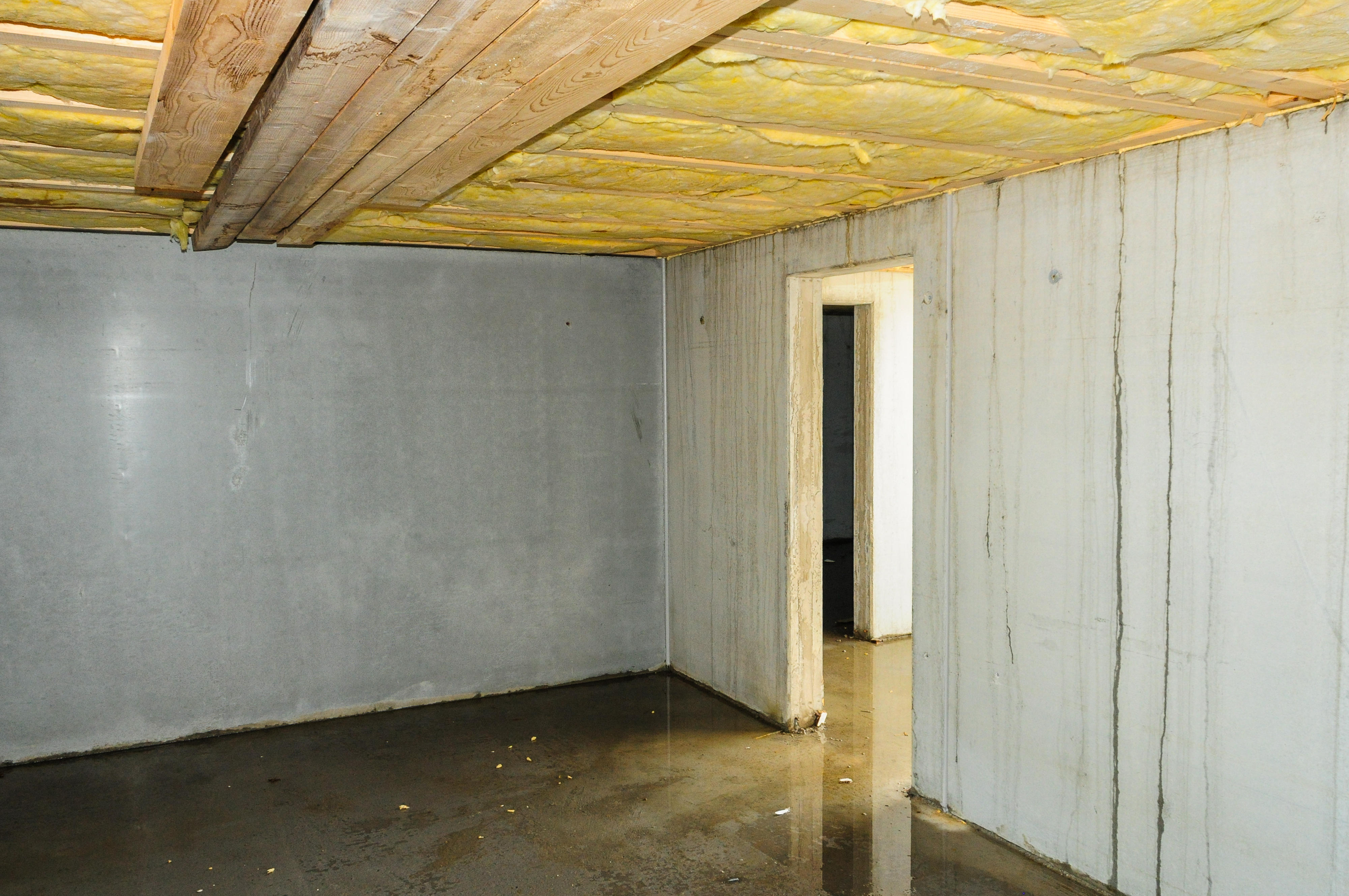
Why insulate a basement?
- Limits heat loss through the ground floor
- Increases comfort on the ground floor (warm feet, less draft)
- Protects against rising damp and condensation
- Reduces energy consumption and heating costs
- Prevents musty odors or mold growth in basements and crawl spaces
- Improves energy label and property value
Insulation methods for the basement
1. Insulating the basement ceiling (most chosen option)
If the basement is not heated, insulating the basement ceiling is the most efficient solution. This prevents heat from the house from escaping downwards through the floor.
Features:
- Applicable to concrete or wooden ceilings
- Insulation material is placed underneath the ceiling
- Materials: EPS, PIR boards, mineral wool, wood fiber
- Finishing (optional): plaster, wooden boards or plasterboard
Costs: approx. €30 – €55 per m²
Subsidy: yes, falls under floor insulation (ISDE)
Effect: 3 to 6 degrees warmer floor above the cellar
2. Insulating basement walls
Wall insulation is particularly interesting if the basement is used as a living or working space, or with damp basement walls. The walls can be insulated on both the inside and the outside.
Inside (most common):
- Insulation with PIR boards, mineral wool or XPS against the inner wall
- Vapour barrier required against condensation
- Finishing with plasterboard or cement-bonded board
Outside (only during excavation):
- Applied in excavated basement environments or new construction
- Moisture and pressure-resistant insulation (e.g. XPS, sprayed PUR)
- Combination with drainage possible
Inside costs: approx. € 60 – € 90 per m²
Note: correct vapour-barrier construction is essential to prevent mould formation
3. Insulating the basement floor
If the basement is heated itself or serves as living space, floor insulation is also desirable.
Application:
- Insulation on top of the existing floor (during renovation)
- Integrated insulation in new construction
- Materials: pressure-resistant PIR, EPS, foam concrete, insulating screed
Costs: €50 – €90
per m²
Finishing: sand-cement, leveling or flooring
Suitable Insulation Materials
|
Material |
Application |
Properties |
|
EPS boards |
Ceiling/floor |
Affordable, dimensionally stable, light |
|
PIR boards |
Ceiling/wall/floor |
High insulation value per cm, pressure-resistant |
|
XPS boards |
Floor/outside wall |
Moisture-resistant, pressure-resistant |
|
Rock wool |
Ceiling/wall |
Fire-resistant, acoustically dampening |
|
Wood fiber |
Ceiling/wall |
Bio-based, moisture-regulating |
|
Foam concrete |
Floor |
Insulating and leveling |
Subsidy for basement insulation (ISDE 2025)
- Applicable for basement ceiling insulation (falls under floor insulation)
- Subsidy amount: approx. €11 per m² (doubled when combined with a second measure)
- Minimum Rd-value: 3.5 m²K/W
- Minimum 20 m² of surface to be insulated
Points to consider
- Check for moisture problems before insulating
– If present, first carry out drainage or basement waterproofing - Ensure vapor barriers with interior insulation
- Pay attention to headroom with ceiling insulation and floor construction
- During energy renovation: combine basement insulation with floor and roof insulation for maximum impact
- Always ask for insulation advice if you are unsure about the right method or material choice
Conclusion
Insulating your basement provides both comfort gains and energy savings. Basement ceiling insulation is relatively affordable and easy to apply. For using the basement as living space, wall and floor insulation are useful. When executed correctly with moisture proofing and vapor sealing, basement insulation also contributes to a healthy indoor climate and a higher energy label. Thanks to ISDE subsidies, the investment becomes more attractive and profitable faster.
What does an insulation company do?
An insulation company specializes in advising, supplying, and installing insulation materials for residential, commercial, and public buildings. The goal is to reduce heat loss, sound transmission, and energy consumption while improving the comfort, durability, and value of a property.
A professional insulation company performs both energy consulting and technical execution and has experience with various building types, materials, and subsidy schemes.
Activities of an Insulation Company
1. Advice and Inspection
- Inventory of the existing insulation situation
- Thermographic survey (if necessary)
- Advice on priorities and savings potential
- Explanation of insulation values, building physics, and subsidies
2. Implementing Insulation Measures
- Roof insulation (internal or external)
- Cavity wall insulation and facade insulation
- Floor and crawl space insulation
- Sound insulation of walls, ceilings, and floors
- Glass replacement (HR++ or triple glazing)
3. Processing of materials
- Installation of insulation boards, mineral wool, PUR, EPS or bio-based materials
- Airtight finishing with foil, tape or sealing systems
- Vapor control and ventilation according to the standard
4. Arranging subsidies and documentation
- Provision of insulation certificates and invoice substantiation
- Guidance with ISDE applications or municipal schemes
- Reporting for energy label improvement or construction file
Characteristics of a professional insulation company
- Recognized and certified (e.g. via VENIN, KOMO, SKG-IKOB)
- Work experience with both existing and new construction
- Own fitters or permanent partners with vocational training
- Guarantee on materials and execution
- Transparent quotes and clear communication
Who does an insulation company work for?
- Private homeowners
- HOAs and housing associations
- Contractors and architects
- Business customers and property managers
- Public institutions such as schools and healthcare facilities
Why cooperate with an insulation company?
- You benefit from tailored technical advice
- You avoid mistakes in material selection or execution
- You qualify for subsidies through professional installation
- You get a guarantee on quality, safety and results
- You save structurally on your energy bill
- You comply with regulations and sustainability requirements
Conclusion
An insulation company is the ideal partner for those who want to insulate their home or building professionally and sustainably. Through the combination of technical insight, expert execution, and knowledge of subsidy schemes, the insulation company contributes to a more comfortable, more energy-efficient, and future-proof property. The investment in insulation quickly pays for itself and provides lasting added value.
Insulate garage – Increase comfort, usability and energy performance
Insulating a garage is a valuable measure to limit heat loss, prevent moisture problems, and make the space suitable for additional functions such as a workspace, hobby room, storage, or utility room. Depending on the intended use and the structural condition of the garage, there are various insulation options, including roof insulation, wall insulation, floor insulation, and door replacement.
When is garage insulation useful?
- If the garage is heated or borders a heated room
- When used as a workshop, hobby room, or office
- To counteract cold, drafts, and condensation
- For sound insulation to adjacent rooms
- As preparation for energy-saving measures such as a heat pump
Insulation options for garages
1. Roof insulation (inside)
Suitable for both flat and pitched roofs. Insulation is placed on the inside between or under the roof structure.
Materials: PIR boards,
glass wool, rock wool
Finish: plasterboard, OSB or wooden boards
Cost indication: € 45 – € 80 per m²
Effect: prevents increasing heat loss, increases comfort
2. Wall Insulation
Both interior and exterior insulation are possible, depending on the situation.
- Interior: Stud wall with insulation boards or wool
– Affordable and quick to install - Exterior: Exterior facade insulation with finishing (e.g., plaster or brick slips)
– Highest insulation value, but higher costs
Cost Indication:
- Interior: € 50 – € 100 per m²
- Exterior: € 90 – € 150 per m²
3. Floor insulation
Applied when the garage floor feels cold or if the garage is heated.
- Underside (if crawl space): insulation against the underside of the concrete floor
- Top side: insulation boards + finishing floor
Materials: PIR, EPS,
foamed concrete
Cost indication: € 25 – € 50 per m²
4. Insulation of the garage door
Old metal or wooden garage doors are often large thermal bridges. They can be replaced or insulated.
- Replace with an insulated sectional door
- Apply insulation material to the inside
- Install weatherstripping and seals
Cost indication:
- Insulate door: € 300 – € 600
- New insulated garage door: € 800 – € 1,500
Subsidy and Regulations
ISDE subsidy possible, provided that the garage is adjacent to a heated room and is fully insulated (roof, floor or walls), with:
- Minimum required insulation value (Rd ≥ 3.5 m²K/W)
- Minimum area per measure (10–20 m²)
- Execution by a recognized insulation company
- Combination with a second measure for increased subsidy
Note: fully detached garages without connection to the heated part of the house are excluded from the standard ISDE scheme.
Points to consider for garage insulation
- Check for moisture problems and resolve them before insulating
- Consider ventilation needs with dense insulation
- Keep an eye on the free passage height with roof insulation
- Note the loss of space with interior wall insulation
- Combination with electric heating or infrared panels is possible with good insulation
Conclusion
Insulating a garage makes the space more usable and increases the comfort and energy efficiency of your home. Depending on the intended use and building type, roof, wall, floor, and door insulation are possible. With well-executed insulation combined with subsidies, the investment is quickly profitable and suitable as part of a sustainable home renovation.
Insulate the exterior facade – Maximum insulation value and durable finish
Insulating the exterior facade is one of the most effective ways to make a home more energy-efficient. It is used for homes without a cavity wall, with poor facade insulation, or as part of a thorough facade renovation. Exterior facade insulation increases comfort, reduces energy consumption, and gives the home a completely new look.
What is exterior facade insulation?
With exterior facade insulation, insulation boards are applied directly to the exterior of the existing facade. The entire structure is then finished with a facade system, such as decorative plaster, brick slips, wooden cladding, or facade panels. This creates a closed and well-insulated shell around the building.
When is external wall insulation suitable?
- For solid walls without a cavity, for example older homes built before 1920
- For homes with very limited or outdated insulation
- When a new facade finish is desired (aesthetic renovation)
- As part of an energy renovation to achieve efficiency rating B or better
- In combination with other measures such as a heat pump or low-temperature heating
Construction of external wall insulation
- Pre-treatment of existing facade (cleaning, adhesion check)
- Applying insulation boards (adhesion and/or fastening)
- Reinforcement layer with fiberglass mesh
- Finishing: decorative plaster, brick slips, wooden cladding, fiber cement or composite panels
Suitable
Insulation Materials
|
Material |
λ-value (W/mK) |
Properties |
|
EPS (expanded polystyrene) |
0.032 – 0.038 |
Lightweight, affordable, moisture-resistant |
|
PIR boards |
0.022 – 0.026 |
High insulation value, thin construction |
|
Mineral wool |
0.034 – 0.038 |
Fire-resistant, vapor-permeable |
|
Wood fiber boards |
0.038 – 0.045 |
Ecological, vapor-permeable, acoustically damping |
|
Resol foam |
0.020 – 0.025 |
Very high insulation value, compact |
Finishing options
- Decorative plaster (crepi): sleek, modern, available in color
- Stone slips: brick look, suitable for monuments or characteristic homes
- Wooden facade cladding: natural, ventilating, more maintenance-intensive
- Facade panels (composite/fiber cement): low-maintenance, modern appearance
Costs exterior wall insulation
|
Component |
Guide price per m² (incl. VAT and installation) |
|
Insulation + decorative plaster |
€ 90 – € 130 |
|
Insulation + brick slips |
€ 120 – € 170 |
|
Insulation + wooden cladding |
€ 100 – € 160 |
|
Insulation + facade panels |
€ 110 – € 180 |
Total investment for an average terraced house: € 10,000 – € 20,000
Subsidy exterior wall insulation (ISDE 2025)
- Subsidy amount: €38 per m² (single), €76 per m² (when combined with other measures)
- Minimum insulation value: Rd ≥ 3.5 m²K/W
- Minimum of 10 m² to be insulated
- Only for professional execution by an accredited company
Points to consider
- Permit required in some cases (front and side facades, monuments, protected townscape)
- Facade must be in good condition (no moisture, cracks, salt efflorescence)
- Detailing is important: adapt window frames, roof overhangs and foundation
- Additional work for roller shutters, rainwater drainage, connections
Benefits of external wall insulation
- Very high insulation value and energy savings
- No loss of space on the inside
- Protects against moisture, rain, and frost
- Enhances the appearance of the home
- Increases property value and energy label
- Can be combined with bio-based materials and subsidies
Conclusion
Exterior wall insulation is a powerful investment in comfort, energy efficiency, and sustainability. It offers the highest insulation value of all facade solutions and is ideally suited for older homes or energetic renovation projects. Thanks to subsidies from the ISDE, the investment is even more attractive. The execution requires craftsmanship, but the result is a permanently improved living climate and lower energy costs.
PIR insulation – High performance with minimal thickness
PIR insulation (polyisocyanurate) is a rigid plastic rigid foam board with a very high insulation value per centimeter. It is widely used in both new construction and renovation projects where limited space is available and maximum thermal performance is required. PIR is compression-resistant, lightweight, and excellently applicable for roofs, floors, walls, and facades.
What is PIR?
PIR (polyisocyanurate) is a further development of PUR (polyurethane), with improved thermal properties, higher fire safety, and better dimensional stability. PIR insulation is usually supplied as a rigid insulation board, with or without a finishing layer such as aluminium, bitumen, or mineral fleece.
Application areas of PIR
|
Application |
Description |
|
Flat roof |
PIR with aluminum facing under roofing (EPDM/bitumen) |
|
Pitched roof (inside) |
PIR panels between or under the purlins |
|
Floor insulation |
On concrete or wooden floors, under or above the finishing floor |
|
Facade insulation |
Under cladding, brick slips or external rendering |
|
Timber frame construction |
Between or external cladding in walls and roofs |
Technical Specifications of PIR
|
Property |
Specification |
|
Lambda value (λ) |
0.021 – 0.026 W/m·K |
|
Insulation value (Rd) |
approx. 4.7 by 100 mm thickness |
|
Fire rating |
Euroclass B – s2, d0 (depending on finish) |
|
Compressive strength |
≥ 150 kPa (excellent load-bearing capacity) |
|
Water absorption |
Very low (<1%), good moisture resistance |
|
Vapor barrier |
High (especially with aluminum lamination) |
Variants of PIR boards
|
PIR board type |
Characteristic |
|
Aluminum facing (PIR ALU) |
Reflective, vapor-tight, most commonly used |
|
Mineral fleece (PIR MV) |
For bonding or plaster finish |
|
Bitumen finish (PIR BIKO) |
Suitable under bituminous roofing |
|
Tongue and groove |
Seamless connection, minimal cold bridge |
|
Milled slope boards |
For water drainage on flat roofs |
Advantages of PIR insulation
- Very high insulation value per cm → space-saving
- Lightweight and easy to process
- Compression resistant → suitable for floors and roofs
- Moisture resistant and mold resistant
Disadvantages and points to consider
- Higher cost per m² than EPS or mineral wool
- Not sound-insulating (additional materials needed for this)
- Less environmentally friendly: not bio-based, high CO₂ footprint during production
- Fire class depends on top layer – additional checks needed for requirements
Price indication PIR insulation (excl. installation)
|
Thickness PIR board |
Insulation value (Rd) |
Price per m² (incl. VAT) |
|
40 mm |
± 1.8 |
€ 15 – € 22 |
|
80 mm |
± 3.6 |
€ 20 – € 30 |
|
120 mm |
± 5.5 |
€ 28 – € 42 |
Price depends on the type of finish, supplier, and application
Subsidy for PIR insulation (ISDE 2025)
- Subsidy amount: € 5 – € 38 per m² (depending on application)
- Minimum Rd-value required: ≥ 3.5 m²K/W
- Only with professional installation
- Double subsidy amount when combined with a second measure
- Also valid for bio-based combinations (note finishes)
Conclusion
PIR insulation is the choice for projects requiring high thermal performance within a limited space. Thanks to its low lambda value and high compressive strength, PIR is widely applicable, from roofs to floors and facades. The higher purchase costs are compensated by space savings, long-term performance, and subsidy opportunities.
EPS insulation – Lightweight, efficient, and versatile
EPS (expanded polystyrene) is a widely used insulation material known for its favorable price-quality ratio, light weight, and versatility. The material is widely used in both new construction and renovation projects for insulating floors, walls, roofs, and facades.
What is EPS?
EPS stands for expanded polystyrene, also known colloquially as Styrofoam. The material consists of approximately 98% air and 2% polystyrene. It is produced by expanding polystyrene beads with steam, creating a light, dimensionally stable insulation material in sheet or molded parts.
Application Areas
EPS insulation is used in a variety of applications:
|
Application |
Description |
|
Floor insulation |
Under concrete floors or on crawl spaces, pressure-resistant version |
|
Exterior wall insulation |
EPS boards with plaster finish or stone strips |
|
Roof insulation |
For flat and slightly sloping roofs, sometimes with a drainage function |
|
Foundation/ground |
Ground contact, under floor slabs or against foundation walls |
|
Prefab elements |
Combination with concrete or wooden structures |
Key Features of EPS
|
Property |
Specification |
|
Lambda value (λ) |
± 0.032 – 0.038 W/m·K |
|
Compressive strength |
Standard ≥ 100 kPa (higher classes available) |
|
Moisture resistance |
Good water repellency, but vapor permeable |
|
Weight |
Very light, easy to handle |
|
Recyclability |
Fully recyclable, reusable as raw material |
|
Fire classification |
Euroclass E, available fire-retardant (Euroclass B) |
Advantages of EPS insulation
- Lightweight: easy to process, even over large areas
- Affordable: good insulation value per euro
- Dimensionally stable: hardly shrinks or expands
- Compression resistant: suitable for loads under floors and roofs
Disadvantages and points to consider
- Limited sound insulation effect
- Less vapor-permeable than natural insulation materials
- Vulnerable to solvents (no contact with bitumen or solvent-based adhesives)
- Can melt at high temperatures: only apply fire-retardant according to standard
Variants of EPS
|
Type of EPS |
Properties |
|
White EPS |
Standard version, generally applicable |
|
Grey EPS (Neopor) |
Improved insulation value through the addition of graphite |
|
EPS HR++ beads |
Loose beads for cavity wall insulation |
|
EPS with slope |
Roof insulation with integrated drainage slope |
Price indication
|
Application |
Cost per m² (incl. VAT, excl. assembly) |
|
EPS boards 8–12 cm |
€ 10 – € 25 per m² |
|
EPS facade system (incl. plaster) |
€ 90 – € 130 per m² |
|
EPS for roof insulation |
€ 20 – € 35 per m² |
|
EPS HR++ beads (cavity) |
€ 20 – € 35 per m² |
Subsidy
EPS insulation is eligible for the ISDE subsidy, provided it is applied with sufficient insulation value (Rd ≥ 3.5 m²K/W) and carried out by a recognized company. Subsidy amounts range from €5 to €38 per m², depending on the measure and combination with other insulation works.
Conclusion
EPS insulation is a reliable and affordable choice for those who want to insulate quickly, lightly, and efficiently. Particularly for floors, flat roofs, and external walls, EPS offers an excellent balance between performance, durability, and cost-effectiveness. When installed correctly and with the right material choice, EPS provides a high insulation value and is eligible for subsidies.
Glass wool insulation – Flexible, sound-absorbing and fire-safe
Glass wool is a commonly used mineral insulation made of molten glass spun into fibers. It is known for its good thermal and acoustic performance, is relatively inexpensive, and widely applicable in both new construction and renovation projects. Glass wool is used in roofs, floors, walls, cavities, and ceilings.
Application areas of glass wool
|
Application |
Description |
|
Roof insulation |
Between rafters or purlins of pitched roofs (inside) |
|
Floor insulation |
Between wooden joists, above cellar or crawl space |
|
Wall insulation |
Stud walls, partition walls and timber frame construction |
|
Ceiling insulation |
Between floors for sound dampening |
|
Cavity wall insulation |
Loose blow-in flakes or cavity boards for exterior walls |
Technical properties of glass wool
|
Property |
Specification |
|
Lambda value (λ) |
0.031 – 0.040 W/m·K |
|
Insulation value (Rd) |
Depending on thickness (e.g. Rd 3.5 at 120 mm) |
|
Fire class |
Euroclass A1 (non-combustible) |
|
Vapor permeable |
Yes – promotes moisture regulation |
|
Sound absorbing |
Excellent – airborne sound absorption |
|
Compressive strength |
Low compressive strength – not suitable for unsupported floors |
Advantages of glass wool insulation
- Good thermal insulation at relatively low cost
- Excellent sound insulation for walls, floors and ceilings
- Non-combustible – increases the fire safety of the building
- Lightweight, flexible and easy to cut to size
Disadvantages and considerations
- Irritation during processing – skin, eyes, and airways may react
- Not pressure-resistant – not suitable for loaded floors or roofs
- Crumble with careless processing – finishing with vapor barrier required
- Lower efficiency with moisture absorption – protect against condensation
- Thick packages required for high insulation value
Product forms of glass wool
|
Type of glass wool |
Application |
|
Glass wool blanket on roll |
Large surfaces (roof, floor, ceiling) |
|
Glass wool board |
Wall constructions, stud walls |
|
Blown-in flakes |
Cavity wall insulation, hollow spaces |
|
Combination with vapor barrier |
For roofs or moisture-sensitive zones |
Price indication glass wool insulation
|
Thickness (mm) |
Rd-value |
Price per m² (material, incl. VAT) |
|
100 mm |
ca. 2,9 |
€ 7 – € 12 |
|
120 mm |
ca. 3,5 |
€ 9 – € 15 |
|
160 mm |
ca. 4,6 |
€ 13 – € 20 |
Installation costs vary depending on accessibility, surface and finish (approx. € 25 – € 50 per m² incl. labor).
Subsidy (ISDE 2025)
- Applicable for roof, floor, and cavity wall insulation with glass wool
- Subsidy amount: approx. €8 – €30 per m²
- Minimum Rd value required: ≥ 3.5 m²K/W
- Only with professional installation by a certified company
- Higher subsidy when combined with a second measure within 24 months
Application advice
|
Construction |
Recommended glass wool |
|
Sloping roof inside |
120–160 mm blankets with vapor barrier |
|
Facing wall |
70–100 mm boards, flexible |
|
Mezzanine |
50–80 mm blankets for sound dampening |
|
Crawl space or basement |
100 mm boards or blankets, mechanically attached |
|
Cavity wall |
Blown-in flakes or cavity boards |
Conclusion
Glass wool is a versatile, affordable, and technically sound insulation solution for both thermal and acoustic applications. Thanks to its flexibility, fire safety, and vapor-permeable nature, glass wool is widely applicable in renovation and new construction. Proper processing and finishing are essential for a sustainable and effective application.
Mineral wool insulation – Fire-resistant, sound-absorbing and moisture-resistant
Rock wool is a mineral insulation made from volcanic rock (such as basalt). The material is known for its excellent fire-resistant, acoustic and thermal insulation properties. Rock wool is widely applicable in residential and commercial construction, both in new construction and renovation.
What is rock wool?
Rock wool is created by heating rock to ± 1,500 °C. The liquid rock is spun into fine fibers, bonded with a resin, and then pressed into blankets or boards. The fiber structure ensures excellent heat and sound insulation and high fire resistance.
Application areas of stone wool
|
Application |
Description |
|
Roof insulation |
Under pitched roofs, between rafters or in prefabricated roof elements |
|
Facade insulation |
Partition walls, facade systems or cavity wall panels |
|
Partition walls |
Sound-insulating partition walls inside the house |
|
Ceilings and floors |
Intermediate floors, ground floors and basement ceilings |
|
Cavity wall insulation |
Rigid cavity boards with water-repellent coating |
|
Fire-resistant details |
Fire compartments, penetrations and technical rooms |
Technical properties of rock wool
|
Property |
Specification |
|
Lambda value (λ) |
0,034 – 0,038 W/m·K |
|
Insulation value (Rd) |
Approx. 2.9 by 100 mm, approx. 3.5 by 120 mm thickness |
|
Fire class |
Euroclass A1 (non-combustible) |
|
Sound absorption |
Very good (wide frequency range) |
|
Moisture regulating |
Vapor-permeable and water-repellent |
|
Density |
High (30 – 160 kg/m³), dimensionally stable and firm |
Advantages of Rockwool insulation
- Non-combustible (A1) – meets the highest fire safety requirements
- Excellent sound insulation – ideal for walls and ceilings
- Thermally insulating – comparable to glass wool, higher density
- Water-repellent and vapor-permeable – prevents moisture retention and mold growth
Disadvantages and considerations
- Heavier than glass wool – processing requires more physical effort
- Can irritate skin and respiratory tract – wear personal protection
- Not pressure resistant – not suitable for heavy floor loads without additional support
- Higher cost than EPS or glass wool per m² with the same Rd-value
Product forms of rock wool
|
Product type |
Application |
|
Rock wool board |
Partition walls, ceilings, roofs |
|
Rock wool blanket (roll) |
Large surfaces in roof constructions |
|
Cavity wall boards |
Rigid, water-repellent boards for cavities |
|
Fire-resistant insulation systems |
Penetrations, ducts, compartmentation |
Price indication rock wool insulation
|
Thickness (mm) |
Rd value |
Price per m² (material, incl. VAT) |
|
100 mm |
ca. 2,9 |
€ 9 – € 15 |
|
120 mm |
ca. 3,5 |
€ 12 – € 18 |
|
150 mm |
ca. 4,4 |
€ 16 – € 22 |
Installation costs average between € 25 – € 55 per m², depending on application and accessibility.
Subsidy (ISDE 2025)
- Rock wool is eligible for subsidy when used in roofs, floors and facades
- Subsidy amount: up to € 30 – € 38 per m²
- Minimum insulation value: Rd ≥ 3.5 m²K/W
- Combination with a second measure doubles the subsidy amount
Application advice
|
Construction |
Recommended rock wool |
|
Sloping roof |
120 – 160 mm blanket between purlins |
|
Partition wall |
50 – 100 mm board for sound insulation |
|
Cavity wall |
60 – 80 mm rigid cavity board with coating |
|
Floor or ceiling |
80 – 150 mm between beams or underside of floor |
|
Fire resistance |
Specific boards with fire classification |
Conclusion
Rock wool insulation is a high-quality solution for those who want to combine maximum safety, acoustic comfort and thermal performance. Thanks to its fire resistance, vapor-permeable structure and versatile applicability, rock wool is particularly suitable for walls, roofs and cavity constructions. The material meets high requirements and is supported by subsidy schemes for professional application.
PUR insulation – Seamless insulation with high insulation value
PUR insulation (polyurethane) is a highly efficient, seamlessly applicable insulation method with a high thermal insulation value. It is particularly used for floors, crawl spaces, cavity walls, and flat roofs. Due to its liquid form during application, PUR seals all gaps and irregularities, resulting in excellent airtightness.
What is PUR?
PUR (polyurethane) is a rigid plastic foam created by a chemical reaction of two components: polyol and isocyanate. During processing, the material is sprayed on in liquid form, after which it hardens into a solid, insulating foam in a few seconds. PUR can be applied as boards or as spray foam. In construction, spray PUR is usually chosen because of its seamless fit to the surface.
Application areas of PUR
|
Application |
Description |
|
Crawl space floor |
PUR is sprayed onto the underside of the ground floor |
|
Floor on sand-cement |
PUR as a pressure-resistant base layer for underfloor heating |
|
Cavity wall |
Injected PUR for complete filling of the cavity |
|
Flat roof |
PUR as roof insulation, usually finished with roofing |
|
Prefabricated elements |
PUR as core insulation between structural shells |
Technical Specifications
|
Property |
Specification |
|
Lambda value (λ) |
0.022 – 0.028 W/m·K |
|
Insulation value (Rd) |
Rd 3.5 at approx. 120 mm sprayed PUR |
|
Compressive strength |
Very good – suitable for floors and roofs |
|
Moisture resistance |
Completely seals the surface, vapour-inhibiting |
|
Airtightness |
Seamless → no cold bridges |
|
Fire class |
Depending on the version: usually B or C |
Advantages of PUR insulation
- Very high insulation value per cm
- Seamless sealing – prevents gaps, cold bridges, and air leaks
- Very suitable for irregular surfaces (such as crawl spaces)
- Moisture-resistant and mold-resistant
Disadvantages and points to consider
- Higher costs per m² than traditional insulation
- Not vapor-permeable – vapor barrier requires attention to ventilation
- Not bio-based or circular – chemical product with environmental impact
- Processing requires protection due to fumes when spraying
PUR as insulation board (alternative)
PUR is also available as a rigid insulation board, similar to PIR boards:
|
Characteristics PUR boards |
Comparable to PIR, but slightly less thermally efficient |
|
Lambda value |
± 0.026 – 0.030 W/m·K |
|
Applications |
Roof, floor and wall insulation |
|
Finishes |
Aluminum foil, bitumen, fleece |
Price indication (excl. finishing)
|
Application |
PUR Thickness |
Indicative price per m² (incl. VAT) |
|
Sprayed crawl space floor |
8 – 12 cm |
€ 25 – € 40 |
|
Sprayed on concrete floor |
10 – 15 cm |
€ 30 – € 50 |
|
Cavity wall PUR injection |
5 – 8 cm |
€ 25 – € 35 |
|
PUR insulation boards (loose) |
4 – 10 cm |
€ 20 – € 35 |
Prices depend on location, accessibility and desired R-value
Subsidy (ISDE 2025)
PUR insulation is eligible for the ISDE subsidy if carried out by a recognized insulation company.
- Subsidy amount: €8 – €30 per m²
- Minimum Rd-value: 3.5 m²K/W
- Applies to floor, roof, and wall insulation
- Double subsidy when combined with a second measure within 24 months
Note: Sprayed PUR insulation is not permitted in open crawl spaces with mechanical ventilation without additional measures.
Conclusion
PUR insulation is a powerful solution for those seeking maximum insulation value in minimal thickness, with complete air sealing and moisture resistance. It is ideally suited for hard-to-reach or irregular surfaces, such as crawl spaces and floors. Due to its rapid application, high efficiency, and subsidy benefits, sprayed PUR is an attractive choice for energy-conscious renovation and new construction projects.
Comparison of insulation materials
An effective insulation choice depends on various factors: thermal performance, sound insulation, fire safety, vapor permeability, moisture resistance, compressive strength, environmental impact and price. Below is a clear comparison of the most commonly used insulation materials.
1. Technical Comparison
|
Material |
Lambda Value (W/m·K) |
Fire Class |
Vapor Permeable |
Sound Insulation |
Compressive Strength |
Moisture resistant |
Biobased |
Indicative price per m² (at 100 mm) |
|
Glass wool |
0.031 – 0.040 |
A1 |
Yes |
Good |
No |
Limited |
No |
€ 8 – € 12 |
|
Rock wool |
0.034 – 0.038 |
A1 |
Yes |
Very good |
Limited |
Good |
No |
€ 10 – € 15 |
|
EPS |
0.032 – 0.038 |
E to B |
No |
Poor |
High |
Good |
No |
€ 10 – € 20 |
|
PIR |
0.021 – 0.026 |
B to C |
No |
Poor |
High |
Good |
No |
€ 20 – € 30 |
|
Sprayed PUR |
0.022 – 0.028 |
B to C |
No |
Moderate |
High |
Very good |
No |
€ 25 – € 45 |
|
Wood fiber |
0.038 – 0.045 |
E |
Yes |
Good |
Limited |
Limited |
Yes |
€ 20 – € 30 |
|
Cellulose |
0.038 – 0.040 |
B to C |
Yes |
Good |
No |
Limited |
Yes |
€ 15 – € 25 |
2. Applicability per building component
|
Material |
Roof insulation |
Facade insulation |
Floor insulation |
Cavity wall |
Sound insulation |
Timber frame construction |
|
Glass wool |
Suitable |
Suitable |
Suitable (above wooden floor) |
Not suitable |
Readily usable |
Suitable |
|
Rockwool |
Very suitable |
Very suitable |
Suitable |
Suitable |
Very suitable |
Suitable |
|
EPS |
Suitable |
Very suitable (outside) |
Very suitable |
Suitable |
Insufficient |
Not suitable |
|
PIR |
Very suitable |
Very suitable |
Very suitable |
Not suitable |
Insufficient |
Very suitable |
|
Sprayed PUR |
Very suitable |
Limited suitability |
Very suitable |
Suitable |
Limited usability |
Not suitable |
|
Wood fiber |
Very suitable |
Suitable |
Suitable |
Not suitable |
Suitable |
Very suitable |
|
Cellulose |
Suitable (blowing) |
Suitable (inside) |
Suitable (dry construction) |
Not suitable |
Suitable |
Very suitable |
3. Summary of advantages and disadvantages per material
Glass wool
Advantages: good insulation value, low price, sound-absorbing, fire-safe
Disadvantages: can irritate during processing, not pressure-resistant, sensitive to moisture
Rock wool
Advantages: very fire-safe, sound-absorbing, dimensionally stable, vapor-permeable
Disadvantages: heavier, higher cost, limited pressure resistance
EPS
Advantages: lightweight, affordable, easy to process, pressure-resistant
Disadvantages: low sound insulation, not vapor-permeable, limited fire class
PIR
Advantages: very high insulation value per cm, pressure-resistant, space-saving
Disadvantages: higher cost, little sound insulation, less ecological
Sprayed PUR
Advantages: seamless sealing, high insulation value, quick to apply
Disadvantages: chemical product, only professionally applicable, vapor-retarding
Wood fiber
Advantages: ecological, vapor-open, sound-insulating, good buffering effect
Disadvantages: higher costs, thicker layers needed for high insulation value
Cellulose
Advantages: bio-based, good to blow in, sound-insulating, vapor-open
Disadvantages: not pressure-resistant, sensitive to moisture if applied incorrectly
4. Conclusion
The best choice for insulation material depends on the technical requirements, the available budget, the application, and the preference for sustainability.
- For high thermal performance with limited space, PIR or sprayed PUR is suitable.
- For sound insulation and fire safety, glass wool and rock wool are most effective.
- For sustainable and vapor-open solutions, wood fiber and cellulose are very suitable.
- EPS is affordable and pressure-resistant, but limited in vapor permeability and sound absorption.
Research: Influence of energy label on property value
The energy label of a property demonstrably influences its market value and saleability. Both national studies and analyses of property transactions show that homes with a better energy label are sold on average for a higher price. The value development is particularly noticeable for homes with label A or B compared to homes with label D or lower.
1. Research results from housing market analysis
Several studies – including research by the Kadaster (Land Registry), the Rijksoverheid (Government) and independent agencies such as TIAS and VBO – indicate that a better energy label is associated with a higher housing value. Some key figures:
- A home with energy label A yields on average 4% to 10% more than a comparable home with label D or lower.
- The price impact is greatest in the Randstad and among young buyer groups.
- In areas with high energy costs or limited gas infrastructure, the value increase is even greater.
- Homes with label G or F are demonstrably less desirable and remain on the market longer.
2. Value increase in numbers (indicative)
|
Energy label |
Average value increase compared to label D |
|
Label A |
+6% to +10% |
|
Label B |
+4% to +6% |
|
Label C |
+1% to +3% |
|
Label D |
– |
|
Label E or lower |
–3% to –6% |
Note: percentages are averages and vary by location, year of construction, property type, and market situation.
3. Explanation of the Value Effect
The added value of a favorable energy label is attributable to:
- Lower energy costs for the buyer
- Higher living comfort through better insulation, ventilation, and installations
- Increased financing options (such as higher mortgage for energy label A/B)
- Stricter legislation and future obligations make label improvement increasingly relevant
4. Role of sustainability in value increase
Investments in insulation, solar panels, or heat pumps directly contribute to label improvement. This makes it profitable for homeowners to invest in sustainability, provided these
measures are carried out correctly and certified.
Examples of interventions with a direct impact on the energy label:
- Roof and facade insulation
- HR++ or triple glazing
- Hybrid or electric heat pump
- Solar panels
- Floor insulation and draft sealing
5. Mortgage and sales advantages with a favorable label
- Green declaration or sustainability discount possible when applying for a mortgage
- National Mortgage Guarantee (NHG) offers extra financing space for energy label A/B
- A better energy label can lead to faster acceptance by buyers and less room for negotiation
Conclusion
The energy label is an increasingly important value-determining element in the housing market. Homes with a favorable energy label demonstrably yield more and are quicker to sell. At the same time, buyers see homes with a poor energy label as risky due to future investment needs, higher living costs, and lower sustainability. Investing in sustainability pays off not only for the environment but also financially.