

Solar panels on a flat roof: the most important considerations
Free and without obligation
Find your contractor
Free and without obligation
Cost Estimate for Solar Panels on a Flat Roof (2025)
Installing solar panels on a flat roof offers advantages such as flexibility in placement and optimal orientation. In 2025, the costs for a complete installation, including solar panels, inverter, mounting system, and installation, will average between €4,000 and €12,000. This depends on the number of panels, system choice, and installation complexity.
Cost Overview by Household Size
|
Household Size |
Number of Panels |
Total Costs (including installation) |
Annual Savings* |
|
1 person |
6 |
€3,500 – €4,500 |
€450 – €550 |
|
2 people |
9 – 10 |
€4,100 – €5,200 |
€750 – €850 |
|
3 people |
11 – 12 |
€5,000 – €6,200 |
€900 – €1,050 |
|
4 people |
12 – 13 |
€5,500 – €7,500 |
€1,000 – €1,200 |
|
5+ people |
14 – 15 |
€6,000 – €8,000 |
€1,100 – €1,300 |
*The annual saving is an indication and depends on your consumption and current energy prices.
Factors Affecting Costs
- Number of panels: More panels increase the investment, but also ensure a greater yield.
- Type of solar panels: Monocrystalline panels are more expensive but more efficient than polycrystalline panels.
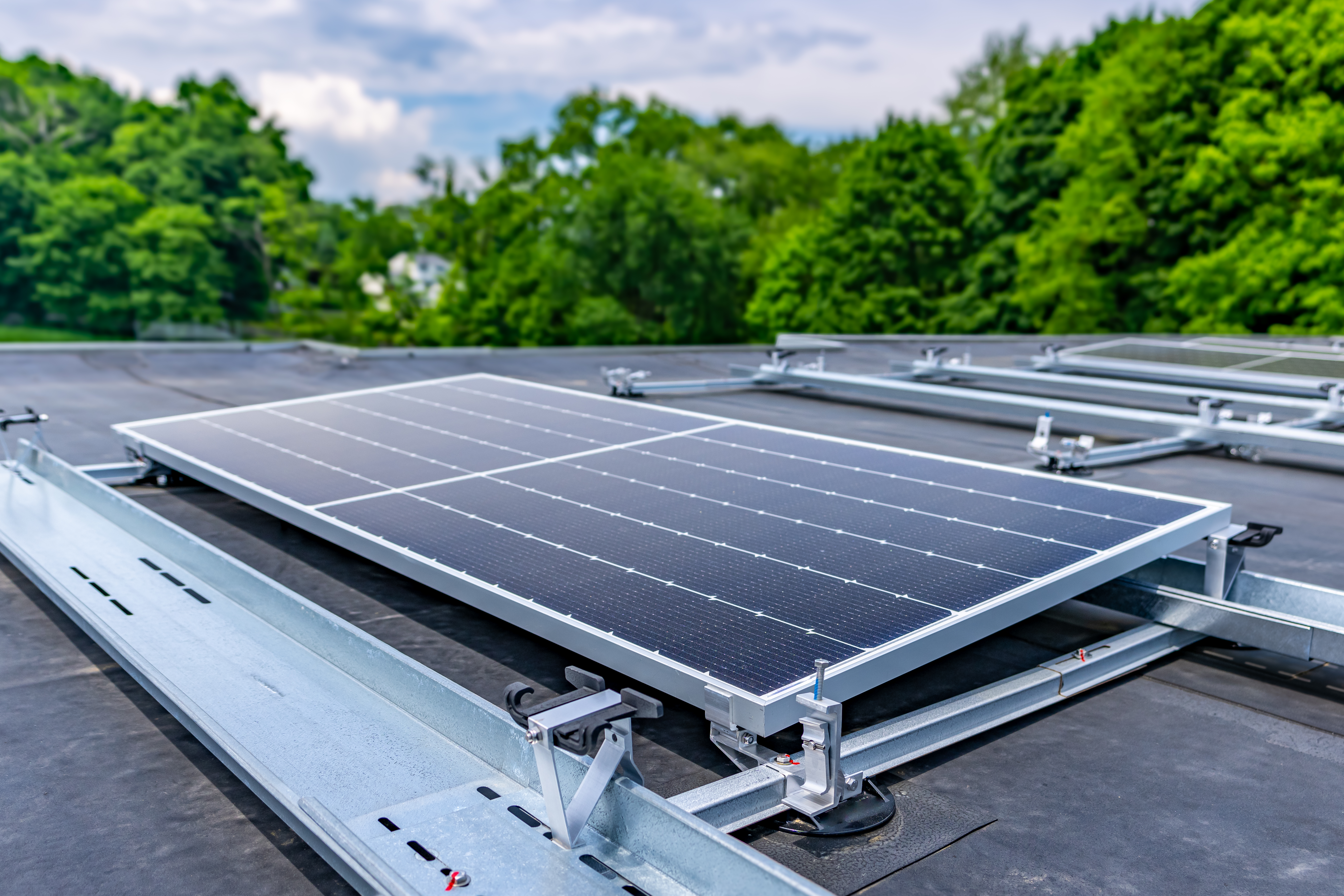
- Mounting system: Special mounting systems with ballast are required for flat roofs, which incurs additional costs.
- Installation complexity: Roofs that are difficult to access or require special adaptations can cause higher installation costs.
Payback Period
On average, the payback period for solar panels on a flat roof is between 6 and 7 years. This depends on factors such as your energy consumption, system size, and energy tariffs.
Subsidies and Financial Benefits
- Since 2023, there has been a 0% VAT rate for private individuals on solar panels, which saves costs directly.
- In some municipalities, local subsidies are available. It is advisable to inquire with your municipality about what financial support is possible.
Recommendation
For an accurate cost estimate and tailor-made advice, it is advisable to request quotes from certified installers. Via jeofferte.nl you can easily compare multiple quotes and thus make the right choice, fitting your wishes and budget.
Types of Solar Panels
When choosing solar panels, it is important to understand the different types available, their characteristics, and which ones best suit your situation. In 2025, there are three main categories of solar panels you can consider. At jeofferte.nl, we are happy to help you make the right choice.
1. Monocrystalline Solar Panels
Features
- Made from a single crystalline silicon cell.
- Uniform black appearance with rounded corners.
- High efficiency due to high silicon purity.
Advantages
- High efficiency (18% – 22%) requiring less roof surface.
- Performs better in low light and warm temperatures.
- Long lifespan and often extensive warranty.
Disadvantages
- More expensive to purchase.
- Production process is energy-intensive.
2. Polycrystalline Solar Panels
Features
- Consist of multiple silicon crystals melted into a single panel.
- Blue color with a grainy appearance.
Advantages
- Cheaper than monocrystalline panels.
- Reliable performance under normal conditions.
- Less energy-intensive production.
Disadvantages
- Lower efficiency (15% – 18%) requiring more surface area.
- Less uniform appearance.
3. Thin-Film Solar Panels
Characteristics
- Consist of a thin layer of photovoltaic material on a substrate (e.g., glass or plastic).
- Lightweight and flexible.
Advantages
- Suitable for special applications such as curved roofs.
- Cheaper in material and production costs.
- Good performance in diffuse light.
Disadvantages
- Lower yield (approx. 10% – 12%).
- Shorter lifespan than crystalline panels.
- Less common for residential use.
Advice from jeofferte.nl
- For limited roof space or maximum yield, monocrystalline panels are the best choice.
- For a larger roof and a budget-friendly option, polycristalline panels are suitable.
- Thin-film panels are suitable for specific situations where flexibility or weight is a factor.
- Always seek advice from a specialist who will consider your situation and wishes.
Costs and Savings per Household for Solar Panels on a Flat Roof (2025)
Installing solar panels on a flat roof is an attractive option for many households in 2025. Costs vary depending on the number of panels, the system type, and installation conditions. Below is an overview of the average costs and annual savings per household type.
Costs per Household Type
|
Household Size |
Number of Panels |
Total Costs (incl. installation) |
Annual Savings* |
|
1 person |
6 |
€3,500 – €4,500 |
€450 – €550 |
|
2 people |
9 – 10 |
€4,100 – €5,200 |
€750 – €850 |
|
3 people |
11 – 12 |
€5,000 – €6,200 |
€900 – €1,050 |
|
4 people |
12 – 13 |
€5,500 – €7,500 |
€1,000 – €1,200 |
|
5+ people |
14 – 15 |
€6,000 – €8,000 |
€1,100 – €1,300 |
*The annual saving is an indication and depends on your consumption and current energy prices.
Factors Affecting Costs
- Number of panels: More panels increase initial costs but can lead to higher savings.
- Type of solar panels: Monocrystalline panels are more expensive but more efficient than polycrystalline panels.
- Mounting system: Flat roofs require ballasted systems, which incur additional costs.
- Installation complexity: Hard-to-reach roofs or special adaptations can increase installation costs.
Payback period
The average payback period for solar panels on a flat roof is between 6 and 7 years, depending on factors such as energy consumption, system size, and energy prices.
Subsidies and Financial Benefits
- Since 2023, there has been a 0% VAT rate on solar panels for individuals, resulting in direct savings.
- In some municipalities, local subsidies are available; it is advisable to inquire with your municipality about what financial support may be possible.
Recommendation
For an accurate cost estimate and tailored advice, it is advisable to request quotes from certified installers. Via jeofferte.nl, you can easily compare multiple quotes and thus make the right choice, fitting your needs and budget.
Mounting Considerations for Solar Panels on Flat Roofs
Installing solar panels on a flat roof requires specific considerations to ensure the safe, efficient, and durable operation of the system. At jeofferte.nl, we ensure these factors are carefully taken into account to optimize your installation.
1. Tilt Angle and Orientation
- Because flat roofs are often horizontal, solar panels must be placed on a mounting system that positions them at the correct angle (usually around 30 degrees).
- Optimal south-facing orientation maximizes solar radiation and efficiency.
- Flexibility in placement offers opportunities to direct panels towards the most favorable point.
2. Mounting Systems
- Flat roofs require special mounting systems that distribute the weight of the panels well without causing damage to the roofing.
- Ballast mounting, where the system is weighted down with stones or concrete blocks, is often used to counteract wind loads.
- Alternatively, there are mechanical fastening systems that are anchored to the roof edge or roof structure.
3. Wind Load
- Flat roofs are more susceptible to wind pressure under the panels, increasing the risk of uplift.
- The installation must comply with local building codes and wind load standards.
- Correct ballasting and fastening are essential to prevent wind damage.
4. Roof Load and Construction
- The total weight of the mounting system, including solar panels and ballast, must be matched to the load-bearing capacity of the roof.
- Structural advice or inspection is often necessary to determine whether the roof is suitable.
5. Water drainage
- Ensure that the panels do not obstruct water drainage.
- The structure must be designed so that water does not accumulate or is retained under or next to the panels.
- Good roofing and drainage prevent leaks.
6. Accessibility for Maintenance
- Maintain sufficient space between rows of panels for inspection, cleaning, and maintenance.
- Safe access to the roof and the system is mandatory.
7. Cabling and Connections
- Cables must be neatly routed and protected from the elements.
- The electrical installation must comply with safety standards and be easily accessible for inspection.
8. Shading and Environment
- Check for potential shading from nearby objects such as chimneys, ventilation units, or trees.
- Shading can significantly reduce system performance, especially with string inverters.
Summary
Mounting solar panels on a flat roof requires special systems and attention to structural, electrical, and environmental aspects. With the right preparation and execution, you ensure a safe, durable, and efficient installation.
Advantages and Disadvantages of a Flat Roof versus a Pitched Roof for Solar Panels
When installing solar panels, the type of roof plays a major role in the efficiency, cost, and possibilities of the system. Both flat and pitched roofs have specific characteristics that influence the installation and yield. At jeofferte.nl, we are happy to guide you in making the best choice, tailored to your situation.
Flat Roof
Advantages
- Flexible placement: Solar panels can be freely positioned and oriented towards the optimal angle and direction (usually south, inclination angle approx. 30°), which maximizes yield.
- Simple installation: Usually less complex mounting than on pitched roofs, with mounting systems placed directly on the roof.
- Less aesthetic impact: Panels are often less visible from the street side.
- Space for additional installations: Usually enough space for other installations such as ventilation systems.
Disadvantages
- Mounting system costs: Installing special brackets or ballast mounting to position the panels at the correct angle incurs additional costs.
- Water drainage: Flat roofs require good maintenance to prevent water accumulation around the panels.
- Shading: Panels can shade each other or other objects more quickly due to the arrangement.
- Requires regular maintenance: To prevent dirt accumulation, regular cleaning is often necessary.
- Natural slope: Roofs often have an ideal slope (between 20° and 40°) for solar energy yield without additional mounting systems.
- Good water drainage: rainwater washes away dirt more easily, promoting the efficiency and lifespan of panels.
- Aesthetics: Panels can be beautifully integrated into the roofscape.
- Less chance of shading problems: Due to the slope, the chance of panels shading each other is smaller.
- Limited orientation: Not all roof surfaces face south ideally; this can limit yield.
- Less flexibility: Panels must be placed according to the roof shape and orientation.
- More complex installation: Fixing often requires more time and craftsmanship due to the angle of inclination and material.
- Safety: Installation on steep roofs requires additional safety measures, which can increase costs.
Sloped Roof
Advantages
Disadvantages
Conclusion
Both roof types offer good possibilities for solar panels, but the choice depends on your specific situation and wishes. Flat roofs offer flexibility and less visibility, but involve higher mounting costs and maintenance. Sloping roofs are often more advantageous in terms of installation and maintenance, but are less flexible in terms of orientation and placement.
At jeofferte.nl, we are happy to advise you personally on the best solution for your home or business premises, with reliable installers who have experience with both roof types.
Important Things to Remember About Solar Panels and Solar Water Heaters
Investing in solar panels or a solar water heater combination involves many considerations. To make your sustainable investment successful and to benefit from it optimally, it is essential to keep a number of key points in mind. Here is an overview of what you absolutely must not forget.
1. Quality Over Price
- Always choose solar panels and systems from reliable brands with good warranties.
- Cheap installations can lead to performance loss and higher maintenance costs in the short term.
2. Professional Installation is Crucial
- Have your system installed by certified and experienced professionals.
- This guarantees safety, optimal performance, and preservation of warranty.
3. Pay attention to Roof Suitability and Orientation
- A roof with a good slope and southern orientation yields the most return.
- Shade and obstacles can significantly reduce yield.
4. Subsidies and Financial Arrangements
- Make use of available subsidies, such as ISDE and VAT refund.
- Inform yourself in time and submit applications correctly to benefit financially.
5. Maintenance and Monitoring
- Regular maintenance and monitoring ensure higher yields and a longer lifespan.
- Keep an eye on malfunctions and dirt accumulation.
6. Payback Period and Long-Term Vision
- A solar panel or solar water heater system usually pays for itself within 5-15 years.
- Consider it a sustainable investment that also contributes to the increase in value of your home.
7. Consider Future Expansions
- Choose systems that are easily expandable with, for example, batteries or extra panels.
- This increases the flexibility and future-proofing of your installation.
Summary
Good preparation, quality, and professional guidance form the basis for a successful and profitable sustainable investment. Through jeofferte.nl, you gain access to expert advice and reliable installers who will support you every step of the way.