

What is the cost of cleaning your solar panels?
Free and without obligation
Find your contractor
Free and without obligation
Solar Panel Cleaning Cost Overview 2025
Cleaning solar panels is important for maintaining their efficiency and lifespan. In 2025, the costs for cleaning solar panels will vary depending on the number of panels, roof accessibility, and the degree of soiling. Below is an overview of the average costs.
Average Costs per Cleaning
|
Number of panels |
Total costs (including VAT) |
|
1 – 10 |
€50 – €85 |
|
11 – 16 |
€75 – €95 |
|
17 – 25 |
€100 – €125 |
|
26+ |
From approximately €1 per panel |
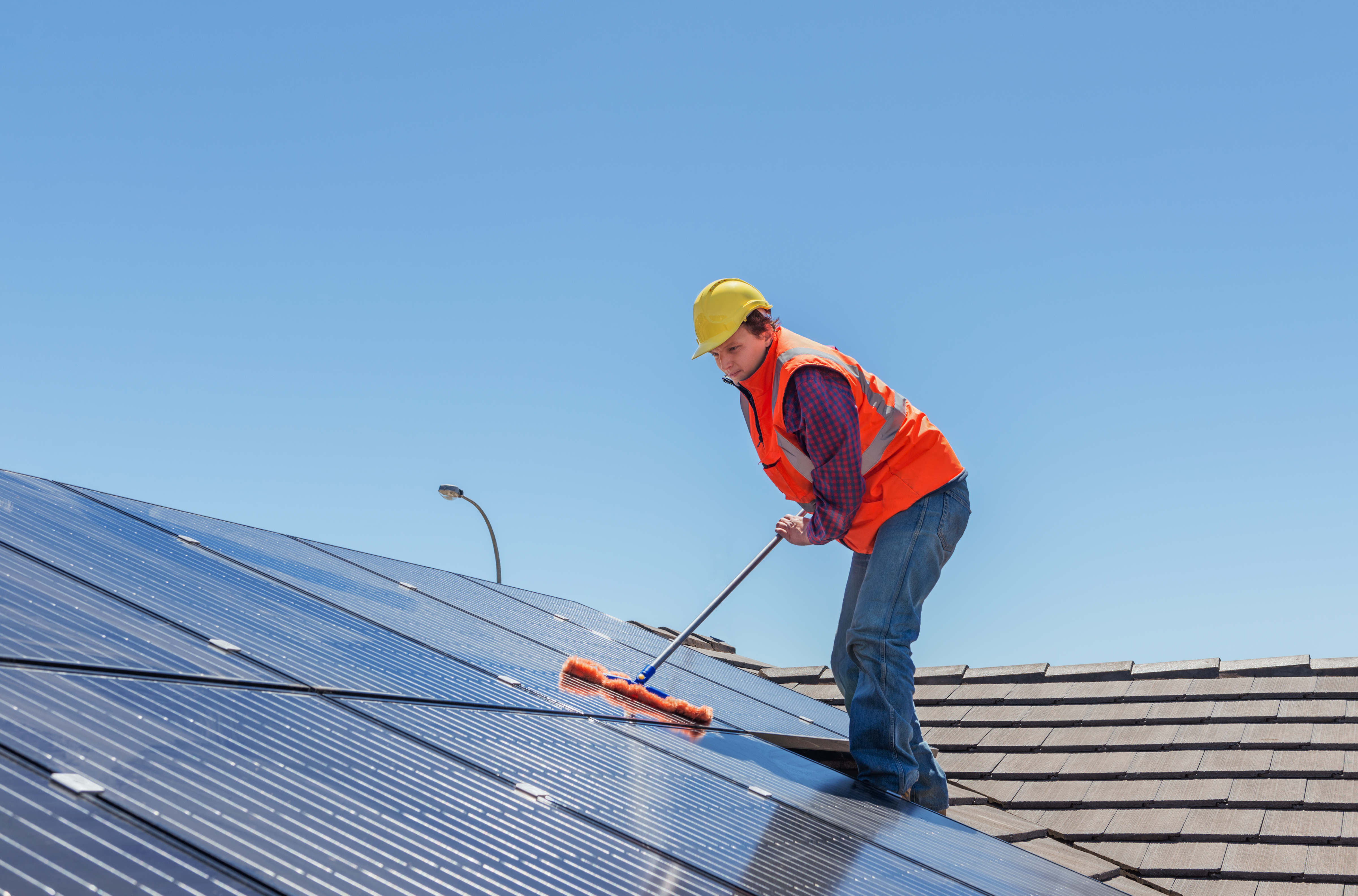
With some providers, there is a starting price plus an amount per panel. For example, a starting price of €40 – €50 plus €1 – €2 per panel. For 10 panels, this amounts to approximately €50 – €70.
Factors Affecting Costs
- Number of panels: More panels increase the total cost, but the price per panel may be lower for larger installations.
- Accessibility: Panels that are difficult to access, for example on high roofs, may incur additional costs due to necessary equipment and safety measures.
- Degree of soiling: Heavily soiled panels require more intensive cleaning, which can increase costs.
- Location: Depending on the region, travel costs and local rates may vary.
Self-cleaning or professional service?
Self-cleaning can save costs, but it carries risks such as damage to panels or accidents when working at heights. Professional cleaning services have the right equipment and experience to perform the job safely and effectively. An annual professional cleaning can increase returns by 3% to 5%.
Recommended Cleaning Frequency
It is recommended to clean solar panels at least once a year. In areas with a lot of dust, bird droppings, or other pollution, more frequent cleaning may be necessary. Spring is often a suitable time, so that the panels are clean for the sunny months.
Returns and Savings
An annual cleaning helps maintain or increase the return of your solar panels. Pollution can reduce the return by about 10%, and a cleaning session can restore this loss, resulting in higher energy yield and lower energy costs.
Self-Cleaning of Solar Panels
Self-cleaning solar panels can be a cost-saving option, but it also involves risks and points to consider. At jeofferte.nl, we always advise you to proceed carefully to prevent damage and accidents. Below you will find a detailed explanation of how to clean solar panels yourself.
Benefits of Self-Cleaning
- Cost Savings: You save on labor costs and the margin of professional cleaning services.
- Flexibility: You can clean when it suits you, for example, after periods with a lot of dust or pollen.
- Regularity: Self-cleaning makes it easier to keep the panels clean regularly, which benefits the efficiency.
Risks and Disadvantages
- Safety Risks: Working at height poses dangerous situations, especially with sloped roofs or hard-to-reach places.
- Panel Damage: Using incorrect materials or aggressive cleaning agents can damage the panels or affect the protective coating.
- Limited Effectiveness: For stubborn dirt, professional cleaning is often more effective.
- Warranty Issues: Improper maintenance can affect the warranty conditions of the manufacturer or installer.
Safety Precautions
- Use suitable ladders and ensure a stable surface.
- Wear a safety harness if possible and ensure you are not alone.
- Perform work in dry weather and avoid cleaning in direct sunlight to prevent rapid drying and spotting.
Suitable Cleaning Materials and Methods
- Use lukewarm, clean water without chemical additives.
- A soft sponge, cloth, or brush without abrasive properties.
- Avoid pressure washers, scouring agents, and aggressive cleaning agents.
- Rinse panels gently to remove dirt and soap residue.
Step-by-Step Guide for Self-Cleaning
- Preparation: Check the weather forecast and ensure the panel surface is cool.
- Safety: Ensure safe access and observe all safety precautions.
- Cleaning: Use lukewarm water and a soft brush or sponge. Start at the top and work your way down.
- Rinsing: Rinse the panel with clean water to remove soap and dirt.
- Drying: Allow the panels to air dry; do not use cloths to prevent scratches.
When is professional cleaning recommended?
- For hard-to-reach or high roofs.
- When the panels are heavily soiled, for example by bird droppings, moss, or industrial pollution.
- If you are unsure about safety or the correct cleaning technique.
Conclusion
Self-cleaning can be a practical and cost-effective way to maintain the efficiency of your solar panels, provided it is done safely and correctly. If you have doubts about safety or the level of soiling, it is advisable to hire a professional cleaning company.
Professional Cleaning of Solar Panels
Having your solar panels cleaned by a professional cleaning company is an effective way to maintain and optimize the performance of your system. At jeofferte.nl, we recommend regular professional maintenance to ensure maximum yield and a long lifespan. Below, you can read more about the benefits, the process, and what to look out for.
Benefits of Professional Cleaning
- Deep cleaning: Professionals have special agents and equipment to efficiently remove stubborn dirt such as bird droppings, moss, and dust without damaging the panels.
- Safety: Skilled cleaners have the right knowledge, training, and equipment to work safely on roofs, even with difficult or high installations.
- Warranty preservation: Professional cleaning complies with manufacturer guidelines, thus preserving warranty conditions.
- Time saving: You do not have to invest time and effort in the cleaning process yourself.
- Improved efficiency: Regular professional cleaning can prevent or reverse energy yield loss due to soiling (3-5%).
- Inspection: During cleaning, any damage or defects can be detected early.
The Cleaning Process
- Preparation: The professional inspects the solar panels and draws up a cleaning plan.
- Safety Measures: All necessary safety precautions are taken.
- Cleaning: The panels are cleaned with soft brushes, sponges, and eco-friendly cleaning agents. High-pressure cleaners are usually avoided to prevent damage.
- Rinsing: The panels are carefully rinsed with clean water.
- Check: After cleaning, the result is checked and any points of attention are reported.
Cost indication
- On average, the costs are between €50 and €125 per cleaning session, depending on the number of panels, the accessibility of the roof, and the degree of soiling.
- Some providers charge a starting fee plus an amount per panel.
Recommendation
It is recommended to have solar panels professionally cleaned at least once a year, especially in areas with a lot of dust, pollen, bird activity, or industrial pollution.
Conclusion
Professional cleaning is a safe, effective, and efficient way to maintain the performance of your solar panels. It prevents loss of yield and contributes to the lifespan of your investment. Via jeofferte.nl, you can find reliable cleaning companies specialized in solar panel cleaning.
Factors Influencing the Price of Solar Panels and Installation
The price of solar panel installations is determined by various factors. Understanding these factors will help you make an informed decision and create a realistic budget. At jeofferte.nl, we advise you to carefully consider these aspects.
1. Type Solar Panels
- Monocrystalline panels: High efficiency, higher price.
- Polycrystalline panels: Slightly lower efficiency, lower price.
- Thin-film panels: Lower efficiency, lower purchase costs, larger area required.
The quality of the panel also affects the price and lifespan.
2. System Size
- Larger systems often offer economies of scale, reducing the price per kWp.
- Smaller systems have relatively higher costs per kWp due to fixed costs.
3. Type Inverter
- String inverters are cheaper, suitable for simple systems.
- Microinverters and optimizers are more expensive, improve efficiency in case of shade or complex roof shapes.
4. Installation Complexity
- Roof type and roofing material affect labor costs.
- Difficult-to-access roofs or safety features increase the price.
- Modifications to the meter box or electrical installation may incur additional costs.
5. Brand and Warranty
- Well-known brands may be more expensive, but offer better warranties and reliability.
- Extended warranties and service contracts increase initial costs but provide long-term security.
6. Monitoring and Technology
- Advanced monitoring may incur additional costs, but improves insight and performance.
7. Regional Price Differences
- Labor costs and competition vary by region.
- Transport and material availability play a role.
8. Subsidies and Financial Arrangements
- Subsidies reduce the net investment but may incur administrative costs.
Summary
The final price is determined by product choice, system size, installation conditions, and additional services. Comparing quotes based on these factors helps to achieve an optimal price-quality ratio.
Recommendations for Choosing and Installing Solar Panels
A well-thought-out approach is crucial for a successful and profitable investment in solar panels. At jeofferte.nl, we are happy to advise you on the best steps and points to consider. Below you will find important recommendations to get the most out of your solar energy system.
1. Choose the right system size
- Determine your energy consumption and adjust the number of panels accordingly.
- Avoid oversizing, but consider possible future expansions.
2. Invest in quality
- Opt for panels and inverters from reputable brands with good warranties.
- This ensures reliability, a longer lifespan, and optimal performance.
3. Hire a certified installer
- Have your system installed by an experienced and certified company.
- This guarantees safety, compliance with regulations, and preservation of warranties.
4. Check roof suitability
- Have your roof inspected for load-bearing capacity, shading, and orientation.
- Optimize the placement for maximum solar radiation and yield.
5. Make use of subsidies and tax benefits
- Inquire about current subsidies such as ISDE and the 0% VAT rate.
- Submit your subsidy applications in time to achieve optimal financial benefits.
6. Plan for maintenance and monitoring
- Ensure regular inspection and cleaning of the panels.
- Consider monitoring to track performance and quickly detect faults.
7. Think about future-proofing
- Choose systems that are easily expandable with additional panels or energy storage.
- Take technological developments and changing regulations into account.
8. Request multiple quotes
- Compare prices, warranties, and service conditions.
- This way, you will find the best value for money.
Conclusion
By following these recommendations, you will maximize the yield and lifespan of your solar panel installation, while ensuring a safe and financially responsible investment. At jeofferte.nl, we are happy to assist you with expert advice and reliable quotes.